France:: Summer

Human Rights & Conflict Resolution in Europe: Legal & Political Perspectives

What You Need to Know

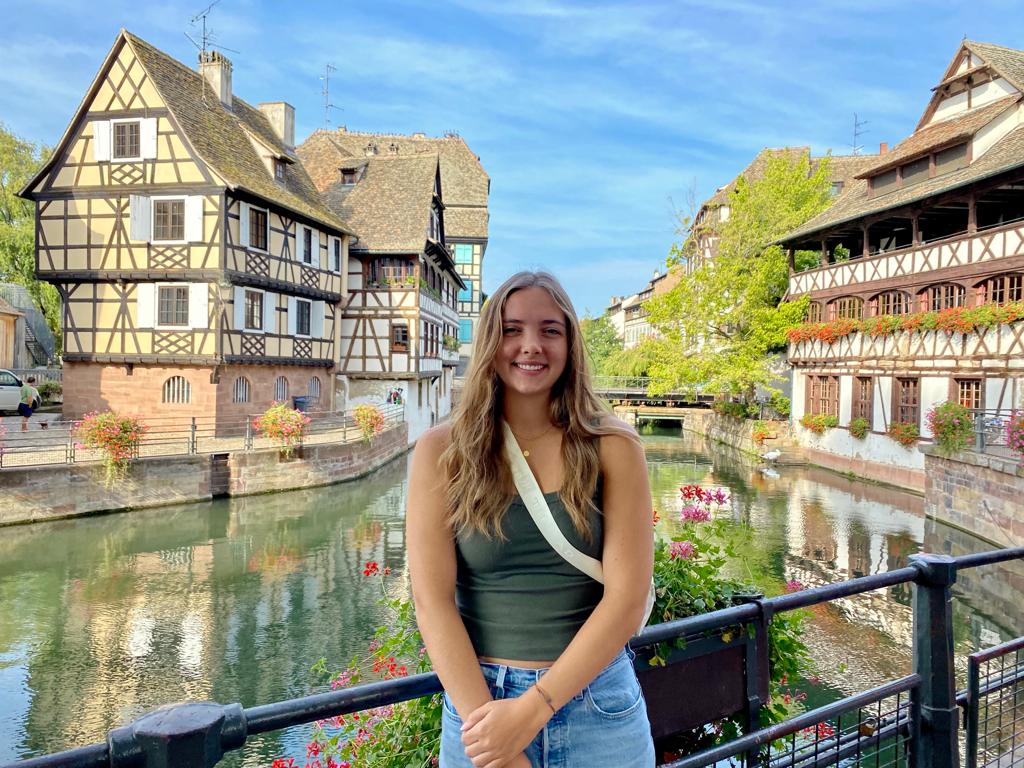
Set in Strasbourg, home to the Council of Europe, this program offers you the opportunity to learn firsthand about European perspectives and approaches to human rights and conflict resolution. It covers topics such as marriage, divorce, abortion, torture, fair trial, homosexuality and obscenity. The role of international organizations in resolving military conflicts is also examined.

The proximity to the Council of Europe means that you’ll be able to get a close-up look at the workings of an international organization through visits, and attendance of events such as Court hearings. You’ll also be in contact with Council of Europe staff, and benefit from the knowledge and experience of lecturers who address human rights and conflict resolution issues as practitioners and activists as well as academics.

The Council of Europe was established after the end of World War II to ensure that "Never Again" would Europe succumb to such a human tragedy. The organization, therefore, aims to protect and foster human rights, pluralist democracy, and the rule of law in European States.

The European Court of Human Rights enforces the first international legal instrument safeguarding human rights -- the "European Convention of Human Rights." The Court has proven to be one of the world's most effective examples of international human rights protection. Students will become familiar with the standards and workings of these institutions. A field trip to Geneva allows students to compare a European and international organization.

Courses

Students are required to take both of the following courses.

European Human Rights
(PSC, 400.1/600.1/IRP 400.1/600.1, 3 credits, undergraduate and graduate)

Issues of human rights are at the heart of debates in the countries of Europe as these societies undergo rapid transformation and consider the form of the "new Europe." This course will delve into these issues, which reveal much about the culture, morals and values of the residents of Europe. It will begin with a general introduction to European human rights standards and present some of the Council of Europe mechanisms engaged in their application. It will then focus on specific rights, such as the prohibition of torture, the death penalty, freedom of expression and the right to family and private life. Next the course will turn to the question of minority protection examining issues of equality, non-discrimination and "minority rights." Students will have an opportunity to study and observe the European Court of Human Rights in action and participate in a "moot court" activity.

Throughout the course, the particular difficulties faced by various minority groups in Europe will be explored. Graduate students will select a case study of a minority situation of interest to them, and bring it into discussions as different human rights issues are explored. Examples of case studies could be Roma in the Czech Republic, the Tatars in Ukraine, language rights in Moldova, "Islamophobia" in the UK, North Africans in France, Albanians in Macedonia, return of Serbs in Croatia, etc.

Grades will be based on: a mid-term assignment or exam (students may choose to participate in a "moot court trial" instead); class participation; a term research project.

Graduate students will be given additional reading assignments and will be required to research a "case study" and complete a lengthier research project involving their case study.

Conflict Resolution in Europe
(PSC, 400.2/ 600.2/IRP 400.2/600.2, 3 credits, undergraduate and graduate)

This course will introduce students to the complexity of conflict, its origin and role in human society from earliest times to today, and as a backdrop to modern conflict resolution. The course will examine the similarities and differences between various kinds of conflict -- personal, domestic, community, racial, religious, violent and non-violent, physical and psychological. It will examine in detail examples of the different types of actual conflicts in order to understand if such conflicts were an inevitable outcome of certain actions or merely the result of deliberate choices. The role of the modern media in conflict will also be examined. Informed about the reasons behind the origin of conflict students will go on to examine different forms of conflict resolution and attempt to apply such resolutions to current conflicts. Examples will be drawn from conflicts in Europe and the Middle East as well as students personal experiences.

After looking into the nature of different conflicts, collision of rights and interests, as well as the role of conflict in the evolution of societies and states, the course will look at the present role and potential of international organizations in resolving civil wars and military conflicts. This will be exemplified by a series of actions taken by the Council of Europe: (1) Bosnia: post conflict stabilization; (2) Kosovo: conflict mediation; (3) Chechnya: intervention and monitoring.

International Relations

Political Science

Faculty

Lanna Hollo who holds a law degree from McGill University, worked at the European Commission against Racism and Intolerance (ECRI) in Strasbourg before becoming an independent consultant in the area of human rights.She has recently completed projects for such NGOs at The Open Society and the Roma Rights Center.

Jorgen Johansen has worked for nearly thirty years as an international consultant and trainer in conflict prevention and resolution. He has also held academic appointments at several major European universities.

Eligibility and Requirements

This program is open to any graduate or undergraduate student interested in human rights, politics, conflict resolution and legal issues.

Travel and Living

Students arrange and pay for their own round-trip transatlantic flight to Strasbourg.

Advantage Travel specializes in student fares and can assist with flight arrangements for your summer program. For more information, please contact Sally Curtis at scurtis@advantagecny.com or 1-800-788-1980.

IMPORTANT NOTE: Do not purchase your airline ticket before receiving written notification from us that you can book your flight. You will have to present this notification if we cancel the program at a later date, and you want to be reimbursed for the cost of the ticket.

Transportation for program-related field trips are arranged by SU Abroad and are included in the program fee.

You will live in a private home with French hosts who provide breakfast and one main meal daily during their stay except on weekends when breakfast only will be provided. During field trips students are housed in hotels or pensioni. Meals are not provided during field trips.

If you choose to arrange and pay for your own housing in Strasbourg, you must notify the SU Abroad office of your decision at the time of application.

Dates

Program Begins:May 24, 2007
Housing Begins:May 24, 2007
Program Ends:July 5, 2008
Housing Ends:July 5, 2008
Deadline:March 1*

* Applications received after March 1 will be considered if there is still space in the program.

Costs

UNDERGRADUATE (6 credits)
Tuition$5,136
Program Fee$2,020 (Estimated)
Total$7,156 (Estimated)
GRADUATE (6 credits)
Tuition$6,408
Program Fee$2,020 (Estimated)
Total$8,428 (Estimated)