
By Grace Stecher, Syracuse University
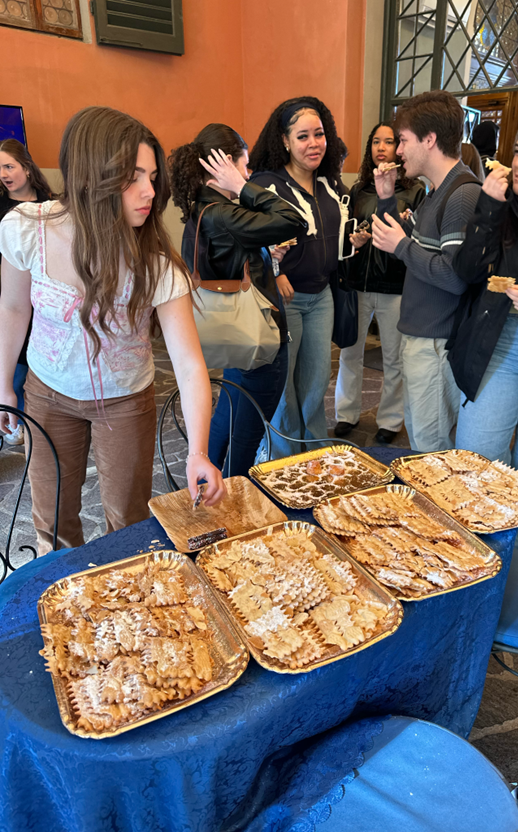
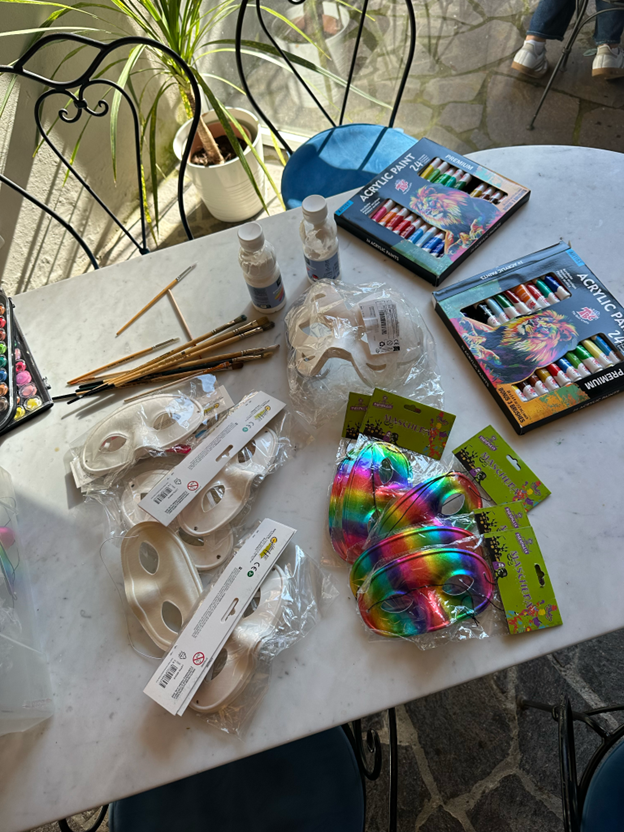
On February 17, Syracuse Florence celebrated the end of Carnevale with delicious delicacies and do-it-yourself mask decorating in the Limonaia (the seating area between the cafe and the garden) of Villa Rossa. “Carnevale is very important for Italian culture,” said Giulia Ricciardi, Syracuse Florence’s Student Experience Manager. “I wanted to bring a piece of the Florentine culture here for students to connect with.”
Carnevale’s origins trace back to ancient Greek and Roman pagan festivals like Saturnalia that celebrated the arrival of spring. Later, these traditions transformed into a final period of celebration and indulgence before Lent, the traditional Catholic 40-day period of prayer and fasting when meat, fats, and sugar were forbidden. In fact, the term Carnevale stems from the ancient Latin meaning “farewell to meat.”
Today, Carnevale is celebrated all throughout Italy, with the most famous festivities taking place in Venice and Viareggio. These parties, filled with eating, drinking, masks, parades, and merriment, all culminate on Fat Tuesday, the day before Lent starts.
At Syracuse’s own celebration, trays of treats like fried dough cenci and fritelle di riso (sweet rice fritters) offered a taste of traditional Carnevale flavors. As they snacked, students had the option to paint a white mask or grab a colorful one to wear at other Carnevale events throughout Florence. “It’s a way for students to bring back something, not just food, as a souvenir of the Carnevale,” Ricciardi said.
Historically, masks were a defining symbol of Carnevale that allowed people from all social classes to celebrate together while keeping their identities hidden. Today, they continue to represent the creativity and over-the-top tradition Carnevale is famous for. Ricciardi plans to give students a chance to try to even more traditional sweets on the next “Typical Tuesday,” a monthly campus event.