
By Aurora Santangelo (Syracuse University)
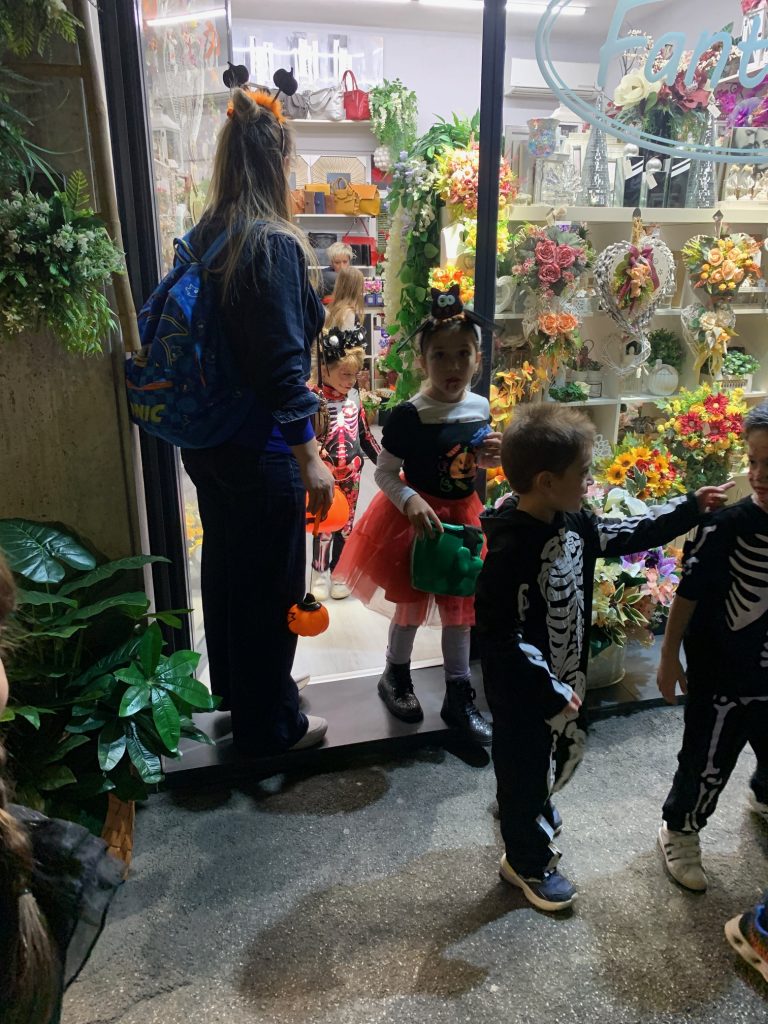
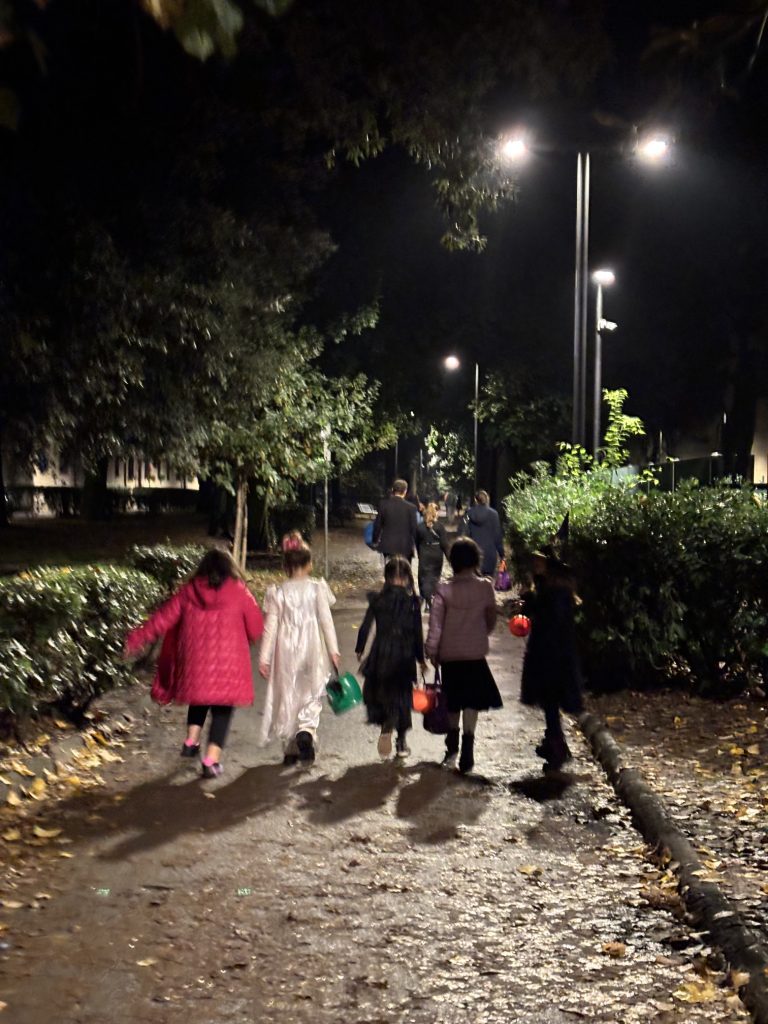
Young children dressed as witches, ghosts, and zombies take to the streets in packs, parents following close behind as they knock on doors and filter into shops in search of candy, chanting, “Dolcetto o scherzetto?” (literally “little treat or little joke”). This is Halloween night in Florence. Such a scene would have been unthinkable here or in any Italian city just a few decades ago, when Halloween did not yet exist in Italy. However, over the last 30 years, the holiday has gained more influence as Italian children have adopted these recognizable traditions. How have Halloween traditions like dressing up and going door-to-door asking for candy been adapted into Italy? And what does the holiday mean to Italians?
Halloween traces back to Samhain, an ancient Celtic festival marking the end of the harvest on November 1st, when the veil between the human world and the Otherworld was believed to grow thin and let spirits pass through. Many familiar Halloween customs come from it: bonfires, offerings to wandering spirits, disguises worn to hide from malevolent ones, going house to house for food, and carved turnips (later pumpkins, once Irish and Scottish immigrants brought the tradition to America) to ward off danger at night. As Christianity spread, the Church found that pagan traditions like Samhain were too ingrained to erase and transformed them into Church-sanctioned holidays. In the 8th century, Samhain became All Saints’ Day (All Hallows’ Day) on November 1st, known in Italy as Ognissanti, a major holiday still celebrated today, followed on November 2nd by the Day of the Dead, when people visit the graves of their loved ones and honor their ancestors. The night before, October 31st, became All Hallows’ Eve, which eventually evolved into the word “Halloween.”
Before the 1980s, Halloween in Italy was a completely foreign concept, one that many people hadn’t even heard of. Olimpia Bozza, Syracuse Florence’s Internship and Engagement Liaison, remembers the first time she heard of it as a middle schooler in the ‘90s, when an American student transferred into her class: “To make her feel welcome, the teacher was like, we’re going to do this super ethnic, crazy thing—Halloween. And we were like, what is that?” She recalls having seen it on horror-movie posters without really knowing what it meant.
Student’s Success Liaison Emma Giorgini only started participating in Halloween traditions like trick-or-treating as a middle schooler. Having grown up in the nearby town of Empoli, it was an interesting experience because of how few people were prepared for children to come asking for candy. “They were giving us whatever they had, like salami,” she explains. “One person invited us in and started cooking for us.” She remembers only some people decorating, usually just with skeletons and jack-o-lanterns – very different from the over-the-top, sometimes competitive Halloween decorations displayed on lawns in North America. Emma also connects Halloween to Carnevale, the period leading up to Lent that in Italy involves parades, masquerading, and sweets. While that remains important and widely celebrated in Italy, there’s been a shift in recent years towards Halloween being the major holiday dedicated to dressing up in costumes.
While Olimpia and Emma describe Halloween as a somewhat unpopular holiday in their childhoods, over the past 30 years, it has become much more celebrated and influential. Academics Assistant Michelle Tarnopolsky has seen this transformation first-hand. She came to Italy as a student in the mid-90s, which was when Italy first began celebrating Halloween. Every year she’s seen it develop more, beginning with adults dressing up and going to parties, then shifting into a holiday dominated by children, just like in the U.S. and Canada.
American students in Italy might be surprised to learn how Halloween is celebrated here. A big difference Michelle has noticed is in the costumes. When she dressed her toddler as a ninja and a firefighter, his costumes stood out from the “scary” ones of the other children, who exclusively dress up as witches, ghosts, mummies, zombies, and other traditionally spooky characters. Another difference is the difficulty of trick-or-treating. Since many people, especially in cities like Florence, live in apartment buildings, the task of providing candy often falls on stores rather than individual homes.
These variations may seem small, but they can cause people raised in North America like Michelle to feel nostalgic for home during and around Halloween, since the Italian version doesn’t quite live up to what they remember from their childhoods. Furthermore, although Halloween is popular in Italy today, many Italians still dislike it. Some believe it goes against the Church and refuse to participate because of its association with paganism. Others lack the special attachment to the holiday that comes from growing up with it and simply don’t care. Others still don’t look down on it as a silly American holiday. But whether Italians like it or not, Halloween is a holiday that here is to stay.