
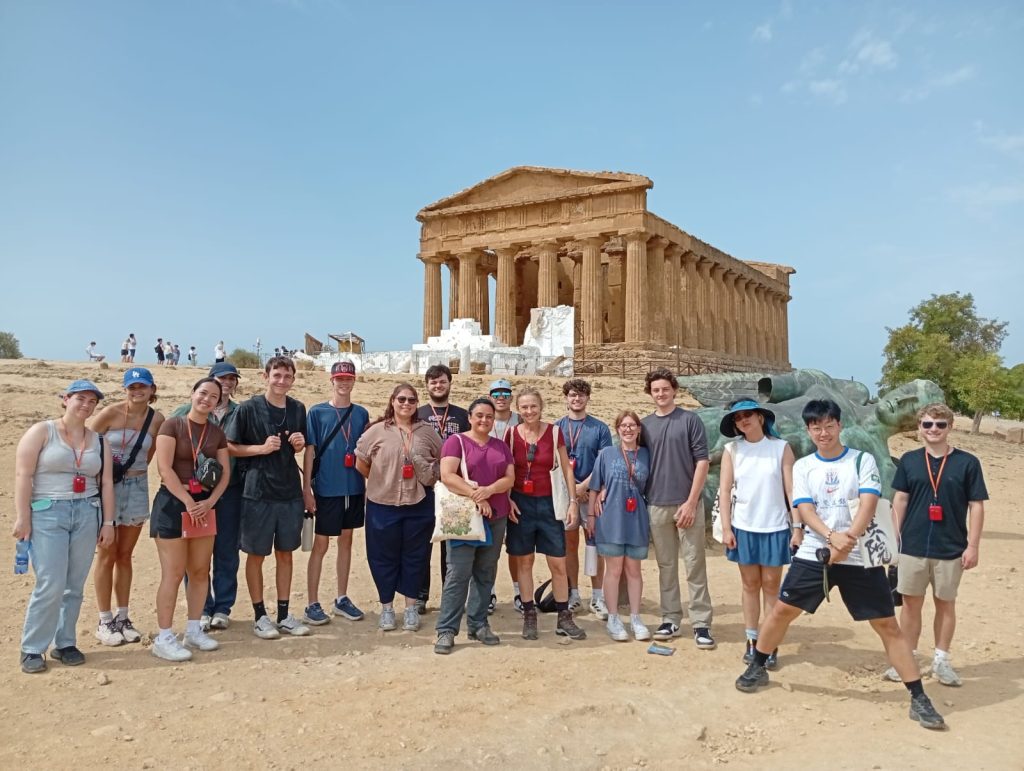
This is a brief account of the Signature Seminar “Hands on History in Sicily” that I led from August 24 to September 2. The purpose was to introduce students to the multifaceted work of archaeologists while touring one of the most beautiful regions of Italy and encountering the rich, millenary culture of the cities we visited.
The seminar was supported by a network of academics, freelance archaeologists, and tour guides who successfully conveyed how varied the work of an archaeologist can be: from setting up an urban didactical excavation; to harmonizing research on the groundbreaking findings of a remote town in the Nebridi mountains with the efforts of local administrators to promote the area’s culture; to the daily struggles of a tour guide who needs to update and implement tours of a well-known place like the Valley of the Temples in Agrigento; to the human touch of people and local bodies that want to give back to the community by transforming history into investment opportunities.
The task was not easy, especially because our group of fifteen students landed in Florence on a Saturday and left for Sicily the very next day! They had no time to adjust to the climate and culture first – it was a full immersion experience from day one. I was blessed with a group of young adults who were very interested in the topics and activities involved. I also benefited greatly from the help of the Responsible Adult assigned to the trip: Prof. Giulia Pettena, a colleague, friend, and fellow archaeologist who was ready to fill in whenever a student needed more explanation or still had questions after I had already moved on to the next monument or subject.
This seminar was one of a kind. Although there are different archaeological projects in Italy involving foreign students and many field trips for study abroad students to visit sites and museums, our seminar is the first to blend hands-on experience with in-class lectures and on-site visits in different locations for students without prior experience in any of the subjects to be covered.
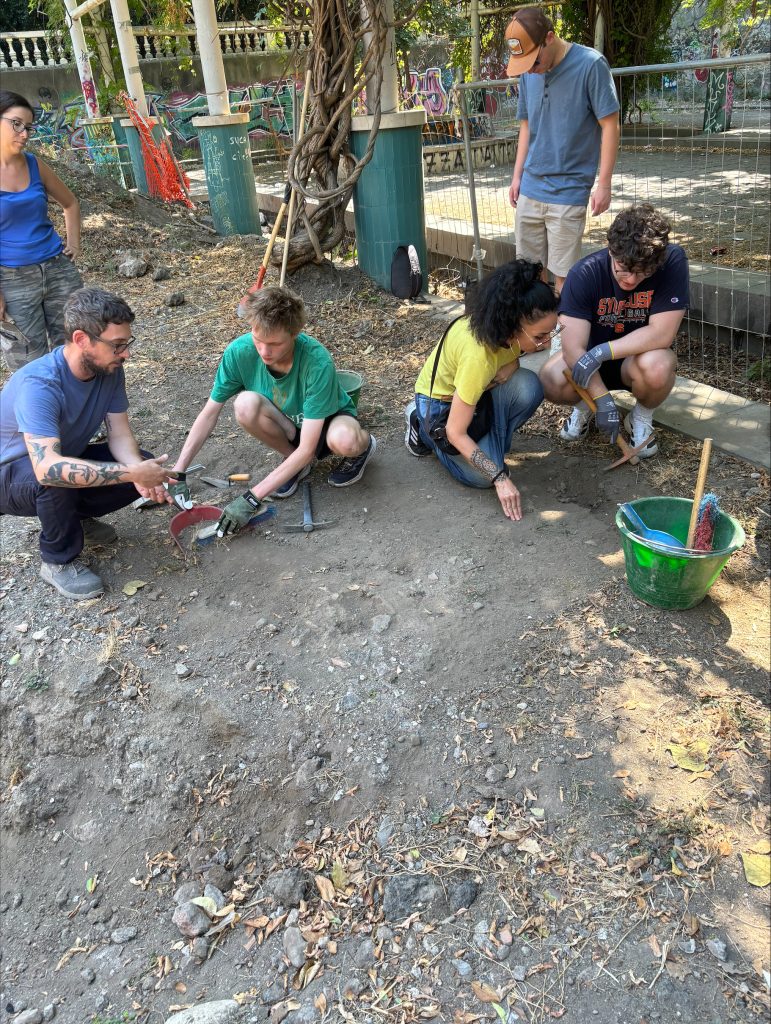
Our journey started in Catania where we were welcomed by the fascinating lava stone used for the city’s ancient and new buildings and roads, while the ongoing eruptions of Mount Etna gave us breathtaking shows at night! My contact there was Prof. Simona Todaro, who teaches the prehistorical and proto-historical archaeology of the islands Sicily, Malta, and Sardinia and leads a didactical excavation in the courtyard of a former Benedictine Monastery. Her energy and professionalism captured the souls of our students, who cited their experience with her in their journals and final papers more than anyone else.
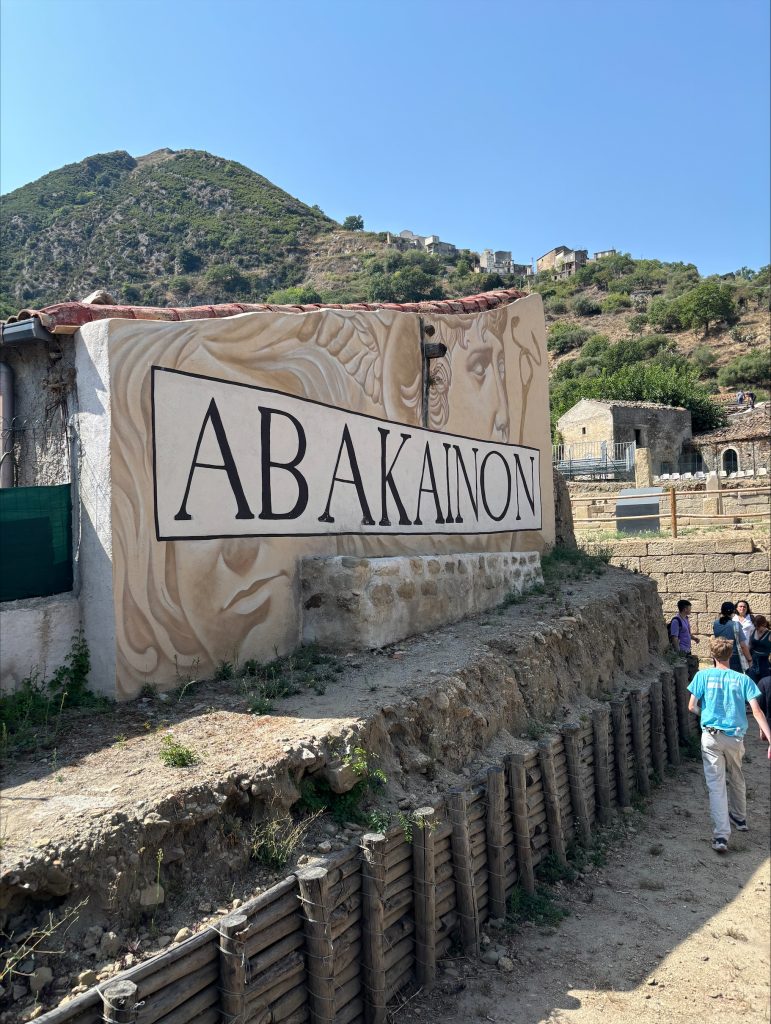
The newness of the project in the small town of Tripi, in the province of Messina, added to our adventure. We made connections between past and present as we explored excavations and a museum that have only recently opened to the public. The initiatives of the town’s mayor were obvious. Its full, official name is Tripi-Abakainon, which combines the modern and ancient ways to refer to the settlement, and its three neighborhoods feature modern murals referring to ancient objects and deities tied to the Siculo-Greek town.
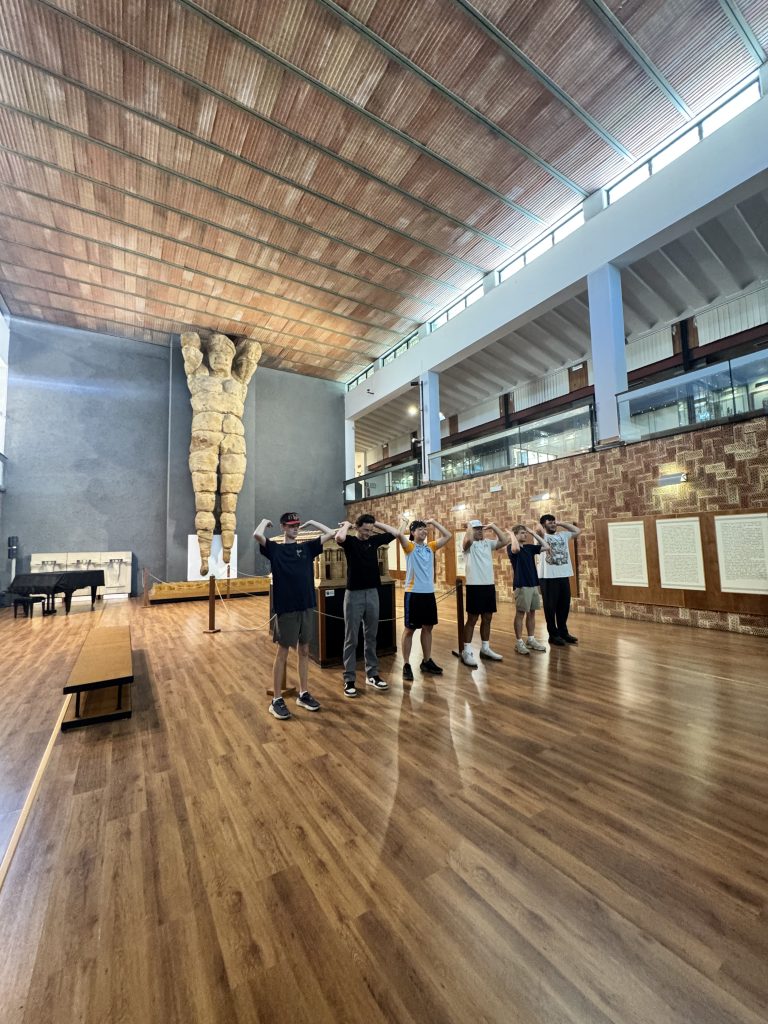
On our way to Agrigento, we stopped in Aidone where over the past twenty years objects have been restituted to the local museum, including the acroliths of Demeter and Kore (the oldest acroliths ever discovered); the so-called Aphrodite of Morgantina; the silver treasure of an ancient private house in Morgantina; and the so-called Bluebeard of Morgantina. This stop gave us a chance to discuss the delicate topic of tomb robbers and the illegal art market, since the Getty Museum in Malibu and the Met in New York have been targets of an international investigation of stolen artifacts.
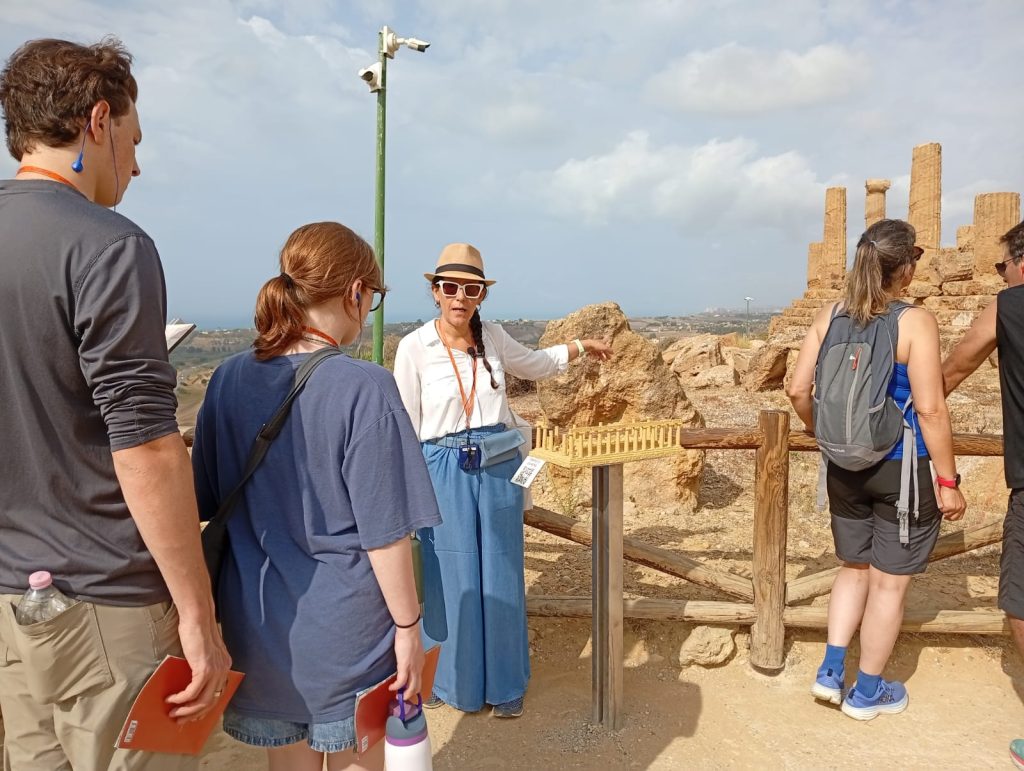
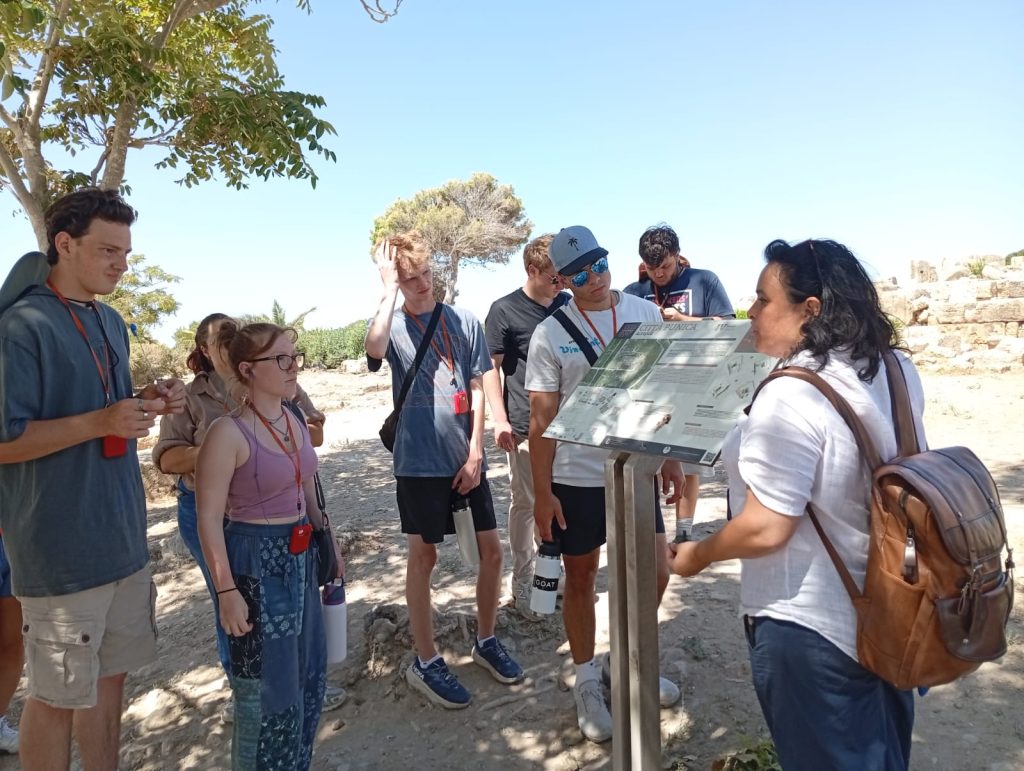
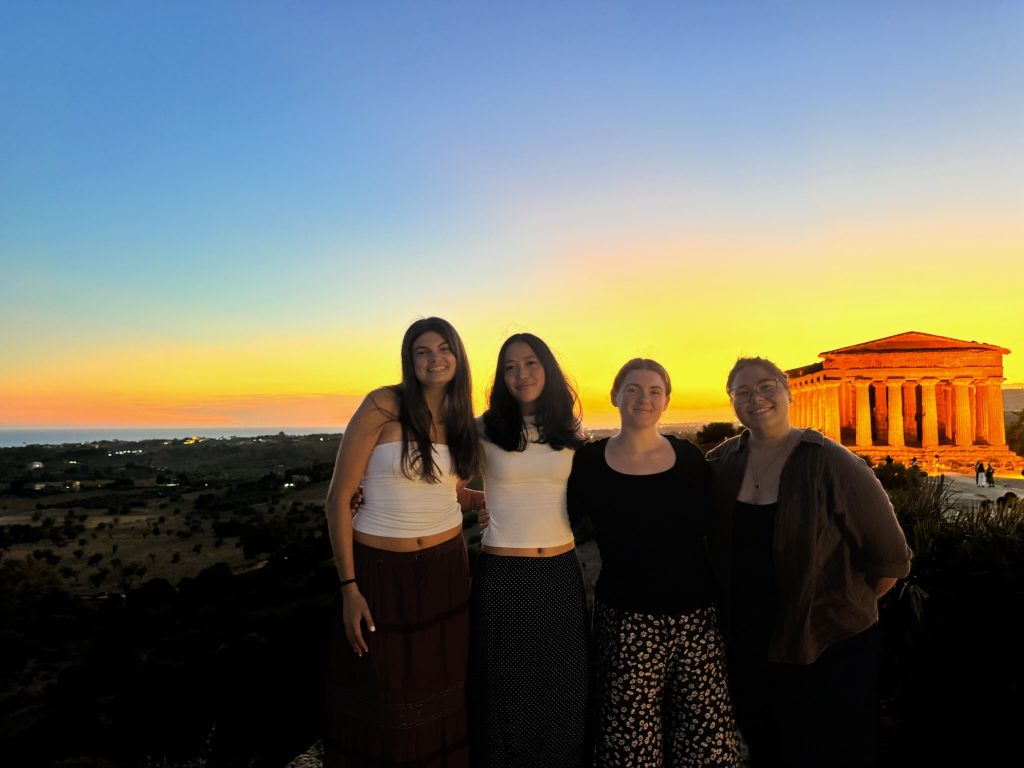
In Agrigento, the students worked on a special project that I developed with archaeologist and tour guide Laura Danile in which they split up into three groups to plan a visit for three different users: families with children; people who walk with difficulty; and English speakers. Our two-day visit to the site with Laura was crowned by the unforgettable experience of wandering around the temples at sunset. During our stay, we also enjoyed two unique experiences: lunch in the Kolymbetra garden, where we met its visionary creator, and a visit to Casa Diodoros, a biodiversity-focused enterprise preserving local traditions and species like the Girgentana goat.
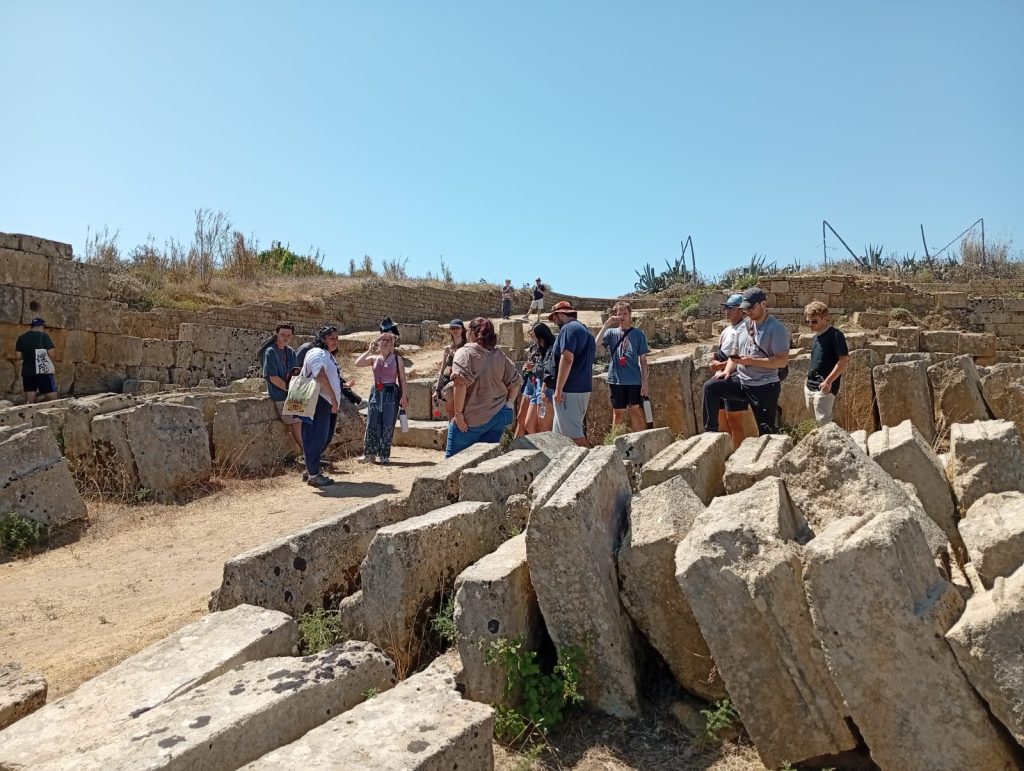
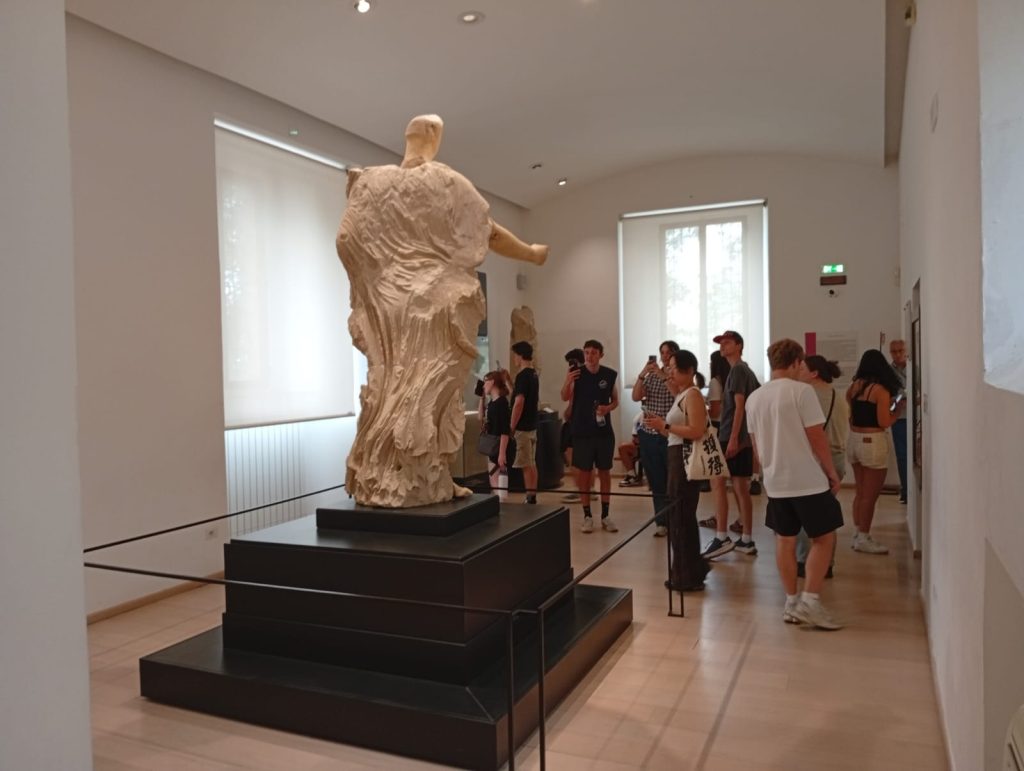
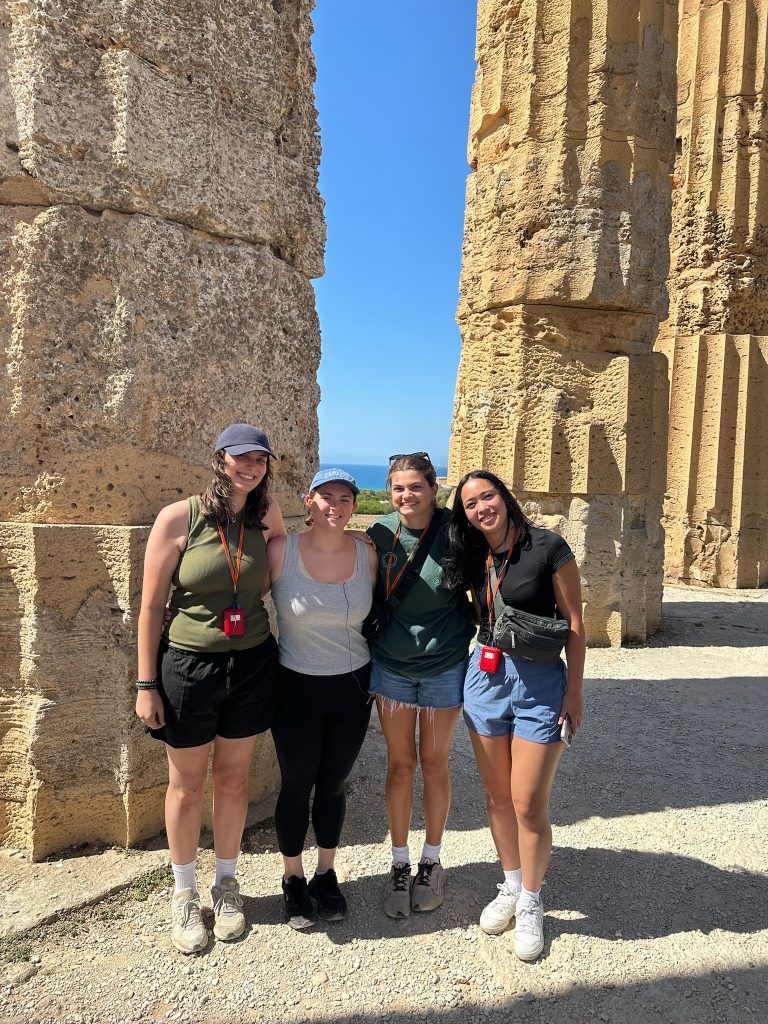
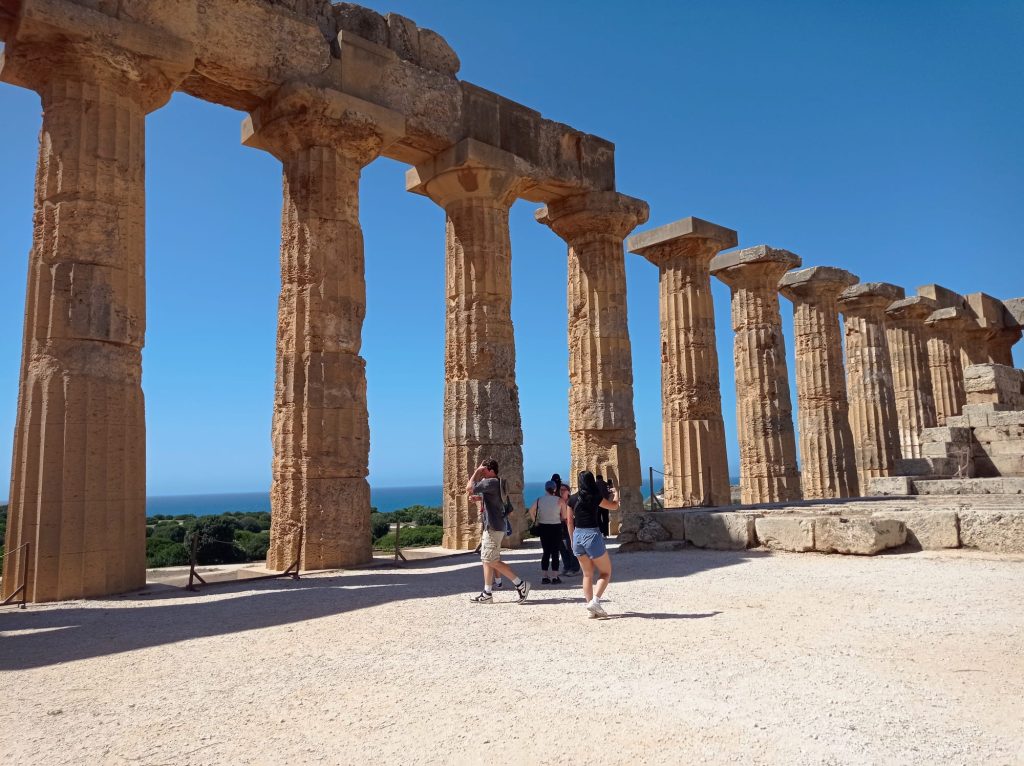
Our last stops were in Selinunte and Palermo where the students surprised us. It had not been an easy trip – every day required immense focus and stamina – and students complained about the lack of free water. Yet during their free time on their last day, they chose to visit Palermo cathedral and savor a final taste of local history and art!
I cannot explain how grateful I am: to the students, to Sasha Perugini and Rachael Smith for believing in my idea for this seminar, and of course to all the office staff at the office for structuring and supporting the logistics of the journey. I am grateful from a human side, but also from an academic perspective, since the experience had a powerful impact on our students. It was emotional to watch them widen their eyes and smile not just in front of a beautiful marble statue, but also while absorbing the passion of someone explaining how ancient history remains relevant today.
I believe that the study of ancient cultures through their stories (myths) and their daily life (archaeology) is the ultimate way to dialogue with our ancestors. Who knows how much help that dialogue can bring to us in our struggle to find a new kind of humanity in our society.
But don’t just take it from me:
One of the most valuable aspects was the excavations … all I found was a small piece of plastered pottery, [but] it was a massive find to me. It allowed me … to understand the pride of finding these items. … This trip also exposed me to more culture than I was expecting. J.A.
I began to understand archaeology in a broader way. It is not only about collecting artifacts but also about reading the soil, analyzing stratigraphy, and noticing how structures evolve over time. This approach felt almost poetic. C.W.
I really enjoyed being able to get hands-on experience. … what stood out most to me was the opportunity to experience history in a way that felt tangible and immediate. It is one thing to read about temples, necropolises, or ancient cities in a textbook, but it is an entirely different experience to walk among the ruins, see the scale of the structures, and imagine the lives of the people who once inhabited those spaces. J.C.
By Professor Stefania Berutti