
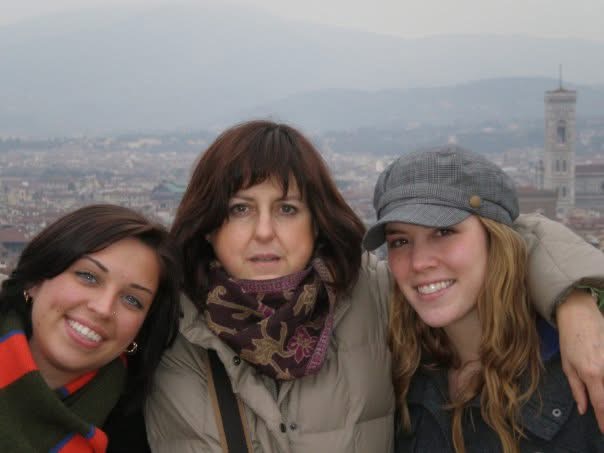
When Lauren arrived in Florence in 2008 as a Syracuse University Italian major, she couldn’t have imagined that nearly two decades later she’d be back — not as a student, but as a professor helping shape the very program that changed her life.
Lauren’s path to Italian started early. Growing up in eastern Pennsylvania with Italian heritage on her mother’s side, she knew from her teens that she wanted to major in Italian and study abroad — even though her high school didn’t offer the language. She chose Syracuse for its size and reputation, and by her first semester on campus she was enrolled in Italian 101, working toward the study abroad experience she’d been dreaming of since she was 16 or 17.
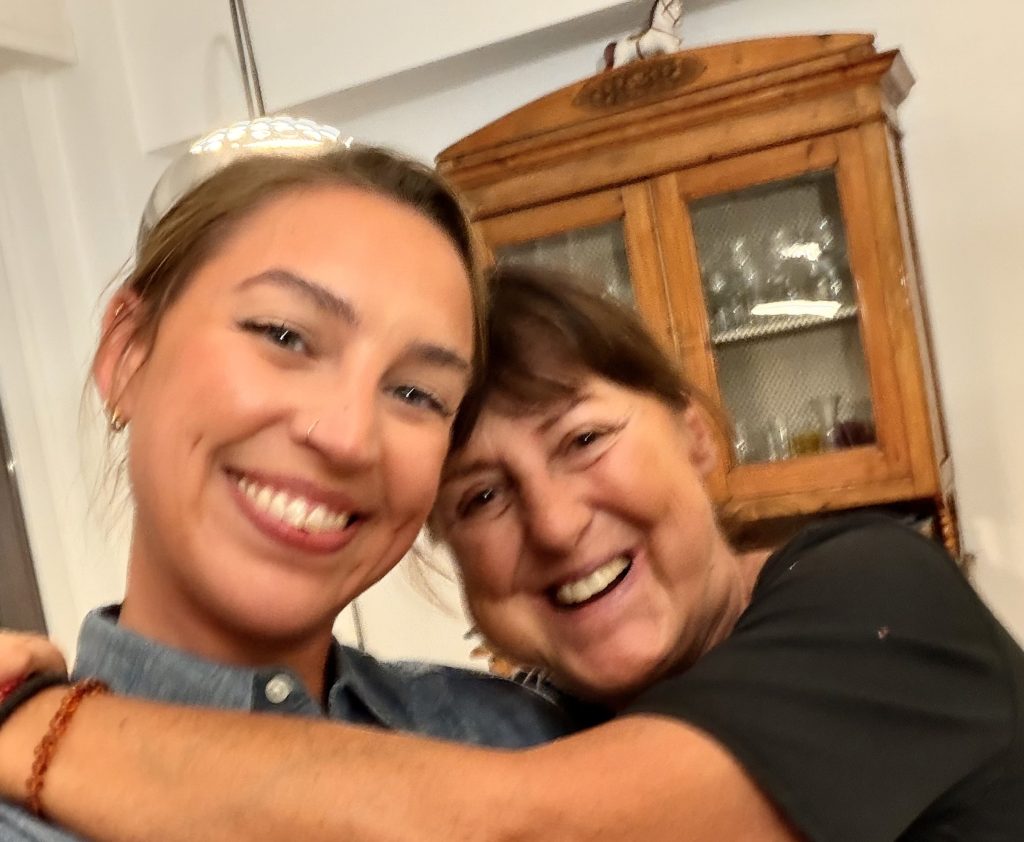
That dream became real when she arrived in Florence and moved in with her host mother, Rita, a widow who lived out past Campo di Marte. In a Florence before smartphones and Wi-Fi, Lauren and her roommate spent long evenings at Rita’s kitchen table, dictionary in hand, trying to explain concepts that don’t translate neatly between languages. “It was really wonderful,” she recalls — one of the formative relationships of her time abroad. Remarkably, Rita is still hosting students today, two decades later.
Like many students, though, Lauren admits she got swept up in the group mentality of her cohort, prioritizing socializing over some of the cultural experiences she’d hoped for. It’s a regret she now shares candidly with her own students: “I wish I spent more time in Florence.” That honesty has become part of what makes her guidance so resonant for the students she advises today.
After graduating in 2009 — into the middle of the financial crash — Lauren spent two years working at a pizzeria before discovering, almost by accident, that graduate study in Italian was even possible. A friend’s Facebook post about being accepted to Middlebury’s Italian master’s program opened a door Lauren didn’t know existed. She enrolled in 2011, spending a second year in Florence — this time, she says, finally finding “her people” among fellow language obsessives in Middlebury’s immersion program.
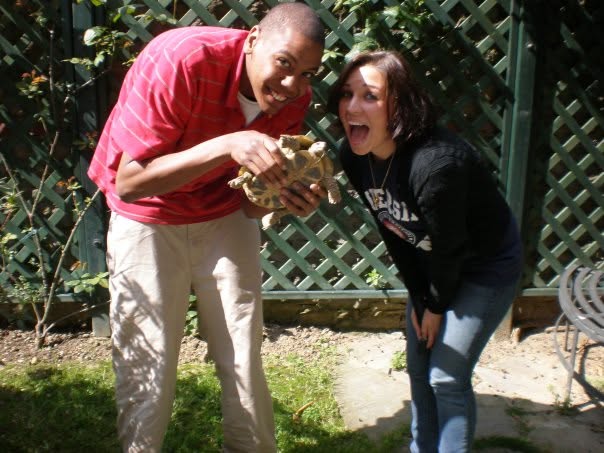
From there, her academic path led to a PhD in Italian Renaissance literature at the University of Wisconsin–Madison, where she specialized in the comedic works of Machiavelli and Aretino. After finishing her doctorate in 2022, she spent a year teaching humanities in Wisconsin’s prison education system — work she calls some of the most rewarding of her career — before an opportunity arose that would bring her story full circle: a position as Assistant Teaching Professor of Italian at Syracuse University.
Since joining the faculty in January 2023, Lauren has worked to change how students see the Italian major, drawing on her own experience of graduating without a clear sense of career direction. She’s helped redesign the curriculum so students build e-portfolios connecting Italian to their broader career goals — writing Italian resumes and cover letters, and researching how language skills intersect with fields from chemistry to biotech. She’s also brought back alumni roundtables, spotlighting graduates working in finance, e-commerce, and international business, to show current students that fluency in Italian is a professional asset, not just a passion project.
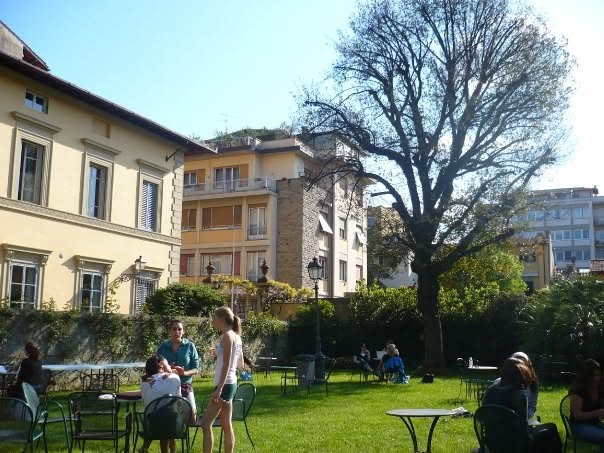
Lauren has also become a bridge between Syracuse’s home campus and the Florence program, working closely with the Florence team to strengthen collaboration and bring her own study-abroad experience to bear on student advising — from housing questions to conversations about identity and belonging while abroad.
Looking back, Lauren describes her journey as a series of doors that opened because she said yes — to a study abroad program, a graduate degree she didn’t know existed, a career change, and eventually, a return to the place where it all began. Her advice to current students echoes that same philosophy: seek out opportunities, don’t get swept up in what everyone else is doing, and understand that a semester in Florence can be the first step in a much longer story.
“Every encounter is a door opening,” she says. “Even this little thing that you say yes to opens some door that you have no idea what connection it might make for you.”