Syracuse Florence is proud to join the 32nd edition of Le Chiavi della Città, an educational initiative promoted by the Comune di Firenze that offers complementary learning opportunities to students, families, and teachers across Florence.
Now in its thirty-second year, Le Chiavi della Città continues to expand its reach, with 597 educational projects designed to enrich the academic experience of students from early childhood programs through secondary school. The initiative provides workshops, laboratories, performances, and guided activities that support schools in fostering creative, responsible, engaged learners. By bringing together institutions across the city, the program strengthens collaboration between schools and the broader community.
Beginning this Spring semester, Syracuse Florence has become part of this growing network through a new project entitled Storytime at Syracuse. Developed in collaboration with local primary schools, the initiative creates opportunities for meaningful interaction between Syracuse students and young learners in the Florentine area.
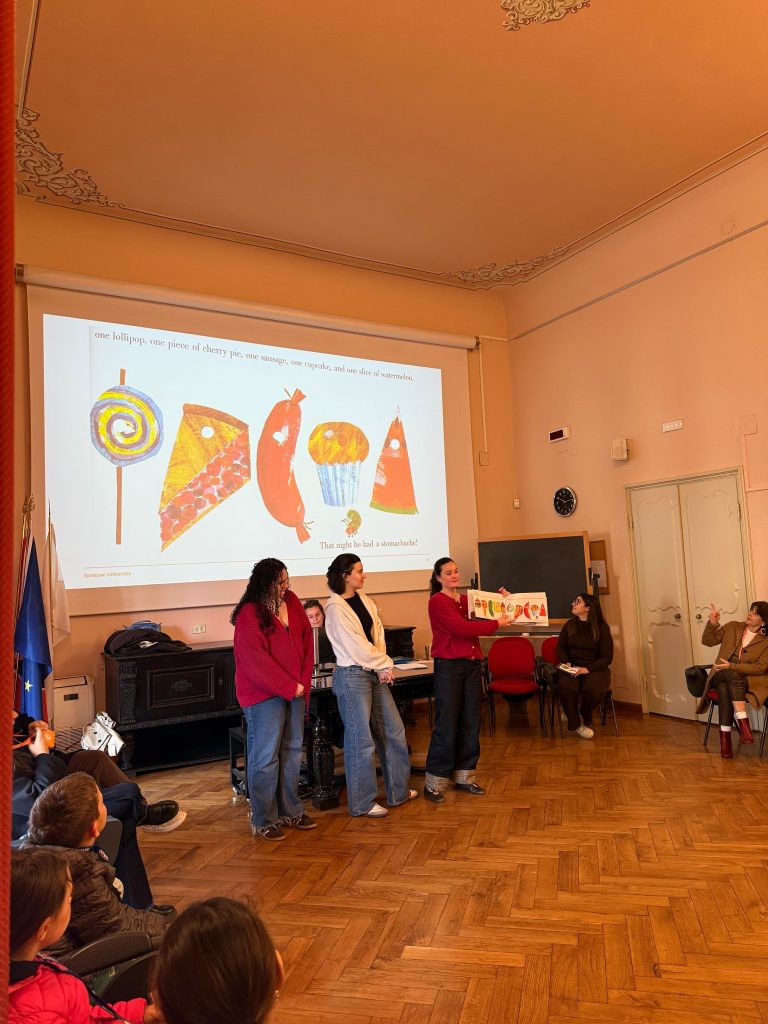
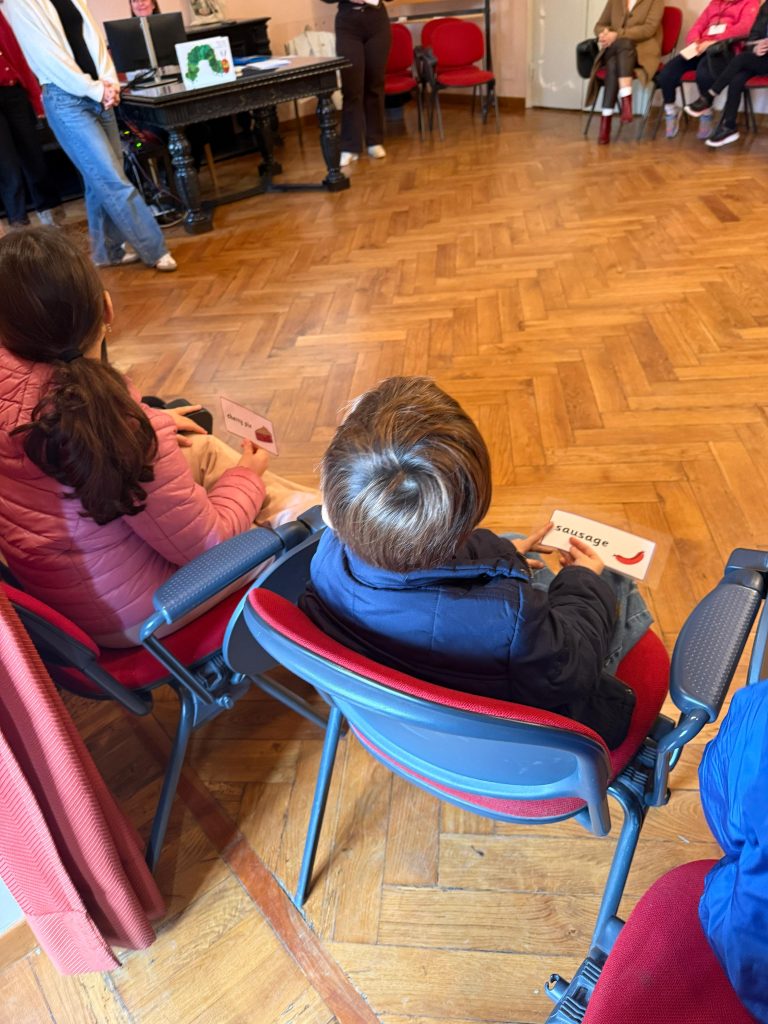
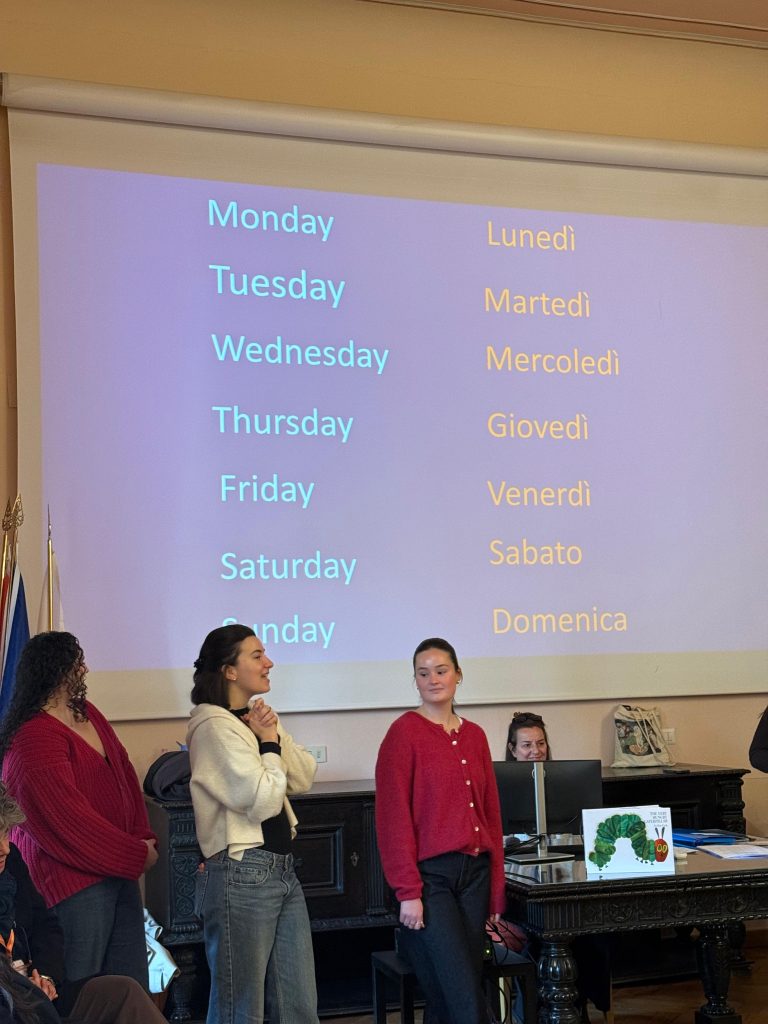
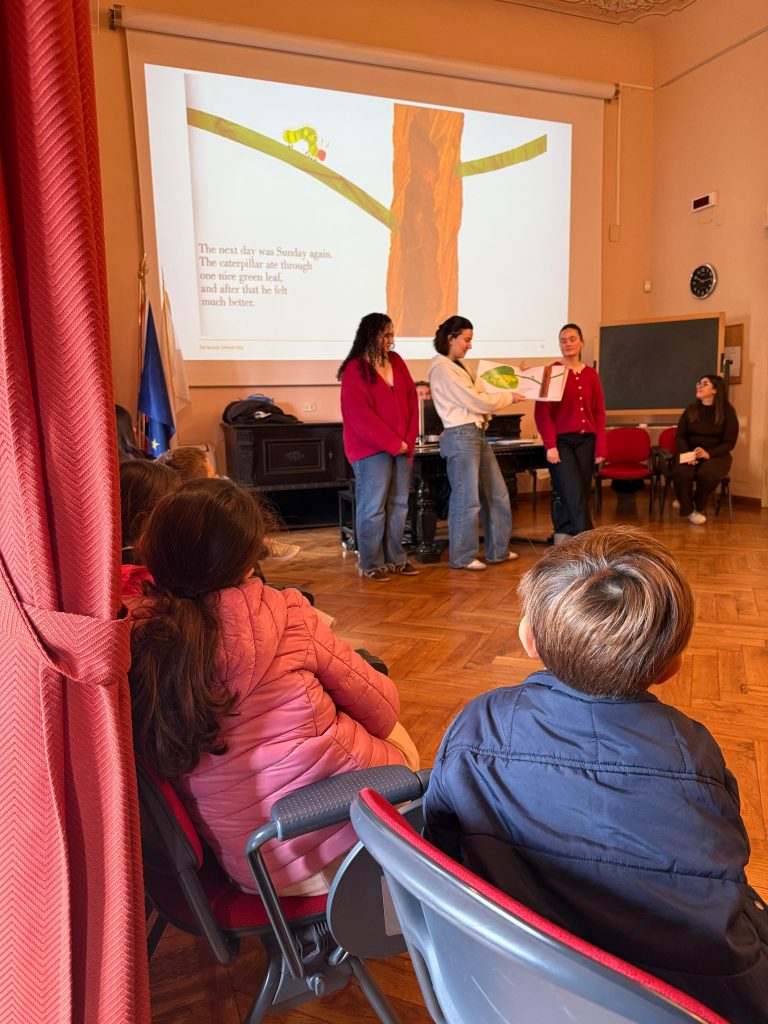
As part of the program, Syracuse students host storytelling sessions centered on the illustrated children’s classic The Very Hungry Caterpillar by Eric Carle. Through guided reading and interactive activities, the sessions introduce children to English in an engaging and accessible format.
The project offers valuable benefits for both groups. For Syracuse students, it represents an opportunity for community engagement and experiential learning, allowing them to apply communication skills in a real-world setting while deepening their cultural immersion. For the participating children, the sessions provide direct exposure to native English speakers and an alternative approach to language learning that complements their classroom instruction.
By contributing to Le Chiavi della Città, Syracuse Florence reaffirms its commitment to active participation in the local community and educational initiatives that foster cross-cultural dialogue and collaboration. The University is honored to support a program that has long played a significant role in the educational life of Florence and looks forward to the next appointments of Le Chiavi della Città and to continuing this meaningful collaboration.
Our language exchange program—revived this semester and rebranded with the special name TALKISSIMO—continues to offer students a way to engage with language beyond the classroom.
On paper, Talkissimo is a language exchange. In practice, it rarely stays that simple.
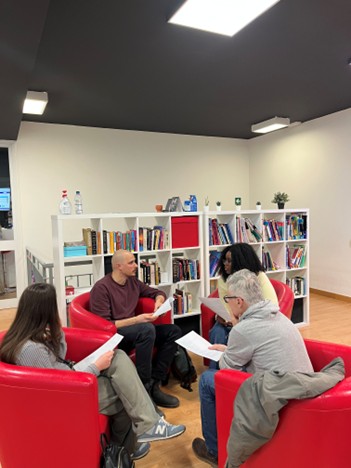
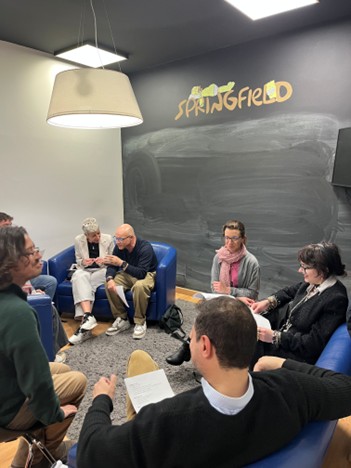
The program brings together Syracuse students studying Italian with local learners working on their English. They meet, sit down, and start talking. There’s no script to follow for long. Conversations drift, overlap, restart. Italian becomes English, then switches back again. At some point, people stop thinking about which language they’re using.
This semester, the program is carried out in partnership with The British Institute of Florence and My English School, two well-established language schools in the city. Both focus strongly on communication and on creating environments where language is actively spoken and tested in real time. That shared approach helps create a setting where the exchange feels immediate and informal from the start.
What makes Talkissimo effective is its balance. Everyone arrives with something to practice, but also something to offer. Our students are looking for a more direct, less filtered way into Italian, while local participants are equally interested in using their English outside of a classroom setting. The result is a conversation that belongs to both sides.
Just as important is who those conversations happen with. Students don’t only meet peers, but people with different routines, perspectives, and life experiences. Those differences shape the conversation itself, making it less predictable and more substantial than a simple exercise.
Alongside the language itself, it is often the smaller moments that stand out. A word that doesn’t come out right and turns into a joke. A story that takes longer to tell than expected. The kind of laughter that comes from not quite understanding something—and then suddenly getting it.
Over time, these exchanges become part of the rhythm of the semester. By the end, what remains is not only a stronger grasp of the language, but also a series of conversations, voices, and encounters tied to a specific time and place.
At Syracuse Florence, we are proud to highlight the growing national and international recognition of our Director, Sasha Perugini, Ph.D., whose work at the intersection of artificial intelligence and study abroad has placed her among the leading voices shaping this conversation in higher education.
A Panel in Bologna to Open the Dialogue
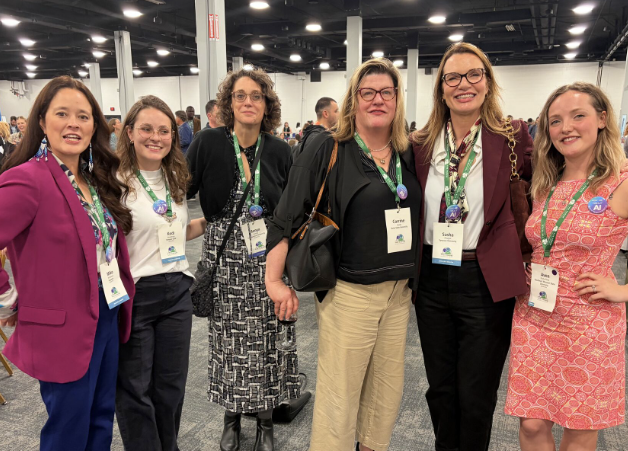
Last November, Perugini led a panel on AI and education abroad at the Forum on Education Abroad European Institute conference in Bologna — one of the field’s most prominent gatherings for European-based practitioners. The panel brought together scholars and professionals to examine how AI is transforming both the practice and the promise of international education. Perugini framed the conversation around two questions that feel increasingly urgent: what does a shifting job market mean for study abroad graduates, and what are the implications of living and learning in a world where the most influential AI tools are shaped almost exclusively within U.S. and Chinese cultural frameworks? Joined by Syracuse Florence colleagues Laura Fenelli and Christine Bakker exploring pedagogy and human rights, the panel offered a rare blend of the practical and the philosophical.
From left: Christine Bakker, Rachael Smith, Laura Fenelli, Sasha Perugini, Gianfranco Borio, and Mario Russo
Insights from the Bologna conference were subsequently gathered and published in a Forum on Education Abroad White Papers collection, extending the reach of that dialogue to a wider professional audience. Her contribution to the published collection argued that study abroad is not merely compatible with an AI-saturated learning environment, but structurally necessary to it — a corrective to the disembodied, algorithmically mediated forms of knowledge that increasingly dominate higher education.
A Practical Toolkit for the Field
Building on those conversations, Perugini co-chaired a Forum on Education Abroad working group that spent several months developing “AI in Education Abroad: Practical Tools for Administrators and Faculty” — a comprehensive toolkit launched in mid-February 2026. Designed specifically for the education abroad community, the resource offers hands-on guidance, practical examples, and ready-to-use prompts to help both faculty and administrators integrate AI tools meaningfully into their work — whether in the classroom, in program design, or in day-to-day operations.
A Voice in the National Conversation
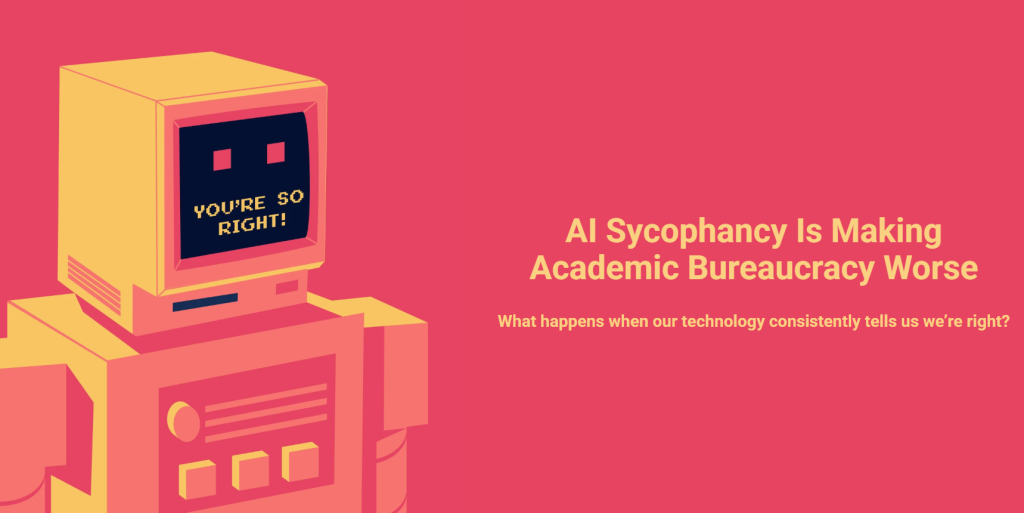
On February 24, 2026, Perugini brought her perspective to an even broader audience with an opinion piece published in the Chronicle of Higher Education — one of the most widely read publications in U.S. higher ed — titled “AI Sycophancy Is Making Academic Bureaucracy Worse.” The piece reflects her ongoing commitment to thinking critically and constructively about where AI is taking our field. A new article, “The Skills Gap and the Advantage of International Education: Rethinking Curriculum and More,” is also forthcoming in April in the EAIE Forum Magazine, the flagship publication of the European Association for International Education.
Hands-On in Nashville
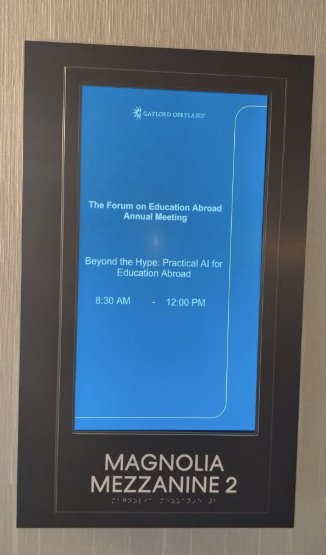
Most recently, Perugini co-led a pre-conference workshop at the Forum on Education Abroad Annual Conference 2026 in Nashville, Tennessee. Held on March 11, “Beyond the Hype: Practical AI for Education Abroad” offered participants direct, hands-on experience with generative AI tools while grounding the conversation in ethics, intercultural competence, and global workforce readiness. Perugini’s contribution focused on bridging AI and cross-cultural competence — helping practitioners identify cultural bias embedded in algorithms and harness AI as a tool for deepening diverse perspectives.
From Bologna to Nashville, and from academic panels to professional toolkits, Sasha Perugini is helping to define what thoughtful, culturally aware AI integration looks like in international education. We are proud to have her leadership reflected not only here in Florence, but across the broader global conversation.
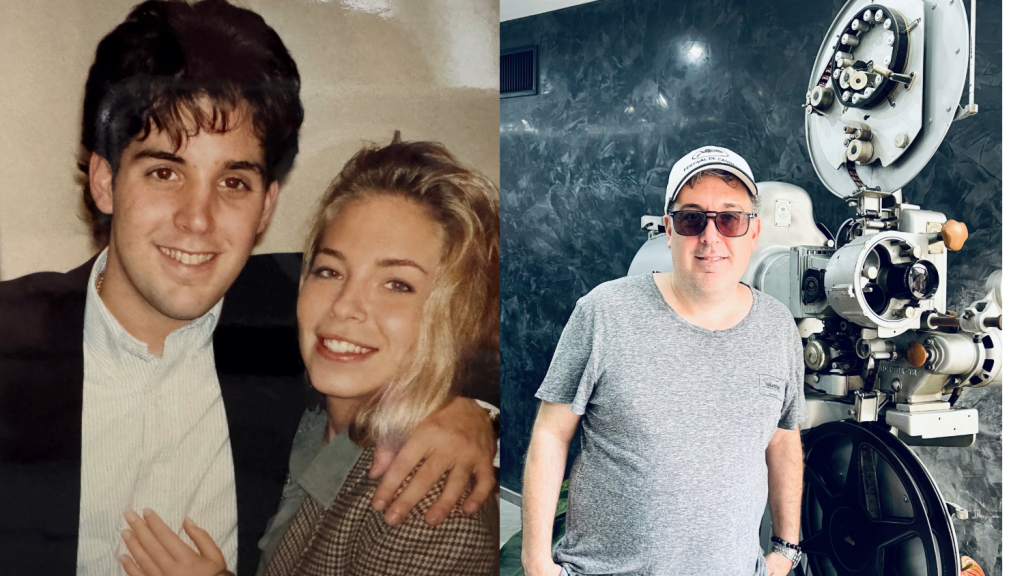
What does a history student with a film minor do with a semester in Florence? If you’re Greg Reitman, you discover the Italian cinema masters, fall in love with storytelling, and spend the next three decades building an award-winning career in film. Now the founder of Blue Water Entertainment — an independent production company whose work spans documentary, narrative, and television — Reitman has made it his mission to create films that matter, tackling everything from social justice and poverty to politics and the environment.
We caught up with Greg to talk bicycles, pazienza, and why returning to Florence to shoot a feature film nearly 30 years later felt like coming full circle.
Please share any funny, strange, or embarrassing anecdotes related to cross-cultural adjustment while you were in Florence.
Like many American students, I initially underestimated just how different daily life would be—from mealtimes to transportation to the pace of everything. I vividly remember realizing that nothing ran on “American time,” and that learning patience was as much a lesson as anything in the classroom. It was humbling, occasionally frustrating, and ultimately transformative.
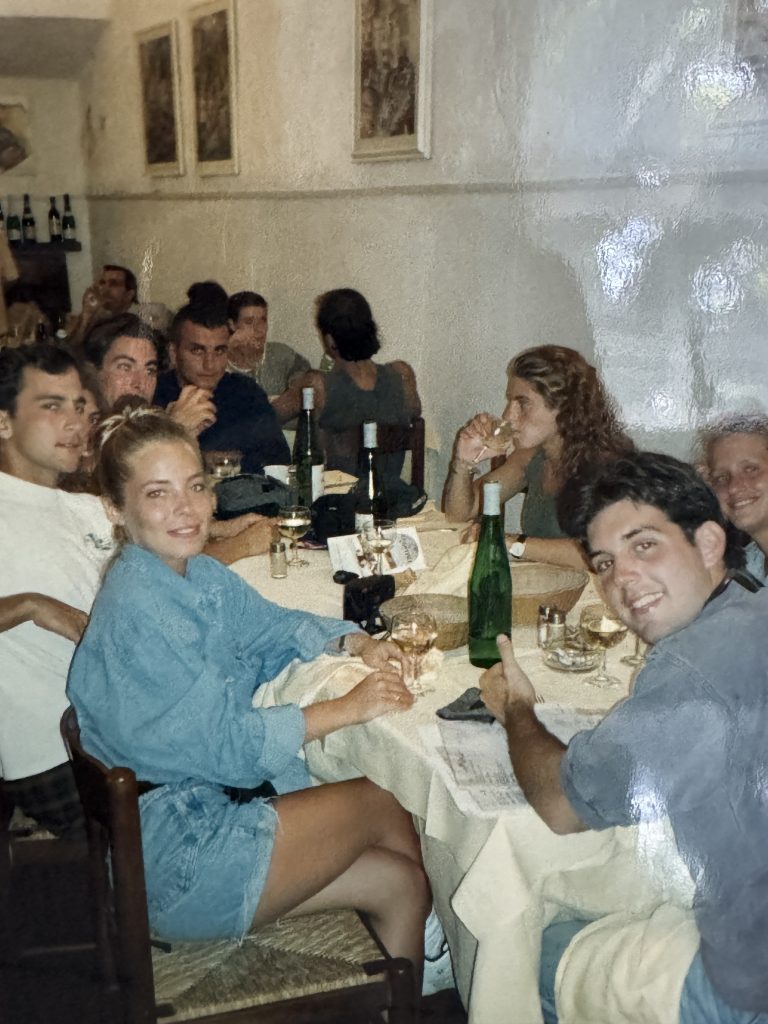
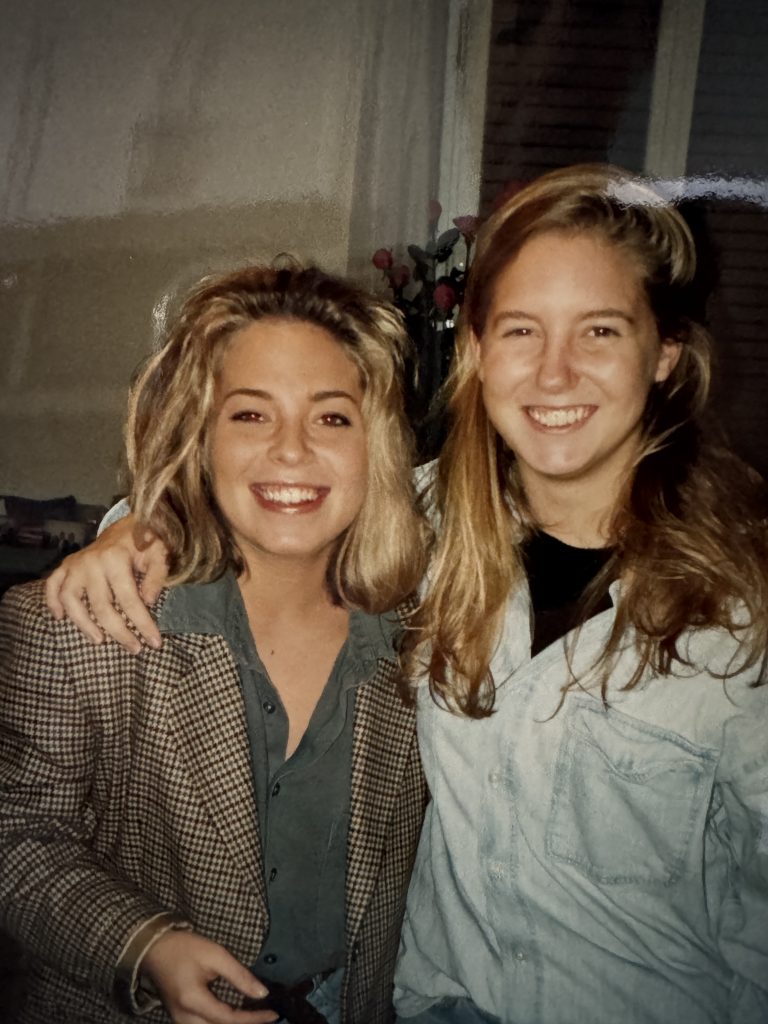
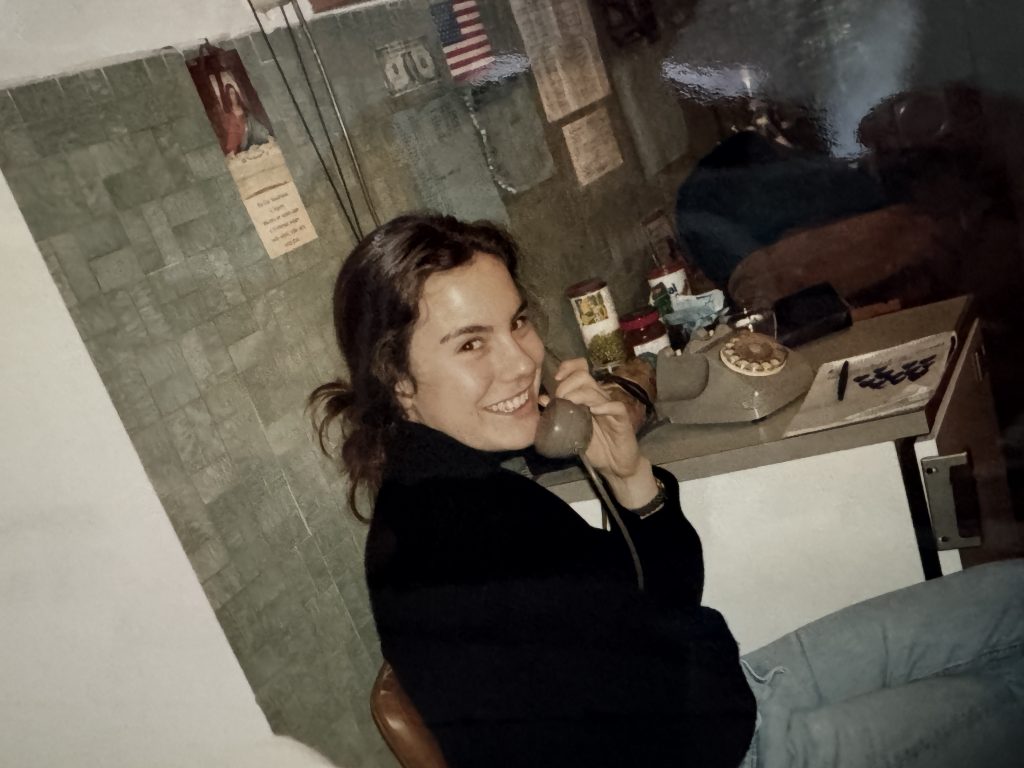
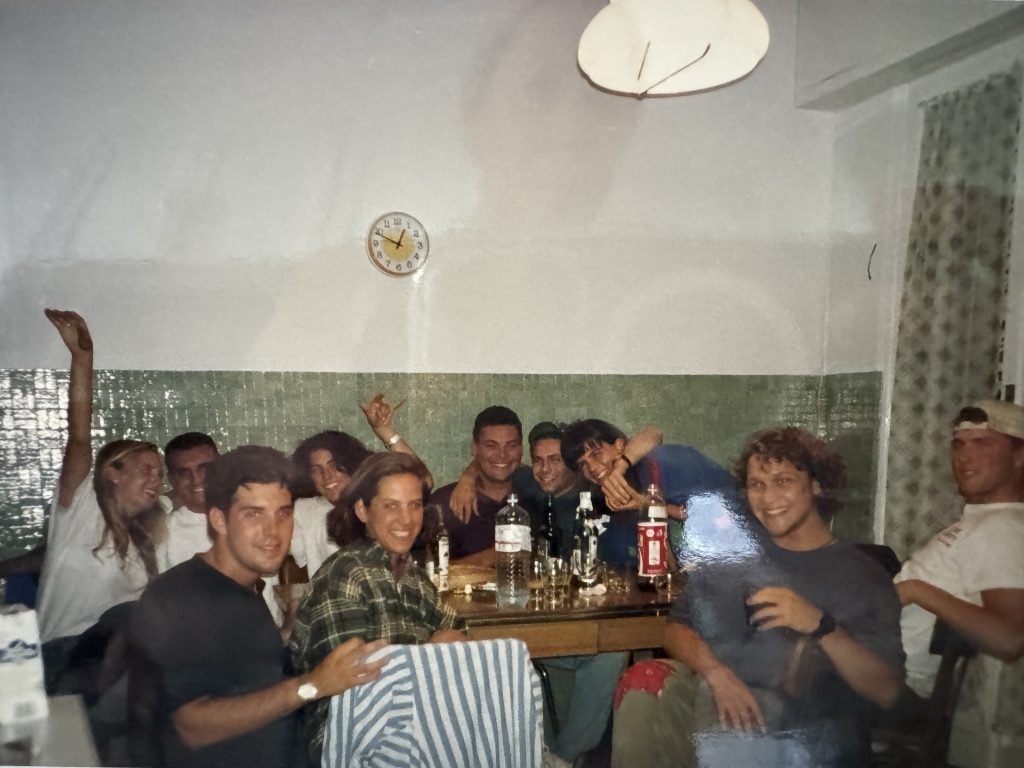
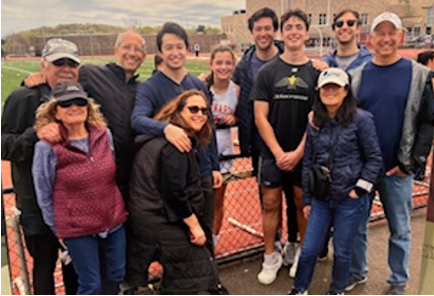
Jennifer Polimeni, Greg Reitman, and “the gang”Jennifer Polimeni and Brinley Schwartz
What was your host family situation like?
My host family was wonderful, but they lived about 45 minutes from campus, which made transportation a real challenge. A bicycle quickly became essential—not just for getting to class, but for fully experiencing the city and gaining independence in a place that rewards exploration.
Greg’s roommate KiaThe Florence gang
What was it like returning to Florence and Villa Rossa?
Returning to Florence nearly 30 years later to shoot on location for the feature film I had once only imagined was completely surreal. It brought back a flood of memories—friends, moments, and formative experiences. Villa Rossa itself felt unfamiliar in some ways; so much had changed that I barely recognized it, yet the emotional connection was still very much there.
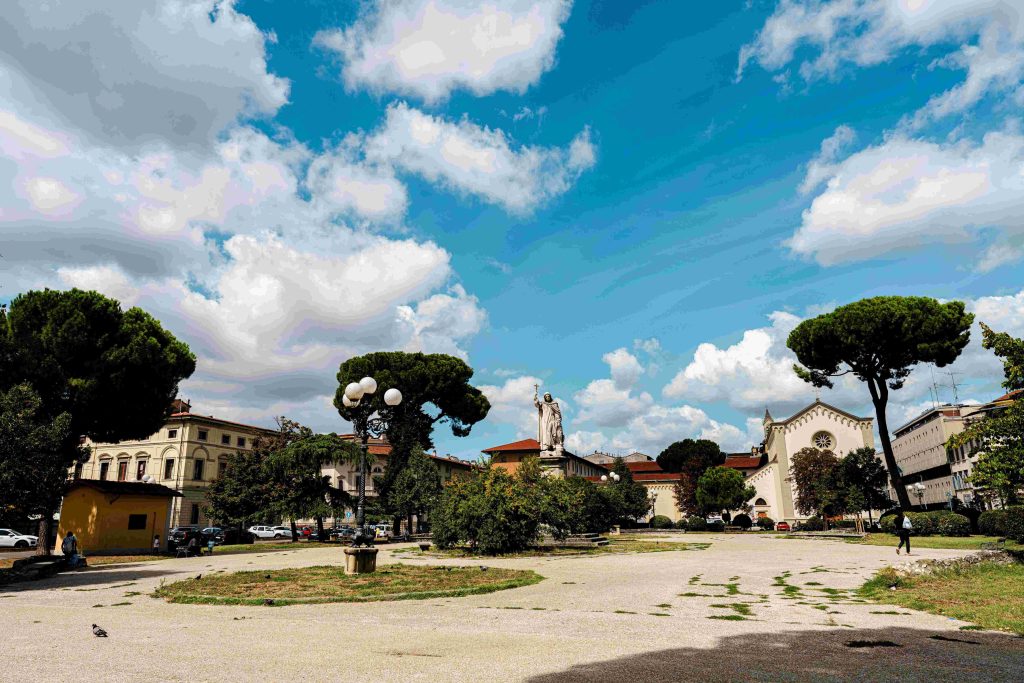
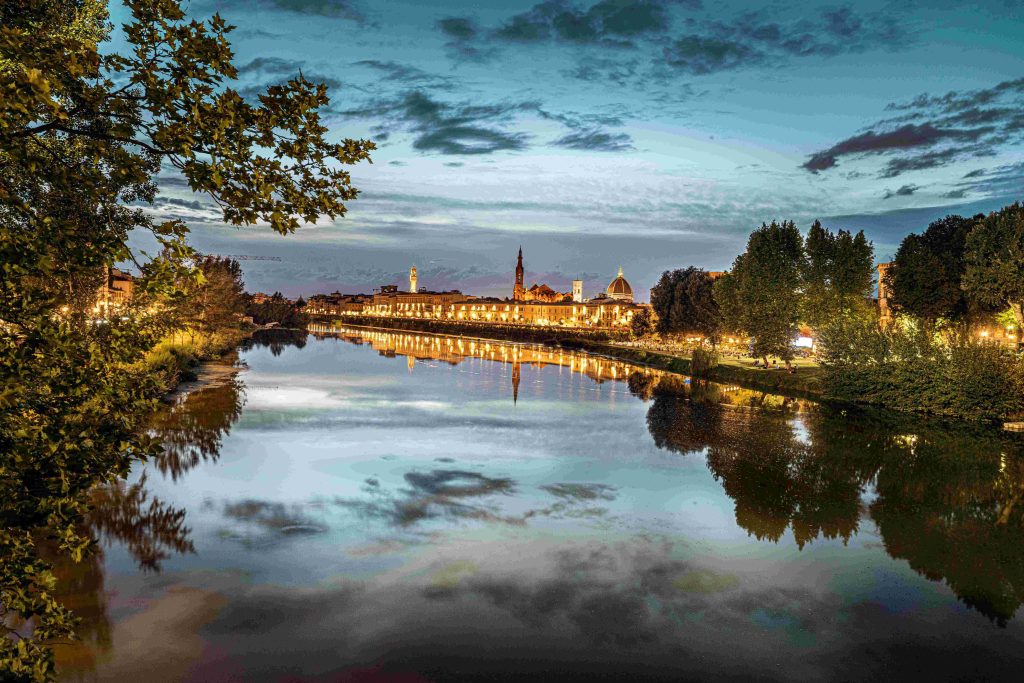
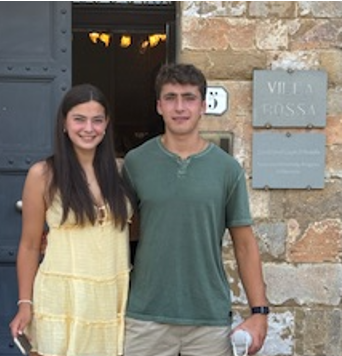
Photos above and below by Johann Haas, on location with Greg in Florence, Summer 2025
You’ve built an impressive career in the film industry since your time in Florence. Did your study abroad experience impact your life afterward?
Absolutely. Studying abroad in Florence changed my life trajectory forever. It was there that I took my first film class and was introduced to the great Italian cinema masters—Vittorio De Sica, Luchino Visconti, Michelangelo Antonioni, Roberto Rossellini, and of course Federico Fellini. That exposure ignited a passion that continues to guide my work today. Florence didn’t just shape my education—it shaped who I became.
Advice for Current Students?
Say yes more often than you say no—especially to experiences that feel unfamiliar or slightly uncomfortable. The moments that challenge you culturally, creatively, or personally are often the ones that shape you the most.
Get outside the classroom. Talk to locals, wander without a plan, sit in cafés, go to museums alone, and observe how people live, move, and tell stories. Those lived experiences will teach you as much as any lecture.
Finally, don’t worry if you don’t yet know your exact path. Pay attention to what excites you, follow your curiosity, and trust that the dots will connect later—often in ways you can’t yet imagine.
Update: Greg’s new screenplay based in Florenceis a quarter finalist for Table Read CANNES; semi-finalists will be announced on March 27.
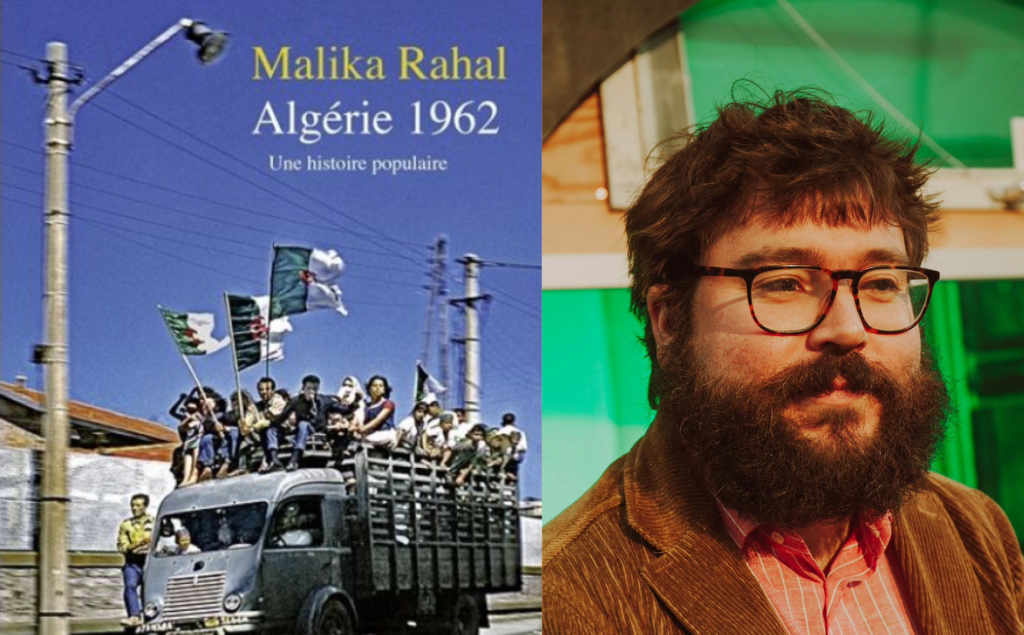
Syracuse Florence is proud to congratulate Professor David Broder, who teaches courses on 20th-Century Europe and Modern Italy at our program, on winning the 2025 Albertine Translation Prize. The prize, awarded annually by Villa Albertine — the French cultural institution in the United States — honors outstanding translators of contemporary French works into English and carries a $5,000 award allocated directly to the translator.
Professor Broder won the prize for his English translation of Malika Rahal’s Algeria 1962: A People’s History, translated from the French Algérie 1962. Une Histoire populaire. The book offers a richly detailed account of the experiences of ordinary Algerians during the turbulent transition from French colonial rule to independence and is forthcoming from Penguin Random House. The award was presented at a ceremony at Villa Albertine’s New York headquarters on February 12, 2026.
David Broder is a Rome-based writer, translator, and historian with a PhD in International History from the London School of Economics, specializing in modern European history. We are delighted to see his work recognized at such a high level, and we look forward to the book’s publication.
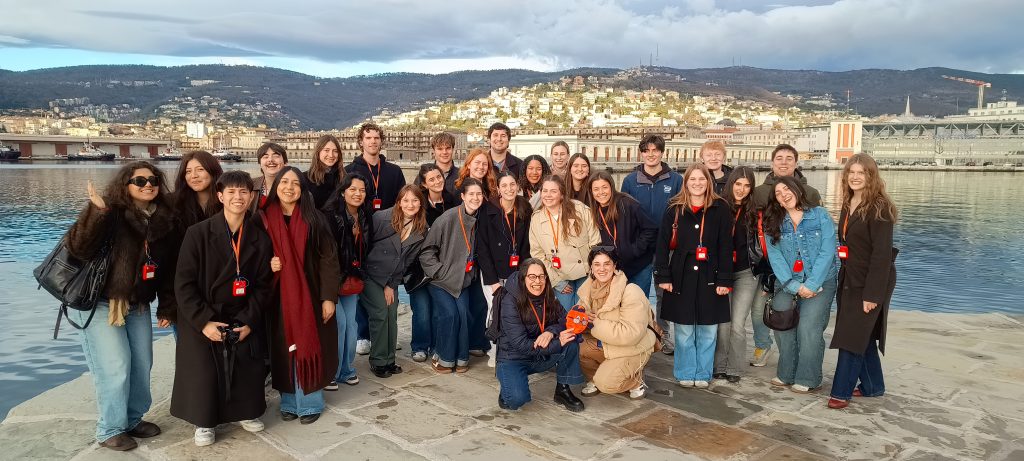
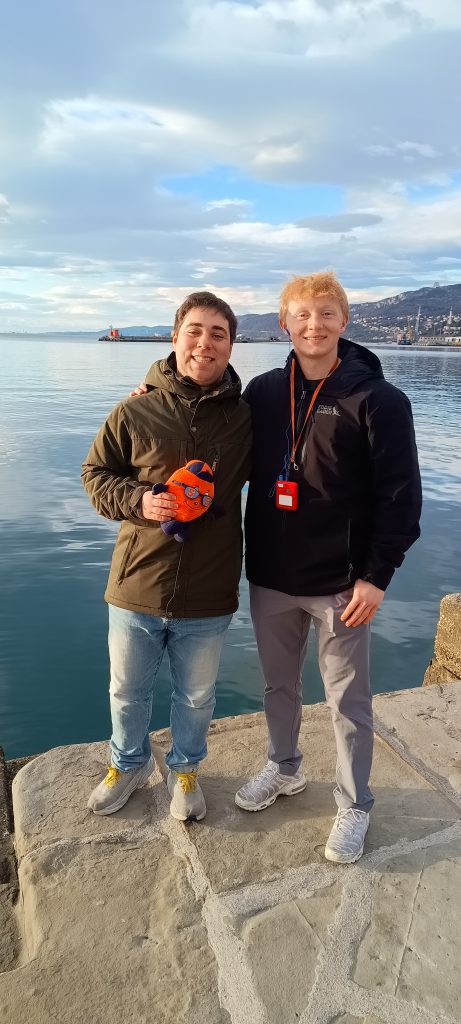
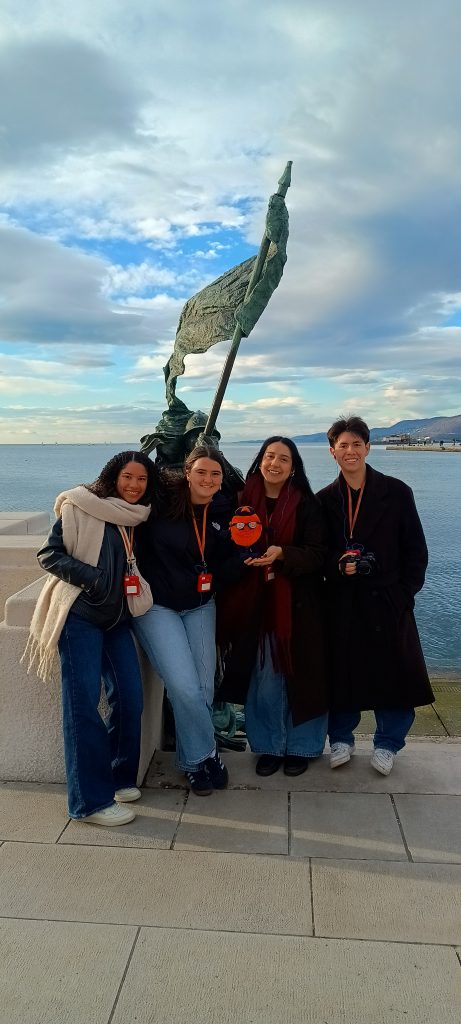
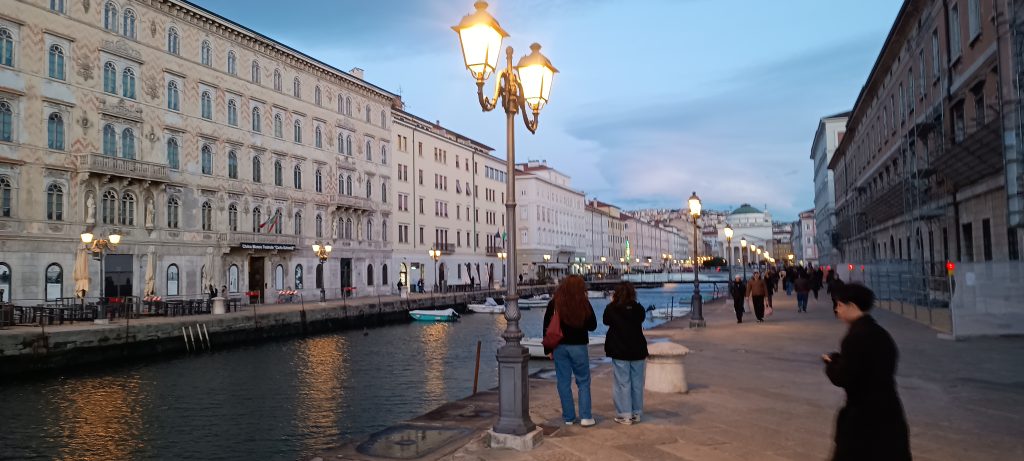
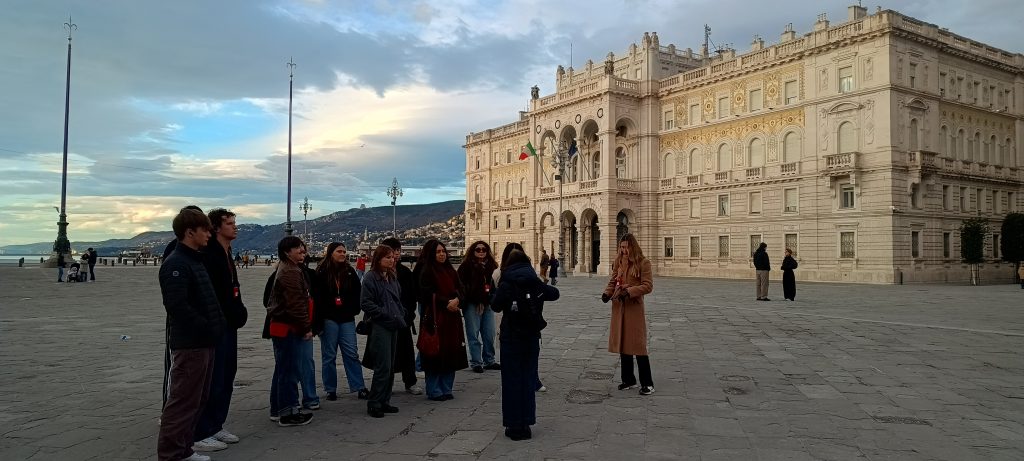
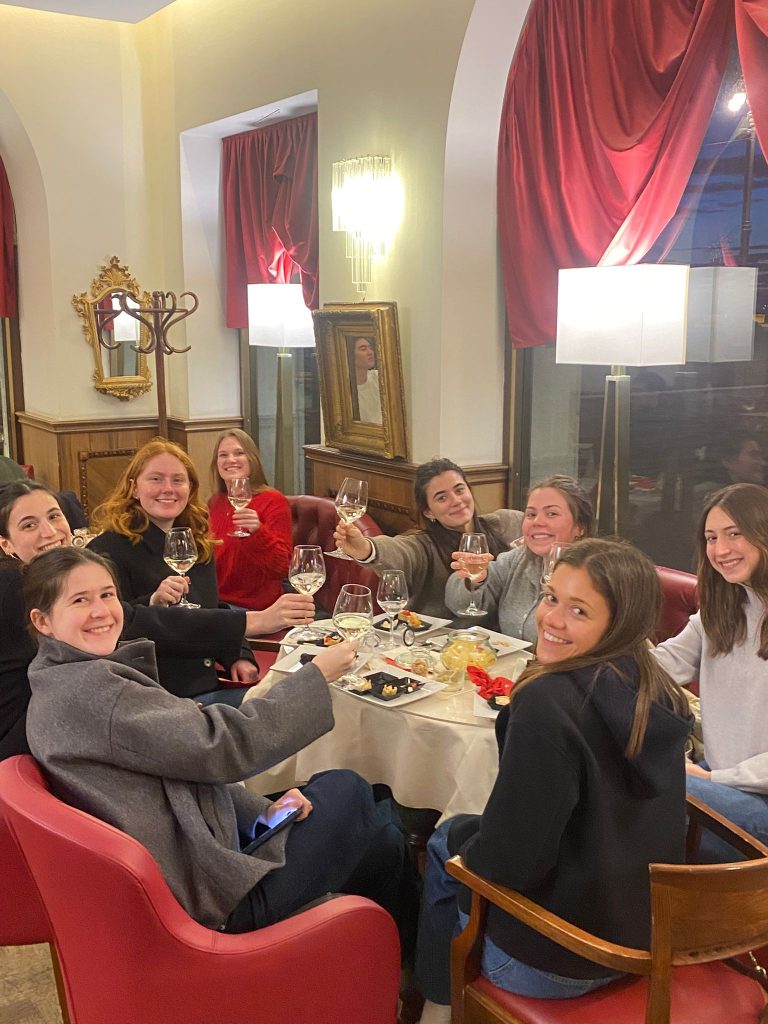
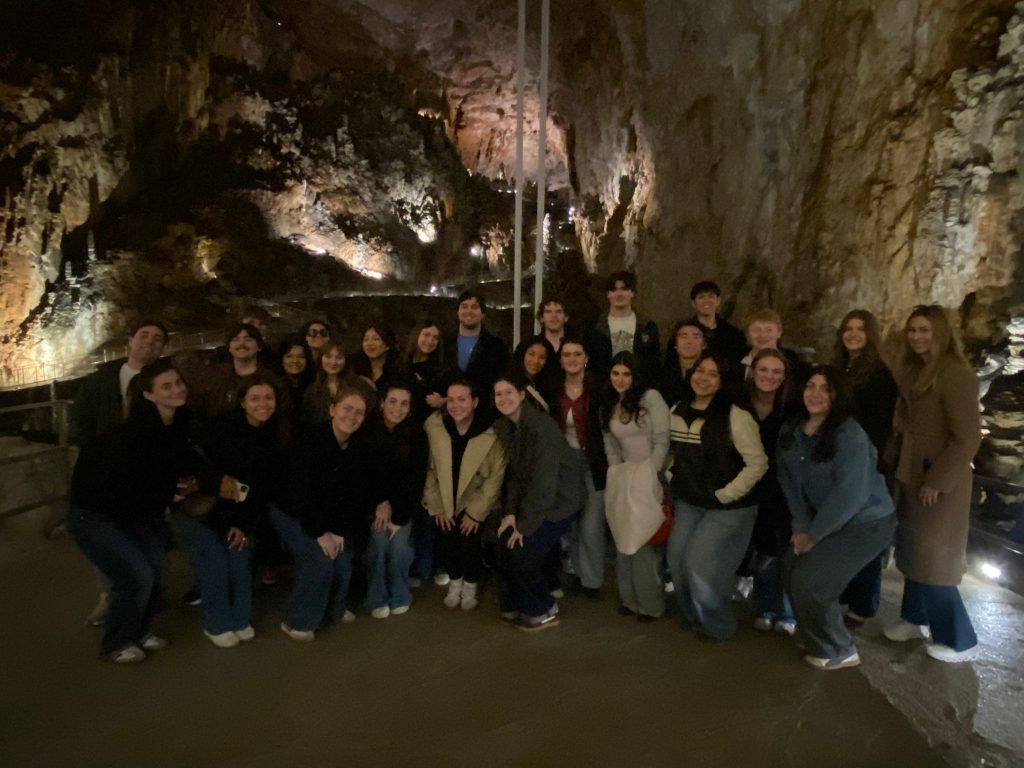
On February 20th, 28 students loaded their baggage onto a private bus and set off on a five-hour journey to Trieste, a historic port city nestled along the Adriatic Sea near the Slovenian border. With stunning waterfront views and a rich blend of Italian, Slavic, and Austro-Hungarian influences, the city offered both beauty and history.
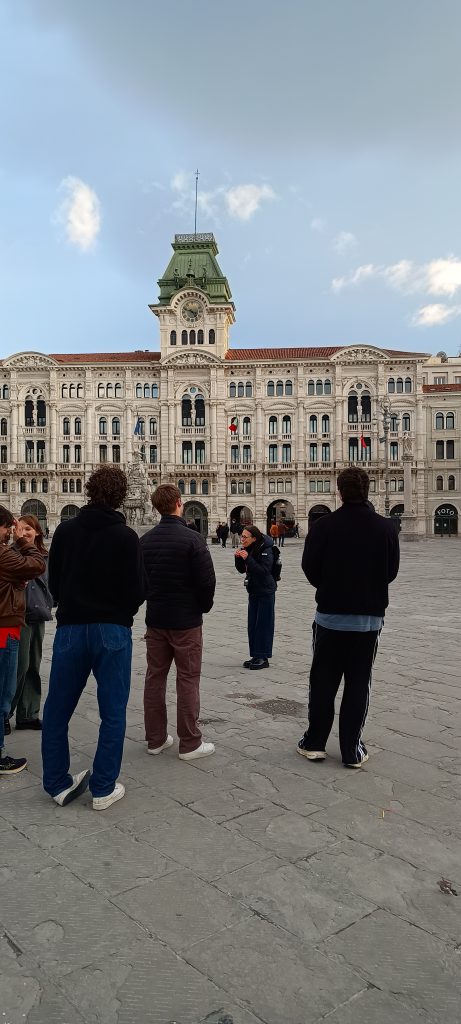
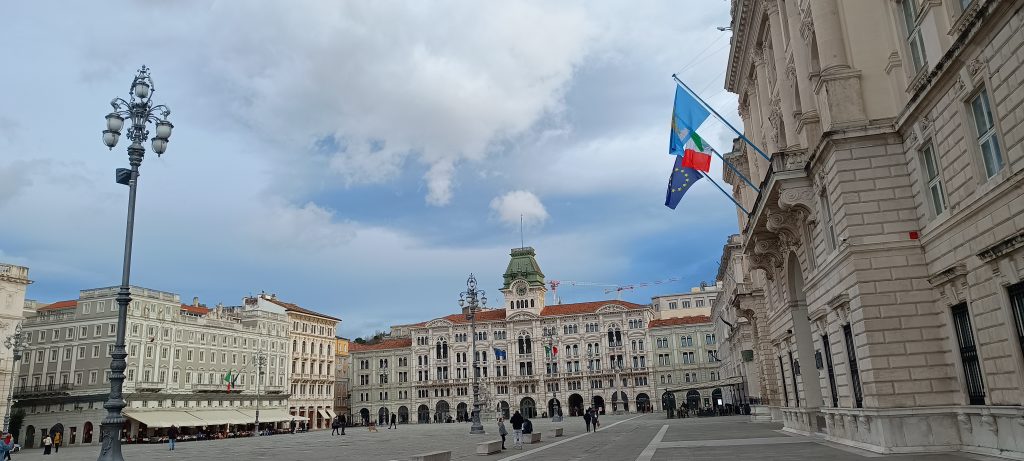
A guided walking tour introduced students to the heart of Trieste, including the magnificent Piazza Unità d’Italia, the largest sea-facing piazza in Europe, spanning approximately 12,280 square meters (about 132,000 square feet). Overlooking the Adriatic, the square provided a breathtaking backdrop for learning about the city’s past.
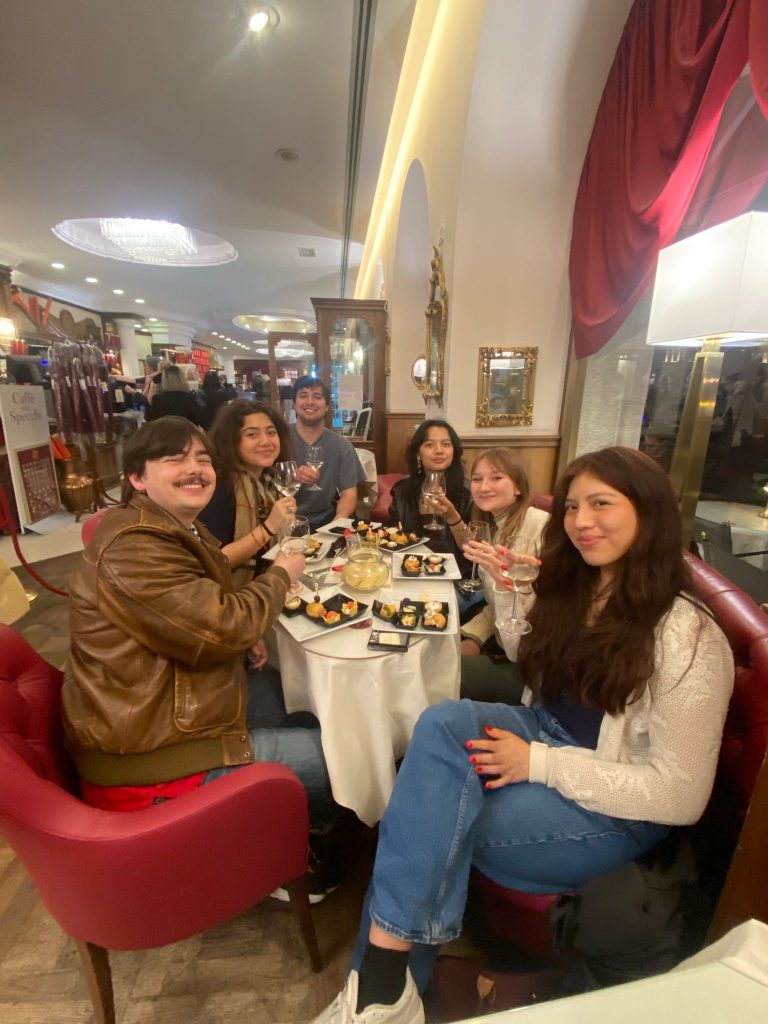
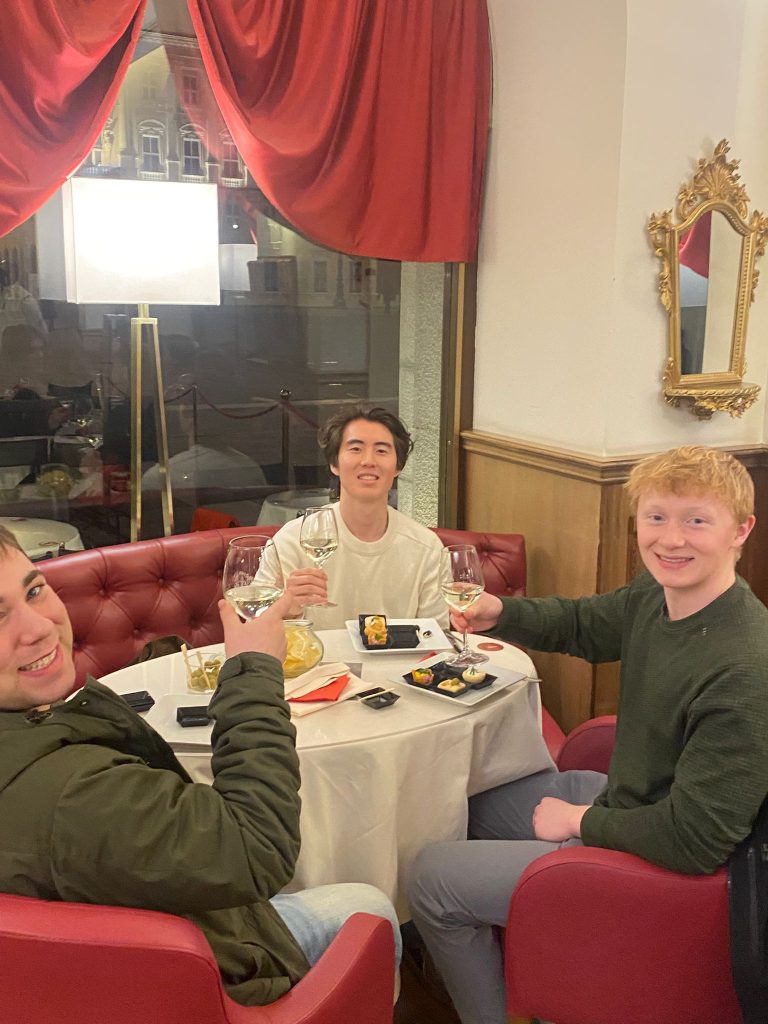
Students also sampled local cuisine, including the traditional “capo in B,” Trieste’s signature espresso served in a small glass, often enjoyed with a rich chocolate treat. They also tasted regional hors d’oeuvres and local prosecco, experiencing firsthand the flavors that define the area.
The adventure continued over 330 feet below the surface with a visit to Grotta Gigante, one of the largest accessible caves in the world and the second largest show cave in Europe. If the immense underground chamber failed to leave students in awe, the 500 steps back to the surface was sure to leave them breathless. Later, the group visited the solemn Risiera di San Sabba memorial, the only Nazi concentration camp on Italian soil, where they reflected on an important and sobering chapter of history.
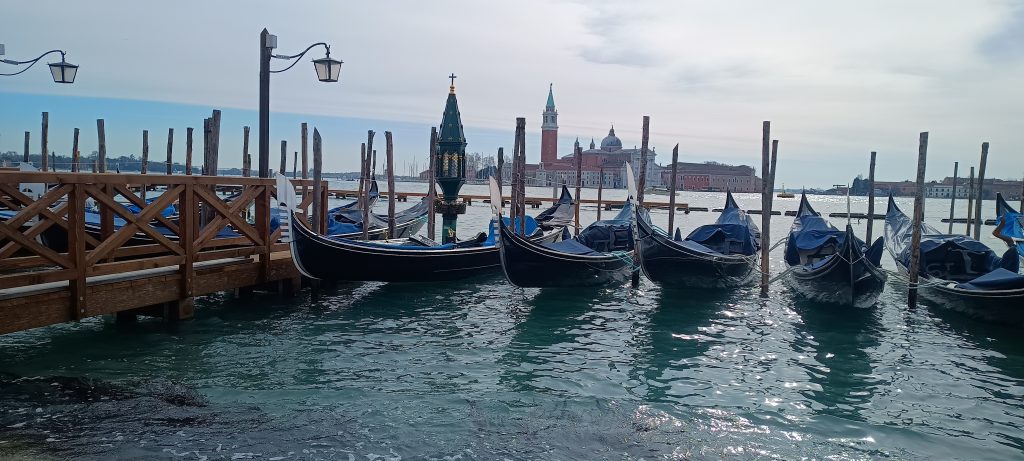
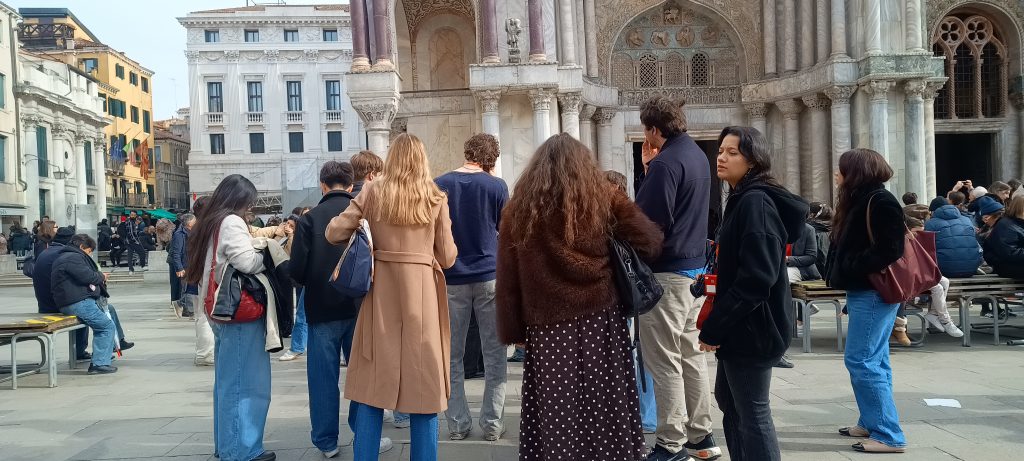
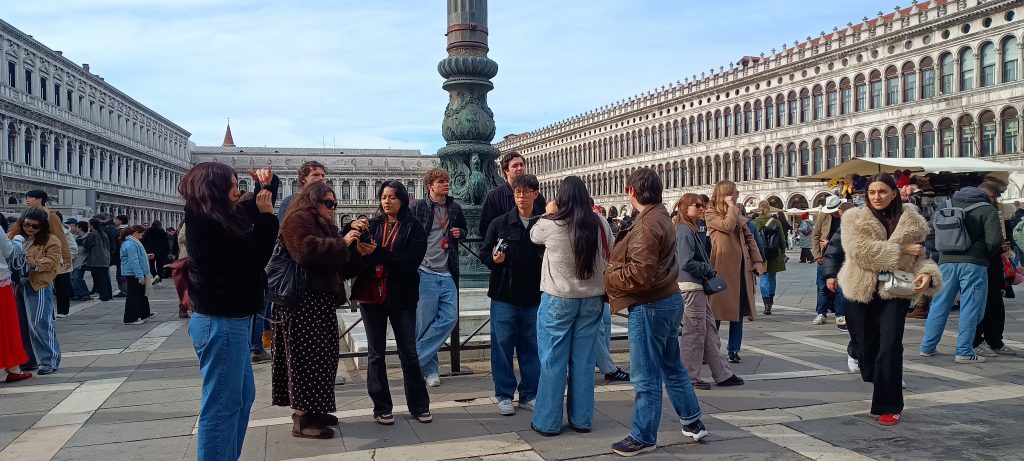
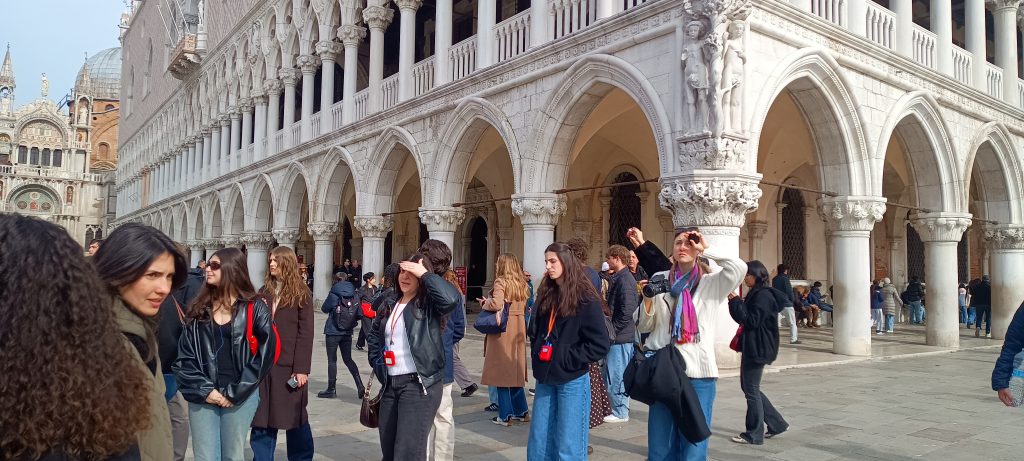
The trip also included a day in Venice. With clear skies and sunshine reflecting off the canals, the city showed itself at its very best. Students spent the morning with their tour guides, learning about Venice’s most significant landmarks and its rich maritime history. From grand piazzas to quiet bridges tucked between narrow buildings, each corner offered something new to discover.
After the guided portion of the day, students had free time to explore on their own. Some wandered through the maze of winding streets, enjoying the sense of adventure that comes with getting slightly lost in Venice’s unique layout. Others sampled fresh Venetian seafood at local restaurants or browsed small shops filled with handmade goods. A few even took the opportunity to experience a traditional gondola ride along the canals, taking in the architecture and atmosphere from the water. The day provided a perfect balance of learning and independent exploration, leaving students as they departed with both dolphin sightings and lasting memories of one of Italy’s most iconic cities.
This February, Florence celebrated Black History Month with a range of exhibitions, screenings, talks, and performances hosted by the Recovery Plan, an educational center founded in 2016 dedicated to researching and preserving the cultural history of afrodescendant cultures.
This year’s theme, Common Time, was designed to reflect on common perceptions of history and break from the patterns that have marginalized the Black Italian community.
Through Syracuse Florence’s internship program, student Abigail Shim has worked with the Recovery Plan to help curate Black History Month exhibits during her semester abroad.
As a studio arts major and a museum studies minor, Shim was excited to gain curatorial experience through an internship. “I was really interested in the art scene in Italy and the museum and gallery scenes, especially because Italy is so known for this historically and today,” she said. “I really wanted to involve myself and get some experience.”
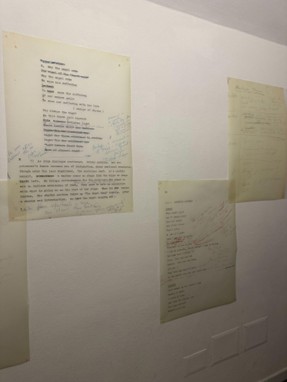
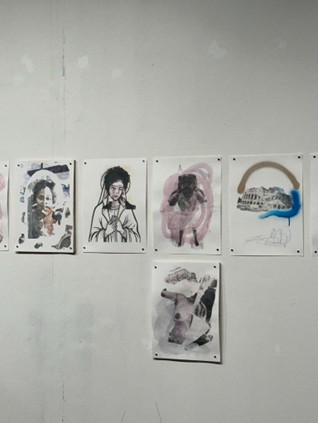
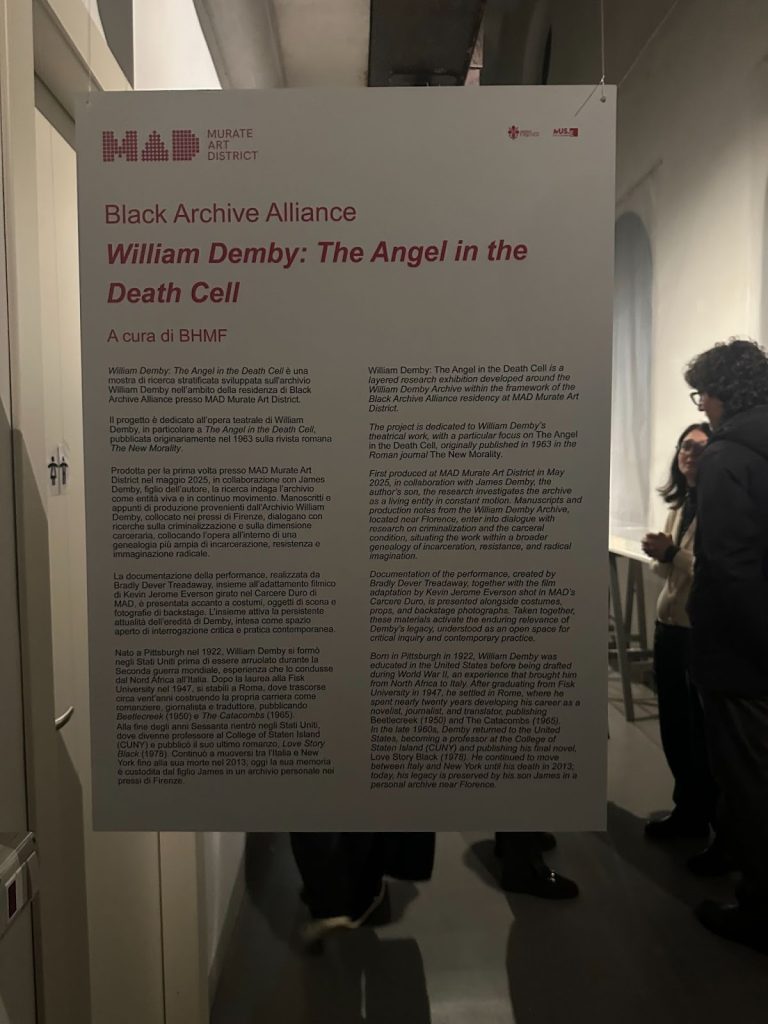
Since January, Shim and three other Syracuse interns have been scanning and digitizing the manuscripts of African American writer William Demby, who spent decades living in Rome. Several of the documents they worked with were recently featured in the Murate Art District show “William Demby: The Angel in the Death Cell,” curated by the Recovery Plan and Black History Month Florence. The exhibition centered on Demby’s theatrical work and his previously unpublished play The Angel in the Death Cell.
Justin Randolph Thompson, co-founder of the Recovery Plan, conducted extensive research on the play in question. Shim had the opportunity to design and organize a table for the exhibit that displayed Thompson’s research, giving attendees insight into the significance of Demby’s work and his life in Italy.
Through this hands-on role, Shim said she developed both professional experience and a meaningful connection to the city of Florence. “I feel like when you’re a student here, it’s like you’re not really in the community,” she said. “So I’m really grateful for being able to experience that through my internship.”
This is the last of the love stories we are sharing to celebrate this romantic month. See the other two here and here.
Some love stories begin with a glance across a crowded room. This one began with a voyage across the Atlantic Ocean.
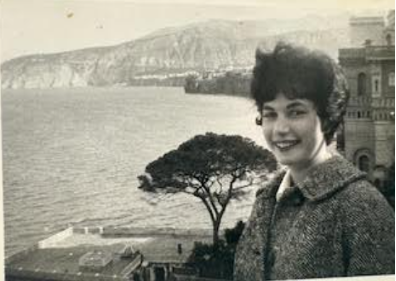
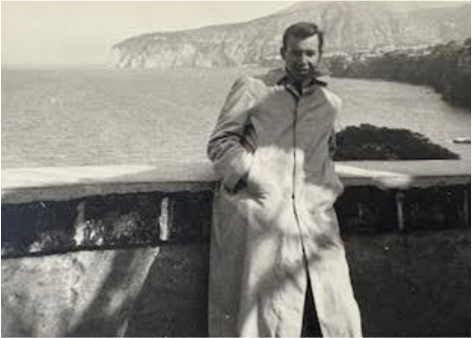
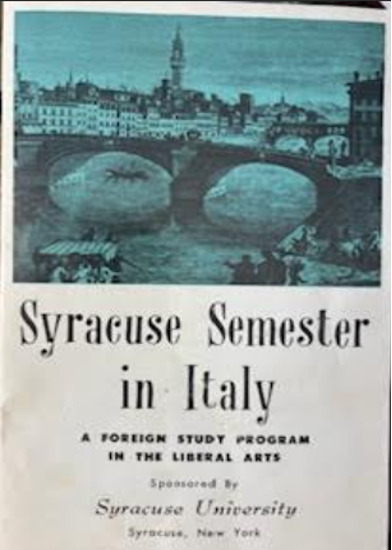
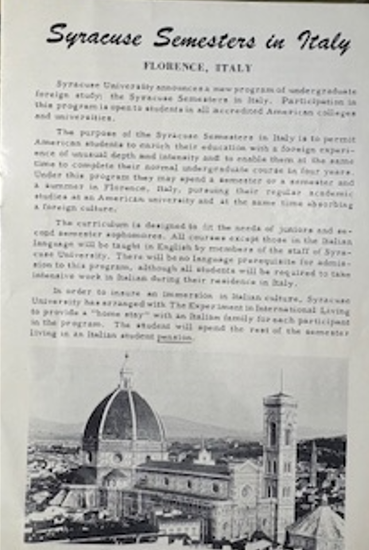
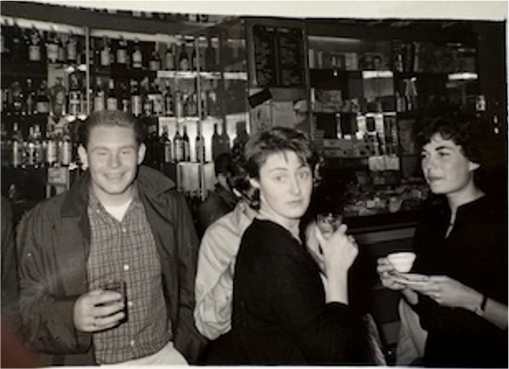
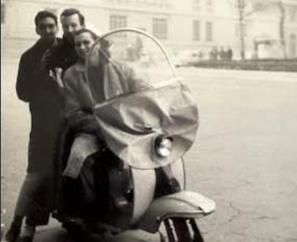
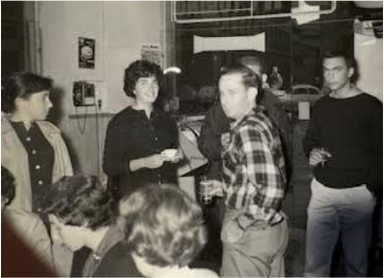
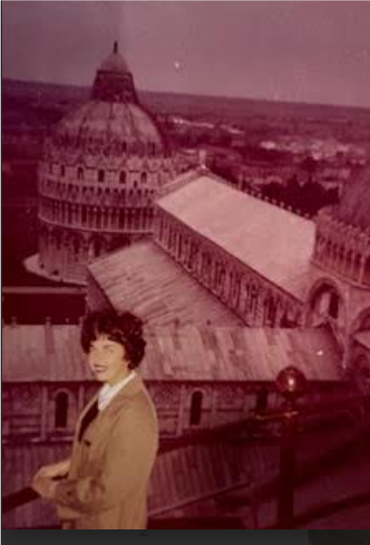
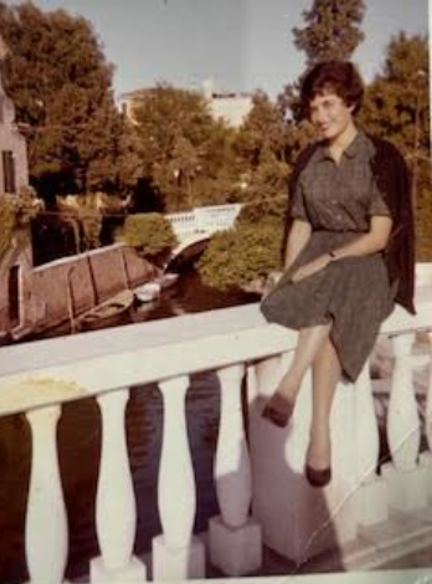
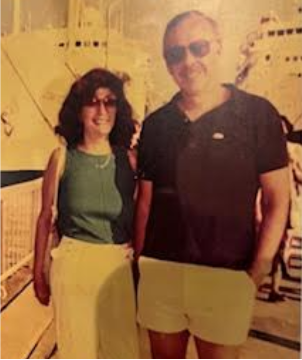
In the fall of 1959, two young students — Marilyn Kaufman from the Philadelphia suburbs and Yale Lazris from North Bergen, New Jersey — boarded the Irpinia in Montreal along with roughly thirty fellow Syracuse University students, bound for Florence, Italy. They were part of something entirely new: the very first class of what would become one of the most beloved study abroad programs in the U.S. Studying in Europe was a rare and daring thing in the 1950s, and for Marilyn, even getting there required a small act of faith from her family. “As a girl, I was surprised — stunned, really — that my parents even allowed me to go,” she recalls. “It was truly unusual at that time.”
Eleven days at sea gave the group time to study Italian, absorb the culture, and begin to find each other. It was on that ship that Marilyn first noticed Yale. “He was always engaging and entertaining to all,” she says warmly. By the time the Irpinia docked and Florence revealed itself, something between them had quietly begun to take shape.
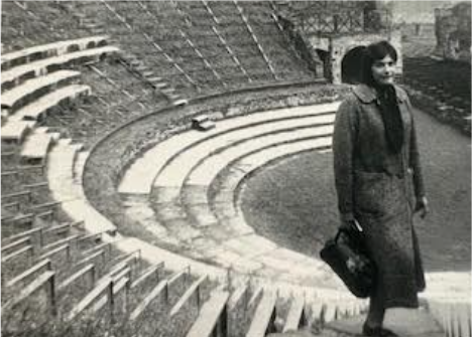
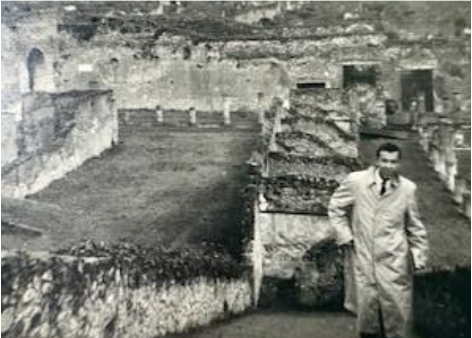
Together they took in everything the city offered — the food, the music, the art, the light. They ventured beyond Florence too, darting off to Pompeii, Sorrento, and Capri, catching operas and chasing Italy’s endless treasures. Yale threw himself into speaking Italian with characteristic fearlessness, ordering with great confidence and receiving, on at least one memorable occasion, a plate full of grapes when he had asked for eggs. He didn’t miss a beat.
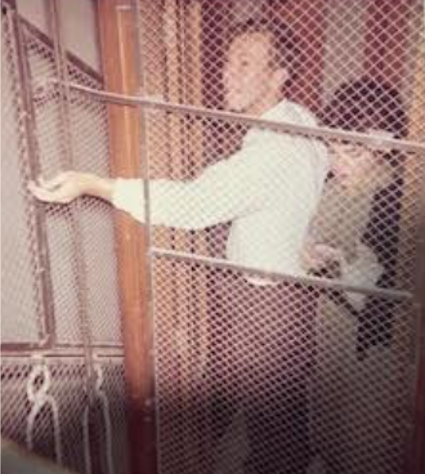
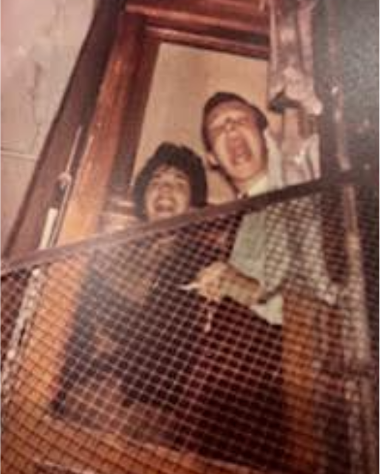
Florence in 1959 had its own rules of propriety. It was not considered acceptable for a young man and woman to be alone together, which made one particular moment all the more memorable: Yale was escorting Marilyn to her floor in the pension’s open elevator when it lurched to a stop — stuck between floors. It took quite a while for anyone to come to their rescue. One imagines they managed to pass the time.
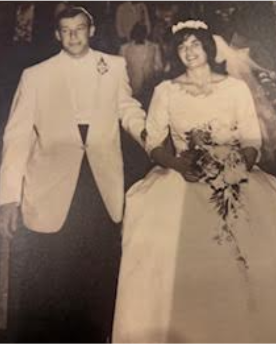
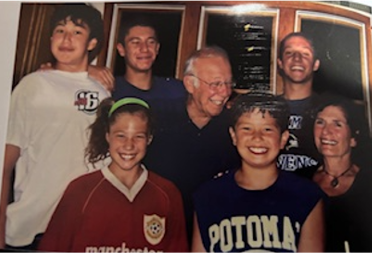
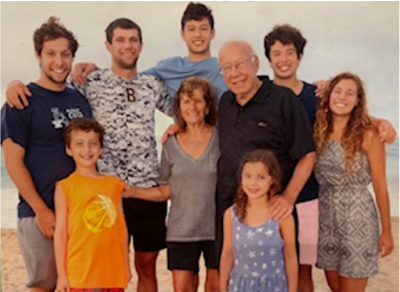
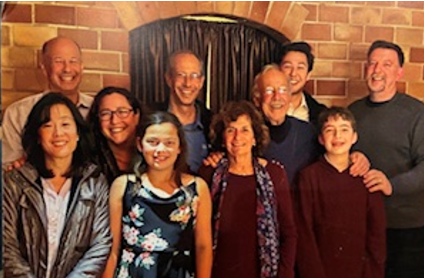
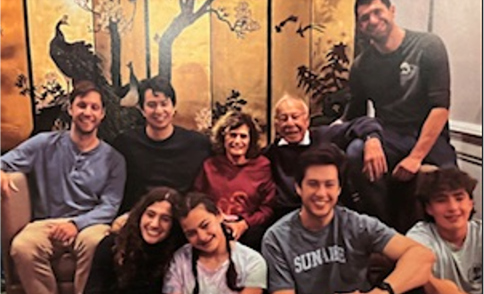
When the semester ended, they sailed home aboard the Queen Elizabeth — rougher seas this time, but that hardly mattered. Florence had already done its work. Back at Syracuse for their senior year, Marilyn and Yale began dating in earnest. They graduated, became engaged, and within a year were married. Their wedding was filled with friends from Florence, friends who would remain part of their lives for decades to come.
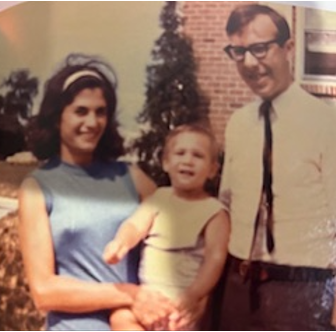
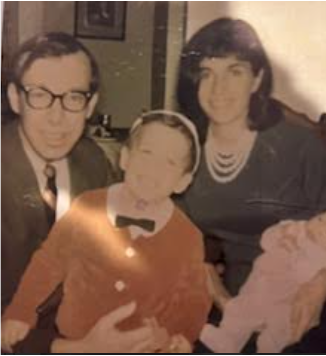
Yale went on to study law at the University of Pennsylvania and built a career as an attorney. Marilyn pursued her passion for Art Education and became a teacher. Together they built a home, a family, and a life in which Florence was always present — literally so, with prints of the city on their walls that Yale made a point of showing their children and grandchildren, telling the stories again and again.
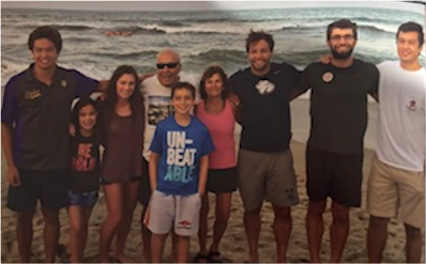
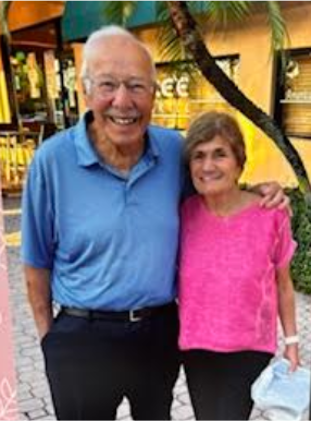
“Everything or anything to do with travels in Italy and around the world made my parents exuberant, energized, and simply happy,” their daughter Kim recalls. That love was contagious. All three of their children — Andy, Mitch, and Kim — traveled to Italy between high school and college, Florence a non-negotiable stop. All three, in turn, brought their own children — seven grandchildren in total — to Italy as well, almost like a pilgrimage. Kim’s family visited Villa Rossa just last summer, in 2025. “Our kids loved walking in their grandparents’ footsteps,” she says.
Kim herself studied abroad through Syracuse — in Madrid — and her father, remarkably, knew the very professor who led her program. Marilyn and Yale came to visit her there and went on to adventure through Spain together. “In the spirit of travel,” as Kim put it. That spirit, she says, is one of the greatest gifts her parents ever gave their family.
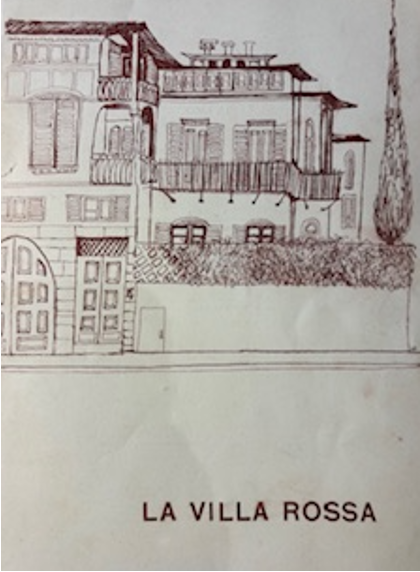
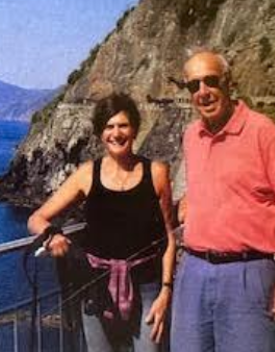
Marilyn and Yale returned to Florence and Italy many times over the years, falling in love with it again on every visit. In 2009, fifty years after their grand adventure began, they walked back through the doors of Villa Rossa together.
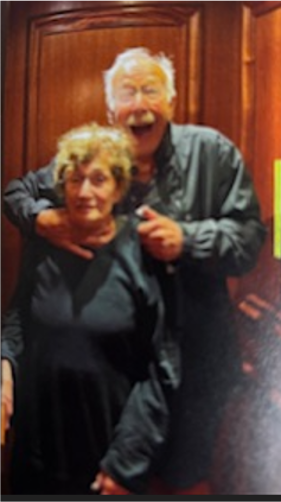
Yale Lazris passed away in December 2024. At his Celebration of Life, two of his Florence friends from that inaugural 1959 class — Joe Rosenberg and Mel Ronick — rose to speak. That the friendships forged during eleven days on the Irpinia and one semester at Villa Rossa lasted a lifetime says everything.
“Our time in Florence at Villa Rossa was a highlight in our lives and in our relationship,” Marilyn says. “Florence was always with us.”
It still is.
Do you have a Villa Rossa love story to share? We’d love to hear from you: flralumni@syr.edu.
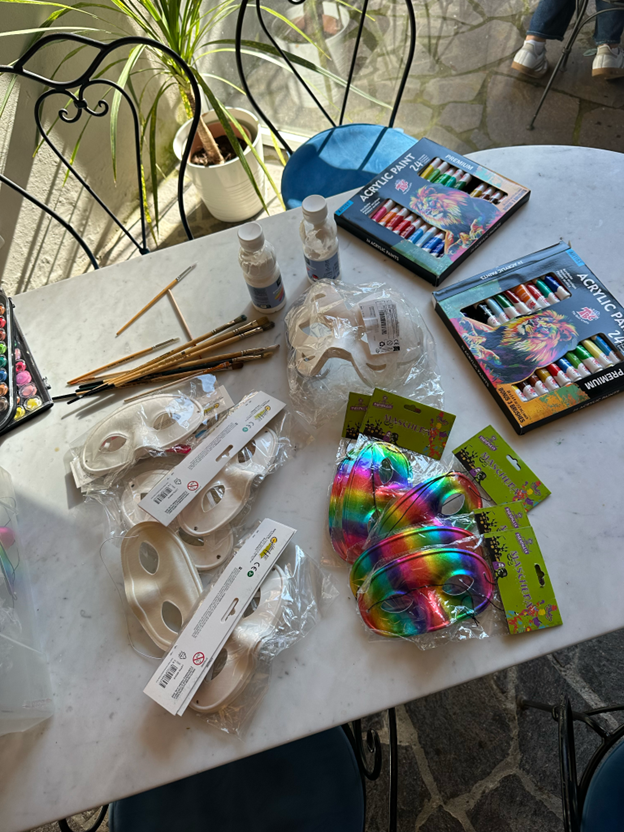
On February 17, Syracuse Florence celebrated the end of Carnevale with delicious delicacies and do-it-yourself mask decorating in the Limonaia (the seating area between the cafe and the garden) of Villa Rossa. “Carnevale is very important for Italian culture,” said Giulia Ricciardi, Syracuse Florence’s Student Experience Manager. “I wanted to bring a piece of the Florentine culture here for students to connect with.”
Carnevale’s origins trace back to ancient Greek and Roman pagan festivals like Saturnalia that celebrated the arrival of spring. Later, these traditions transformed into a final period of celebration and indulgence before Lent, the traditional Catholic 40-day period of prayer and fasting when meat, fats, and sugar were forbidden. In fact, the term Carnevale stems from the ancient Latin meaning “farewell to meat.”
Today, Carnevale is celebrated all throughout Italy, with the most famous festivities taking place in Venice and Viareggio. These parties, filled with eating, drinking, masks, parades, and merriment, all culminate on Fat Tuesday, the day before Lent starts.
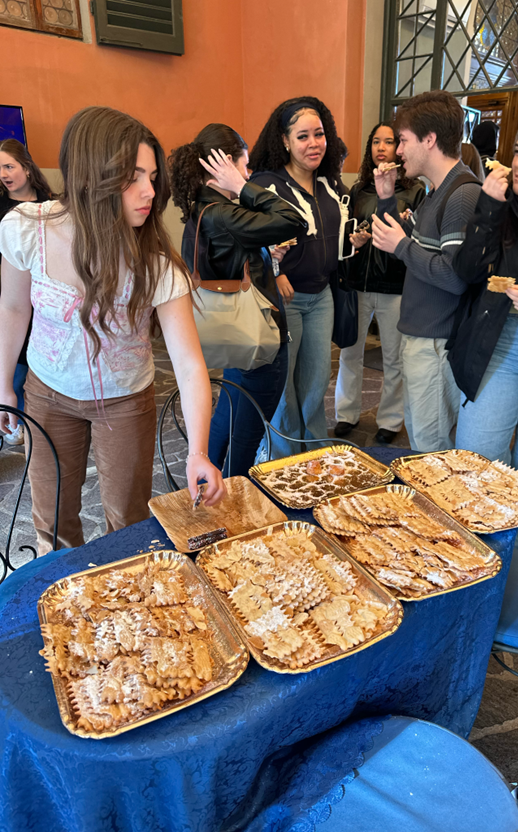
At Syracuse’s own celebration, trays of treats like fried dough cenci and fritelle di riso (sweet rice fritters) offered a taste of traditional Carnevale flavors. As they snacked, students had the option to paint a white mask or grab a colorful one to wear at other Carnevale events throughout Florence. “It’s a way for students to bring back something, not just food, as a souvenir of the Carnevale,” Ricciardi said.
Historically, masks were a defining symbol of Carnevale that allowed people from all social classes to celebrate together while keeping their identities hidden. Today, they continue to represent the creativity and over-the-top tradition Carnevale is famous for. Ricciardi plans to give students a chance to try to even more traditional sweets on the next “Typical Tuesday,” a monthly campus event.
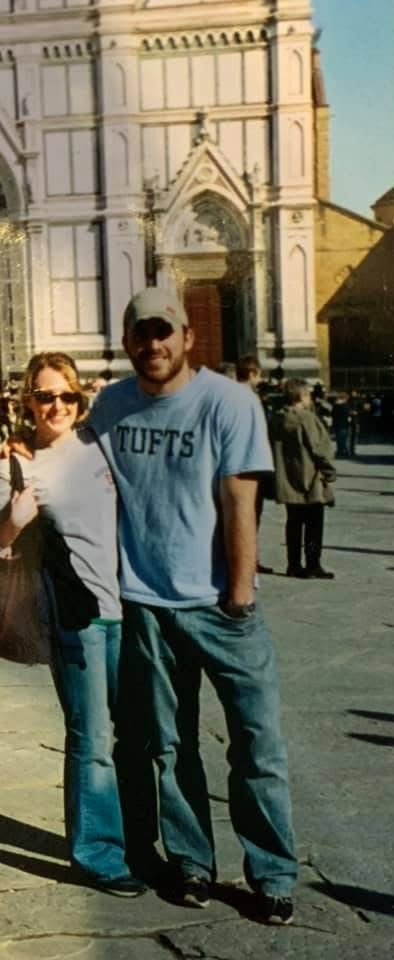
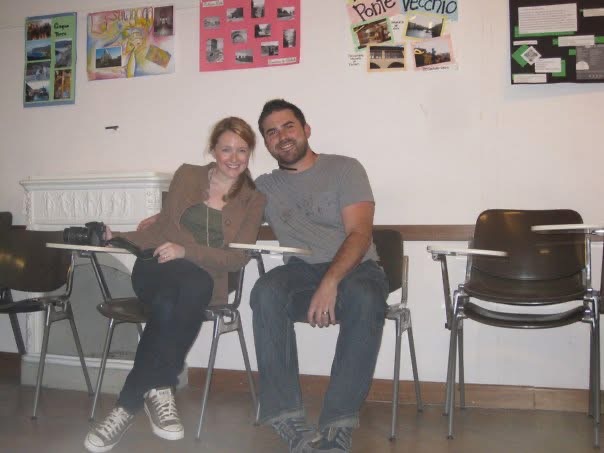
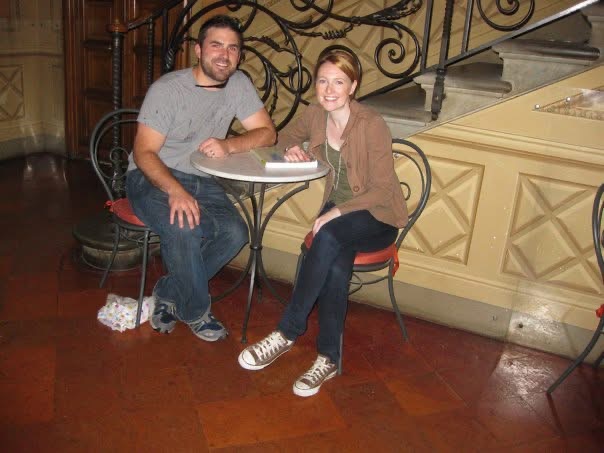
This week, we’re delighted to share the story of Molly and Adam Fraust-Wylie, whose romance began during Spring 2003 at Villa Rossa when their Italian professor, Vittoria Tettamanti, paired them together for a role-play as “husband and wife.” This interview with Molly is the second in our Valentine’s month series of love stories that began at Syracuse Florence. Read the first one here.
1. When were you in Florence, and what were your majors and home schools?
We studied abroad in Florence in Spring 2003. I was a student at Dickinson College in Pennsylvania studying Art History. Adam was a student at Tufts University in Massachusetts where he studied Structural Engineering – in Italy he studied architecture.
2. How did you meet?
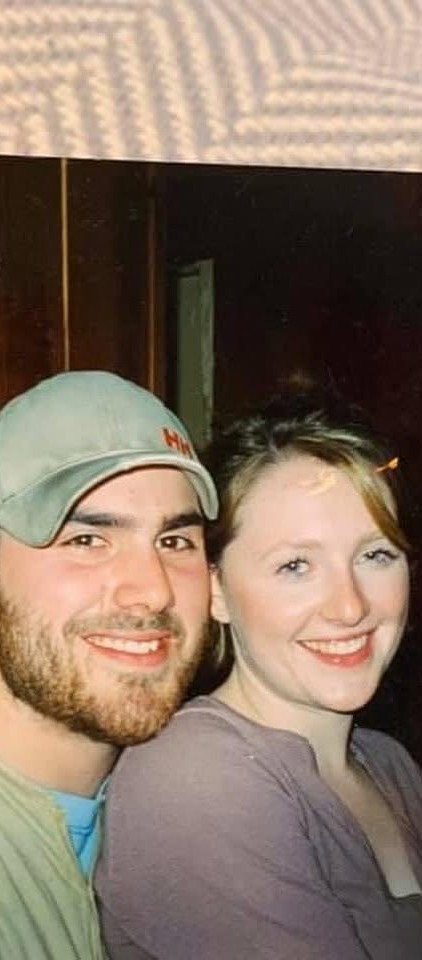
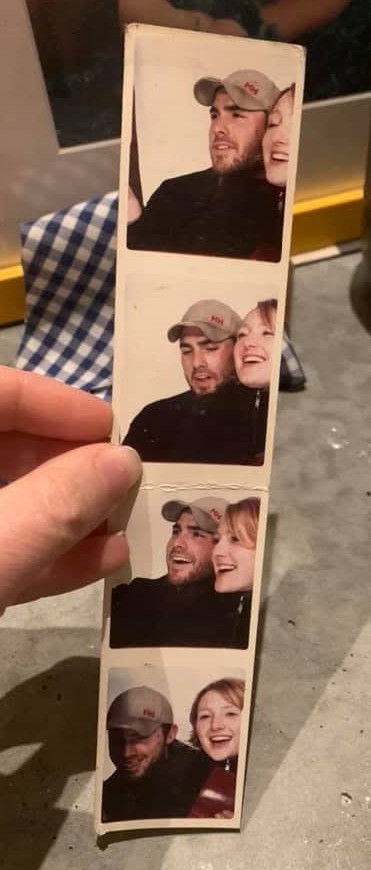
We had Italian class together with Vittoria Tettamanti 🙂 She paired us together for an Italian language learning exercise where we had to pretend/role play that we were husband and wife, ha! We didn’t start dating until later that semester, but Vittoria famously said to us once on a bus to her home to cook in Florence, “Is this a love story?” and the answer was ultimately, yes!
With their cupid, now-retired Italian Professor Vittoria Tettamanti
Funny story: both of our families happened to travel to Florence to visit us at the exact same time and we all went out to dinner together, so our families met each other. Adam’s grandfather was there and says he knew we would get married and said it during a toast during our wedding weekend. Pretty wild to think that all our families met each other in another country and we got married 7 years later!
3. Have you been back to Florence since?
Yes! We went back for our honeymoon in 2010 (and I went back before that in 2007 with some friends).
4. How has your story progressed since meeting here?
We were together in 2003 while studying abroad together, traveling to Greece for a month after the semester ended. We broke up before traveling back to the US knowing long distance senior year wasn’t something either of us wanted to do. We stayed in touch and got back together in 2005 or 2006 when Adam came to DC where I was living to visit friends and we met up… and have never been apart since.
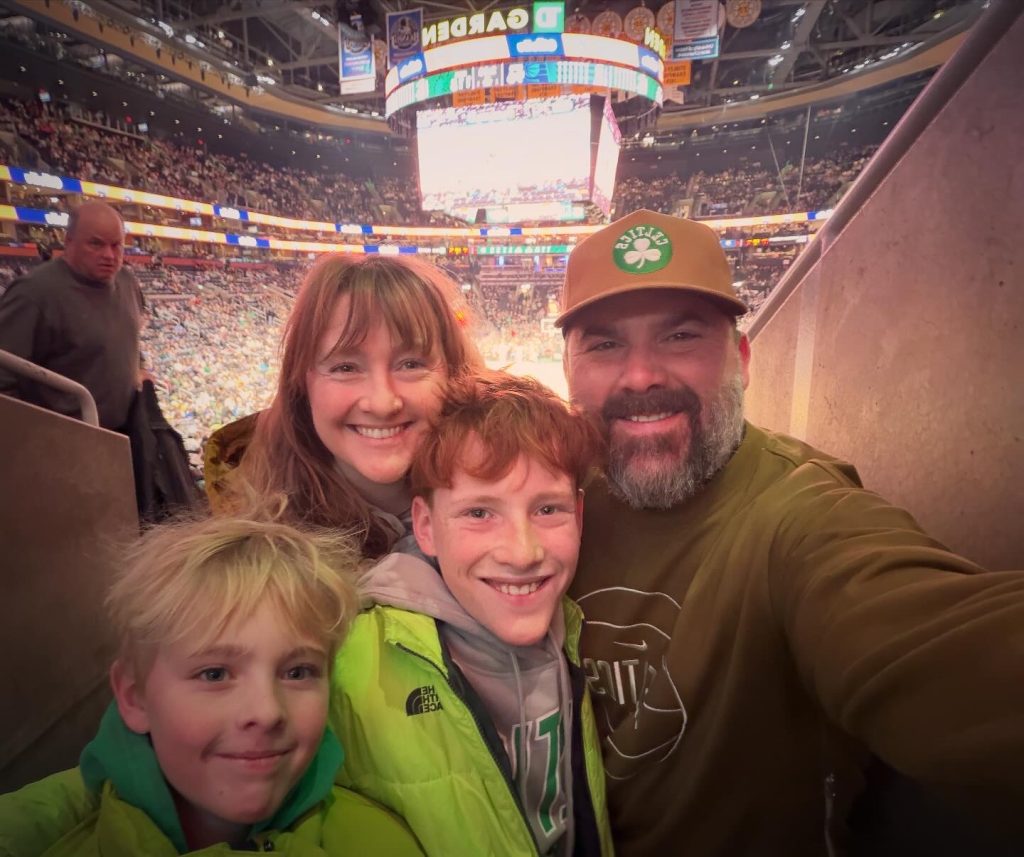
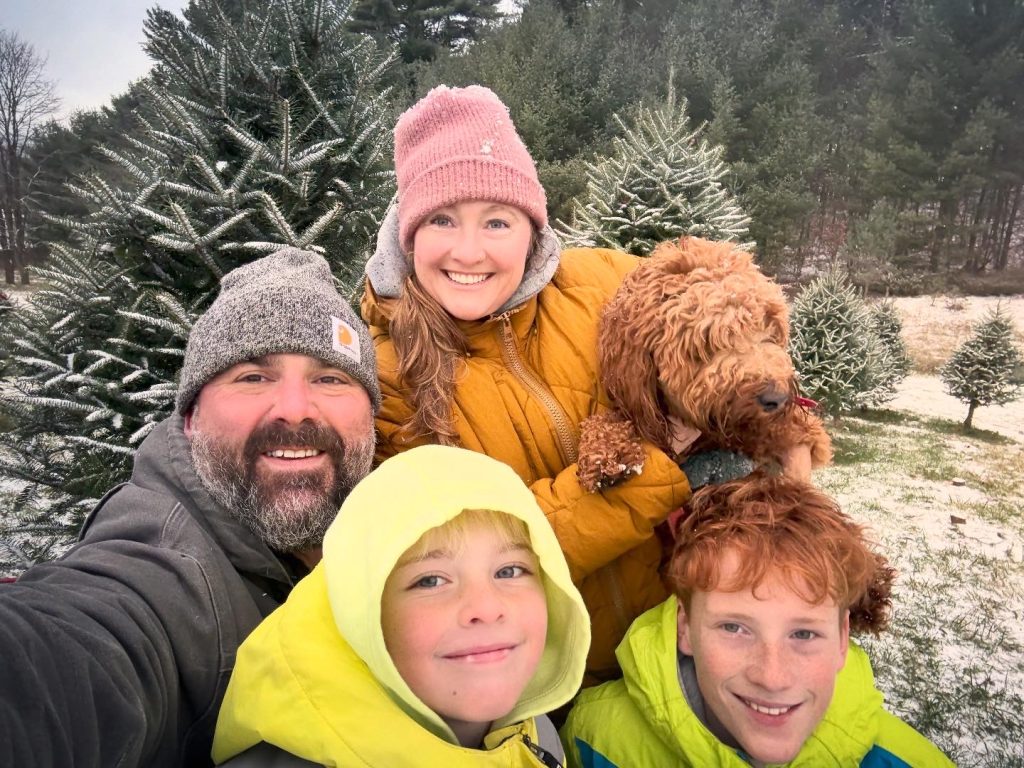
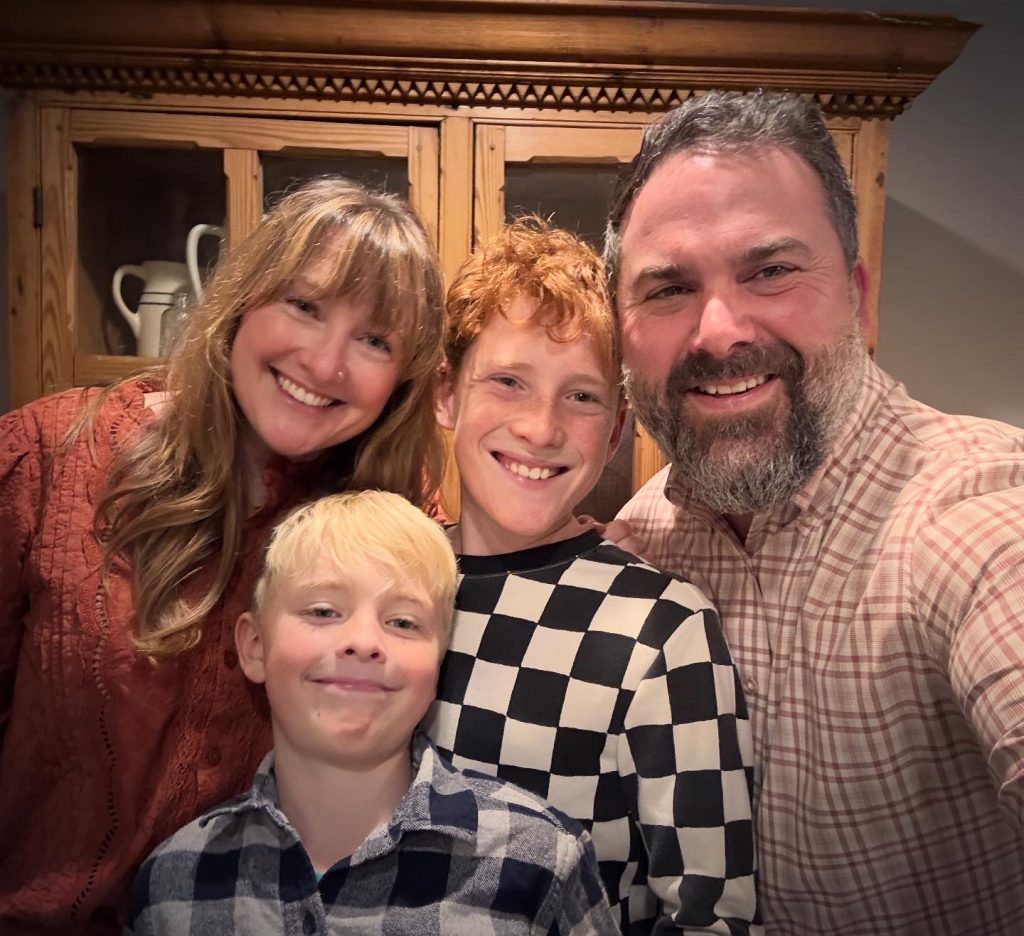
We got married in 2010, with several of our friends from Florence attending our wedding. We took our honeymoon in Italy where we saw Vittoria and visited the Villa Rossa and then traveled to Ischia. Since then, we’ve had two sons, Max who is 13, and Renzo, named after our first date in Piazza San Lorenzo and the famous Italian architect Renzo Piano. We loved the name (and my host brother when I lived there was named Lorenzo, but everyone called him Renzo!). We are traveling back to Florence in April and bringing the boys and cannot wait to show them the city where we met and fell in love!