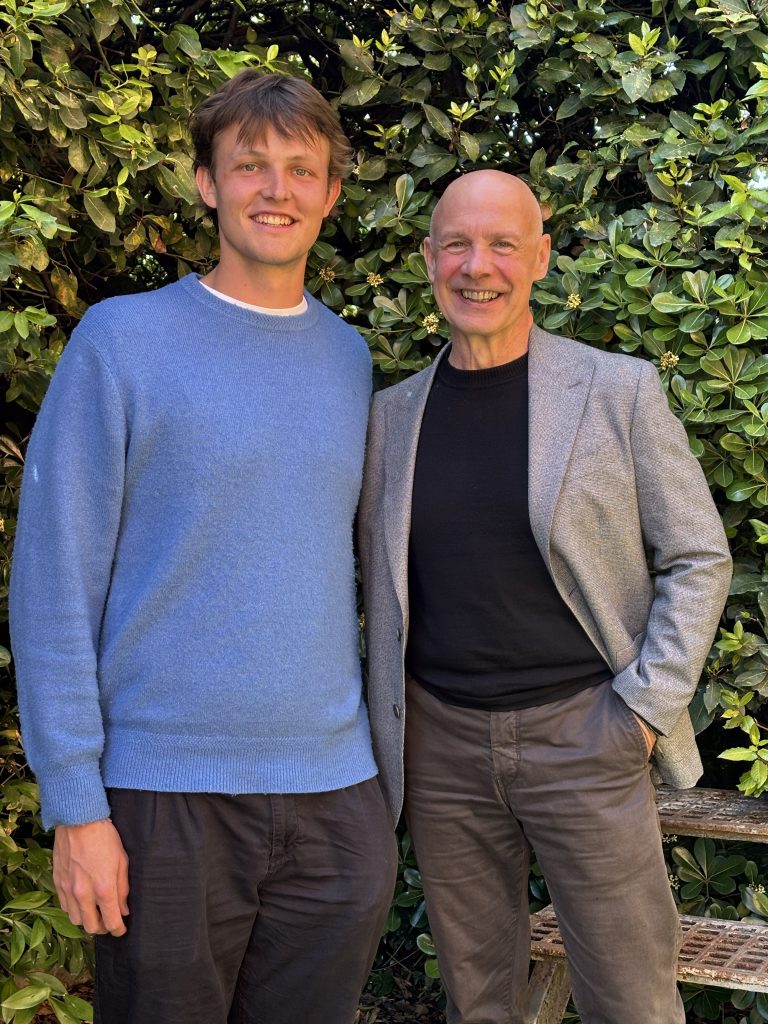
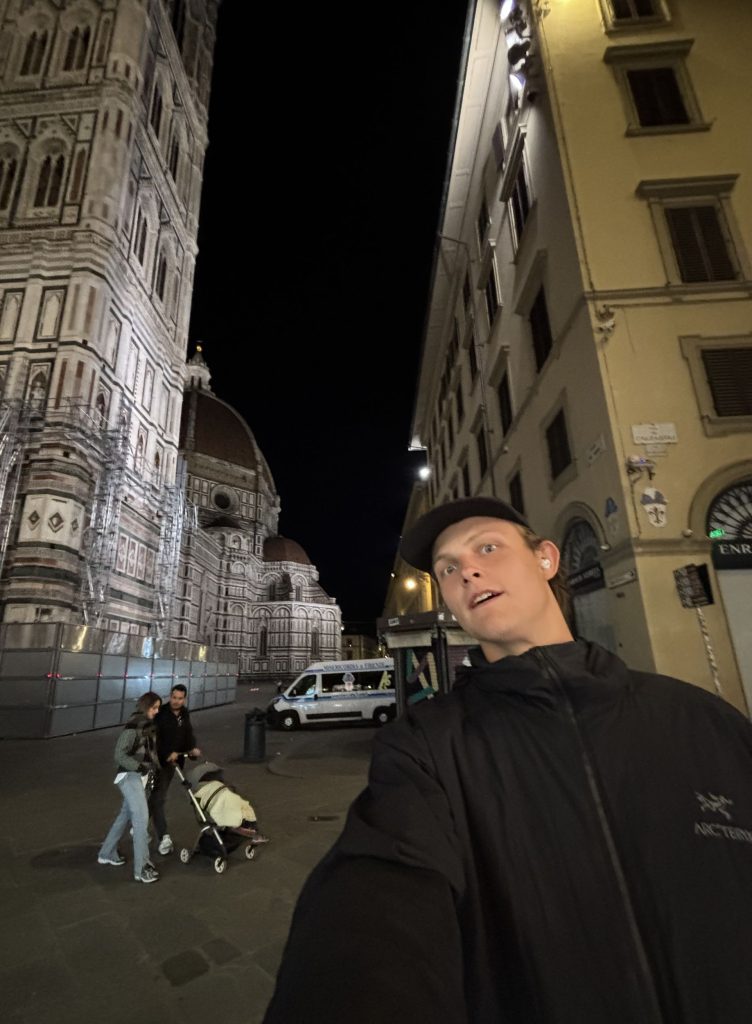
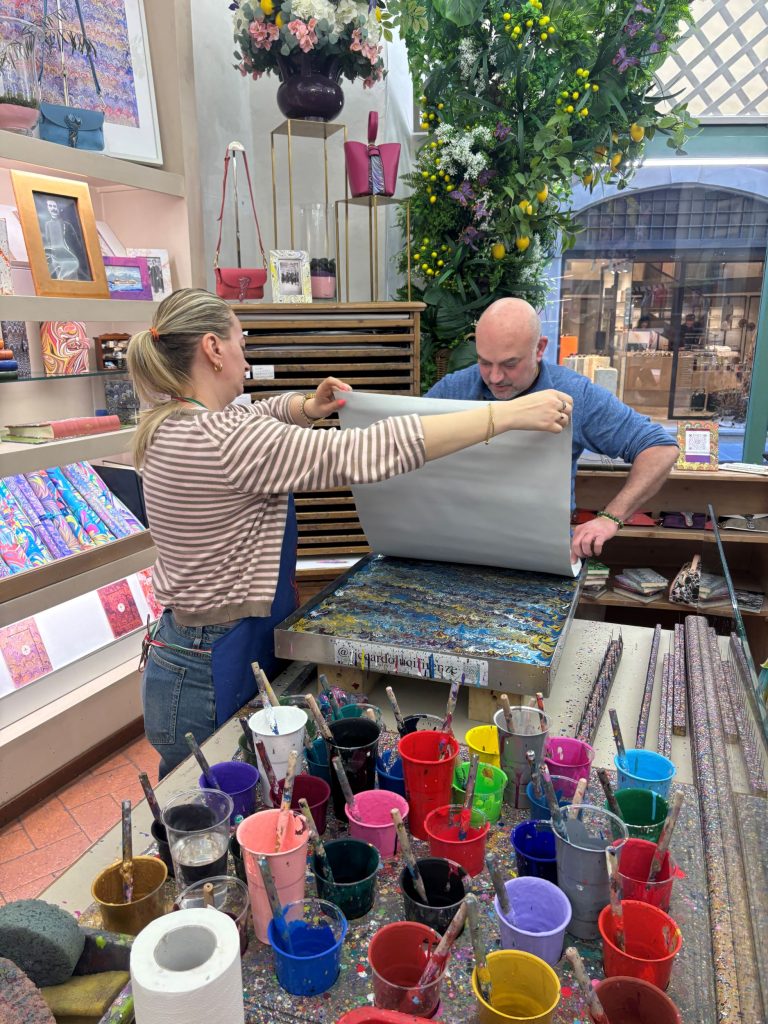
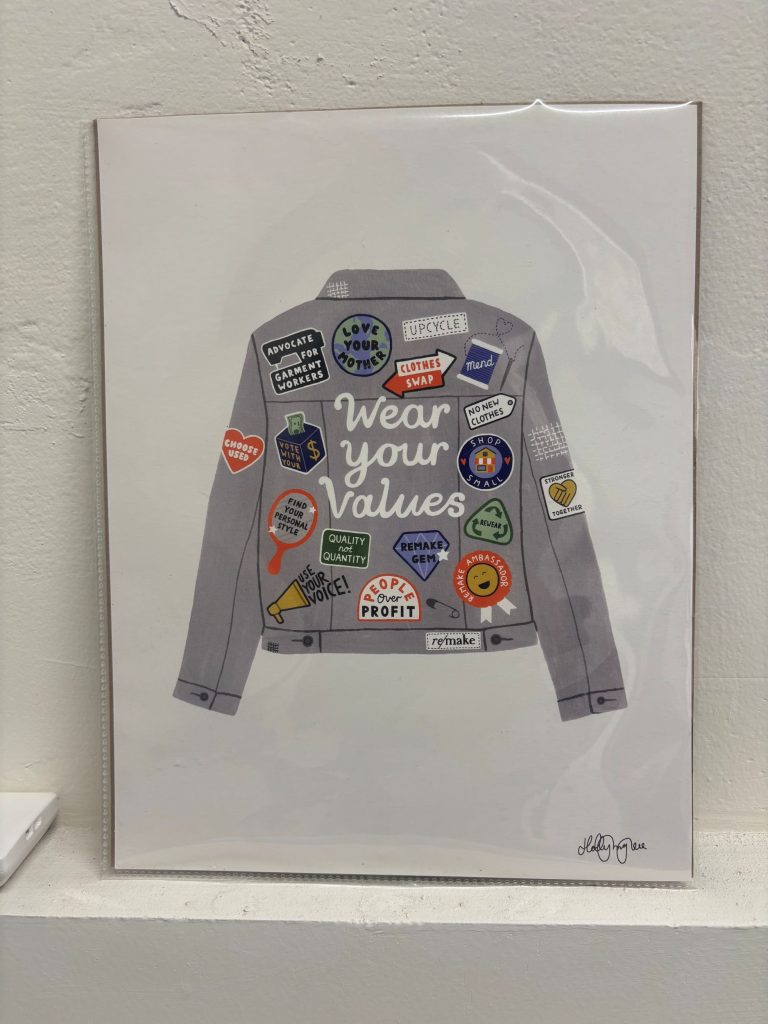
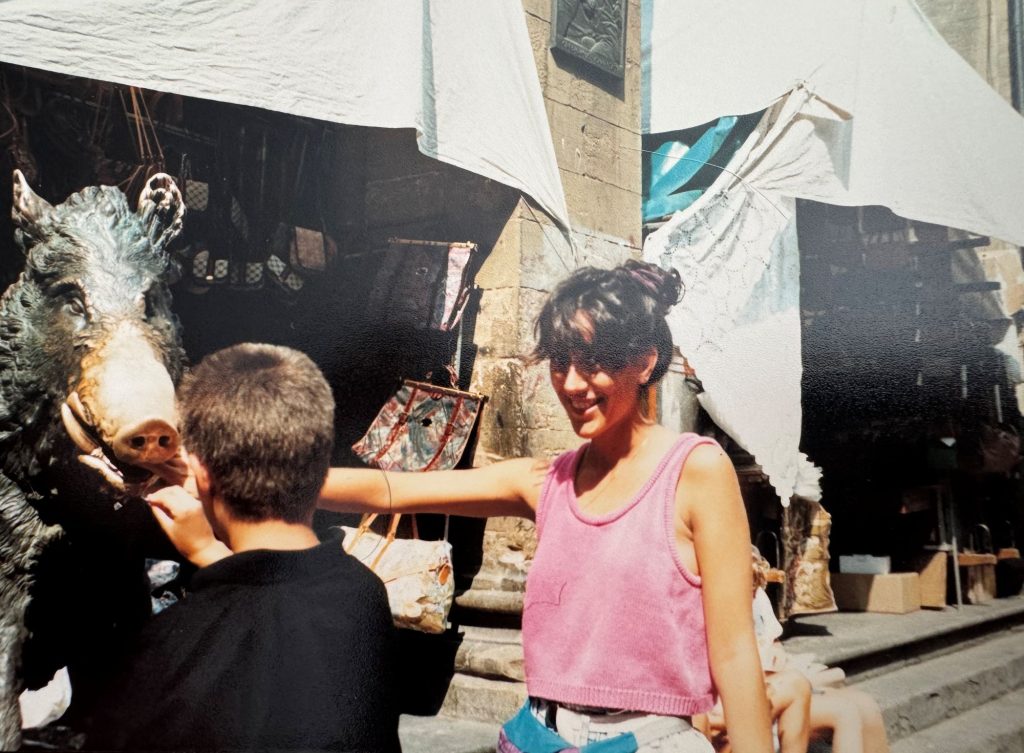
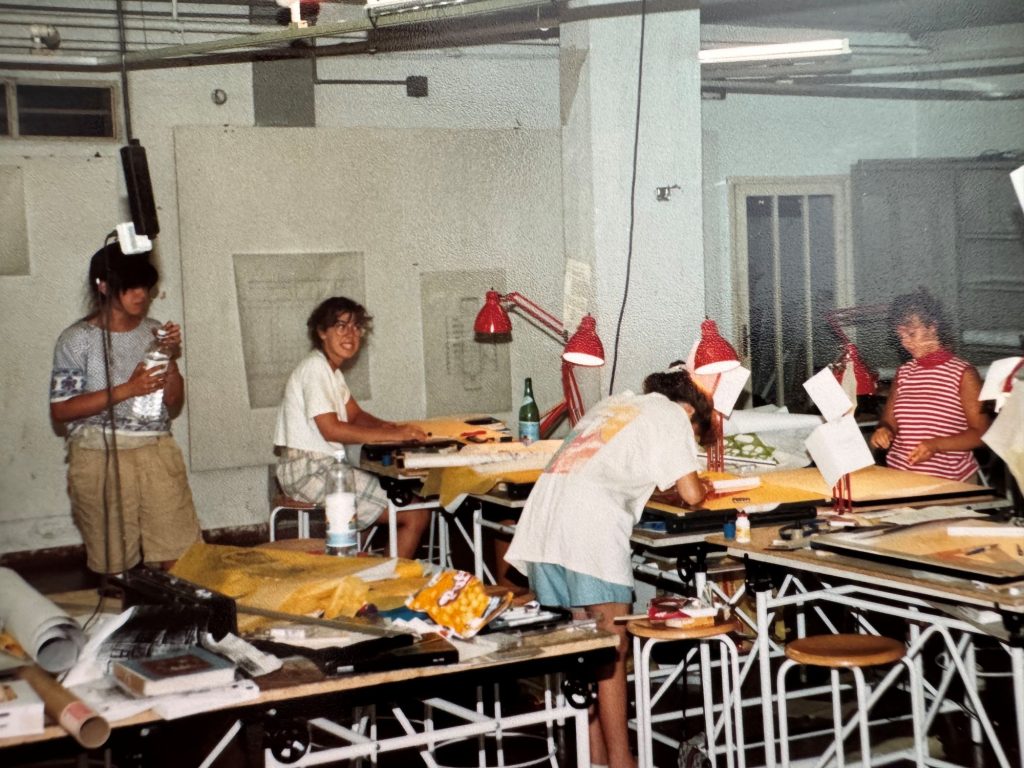
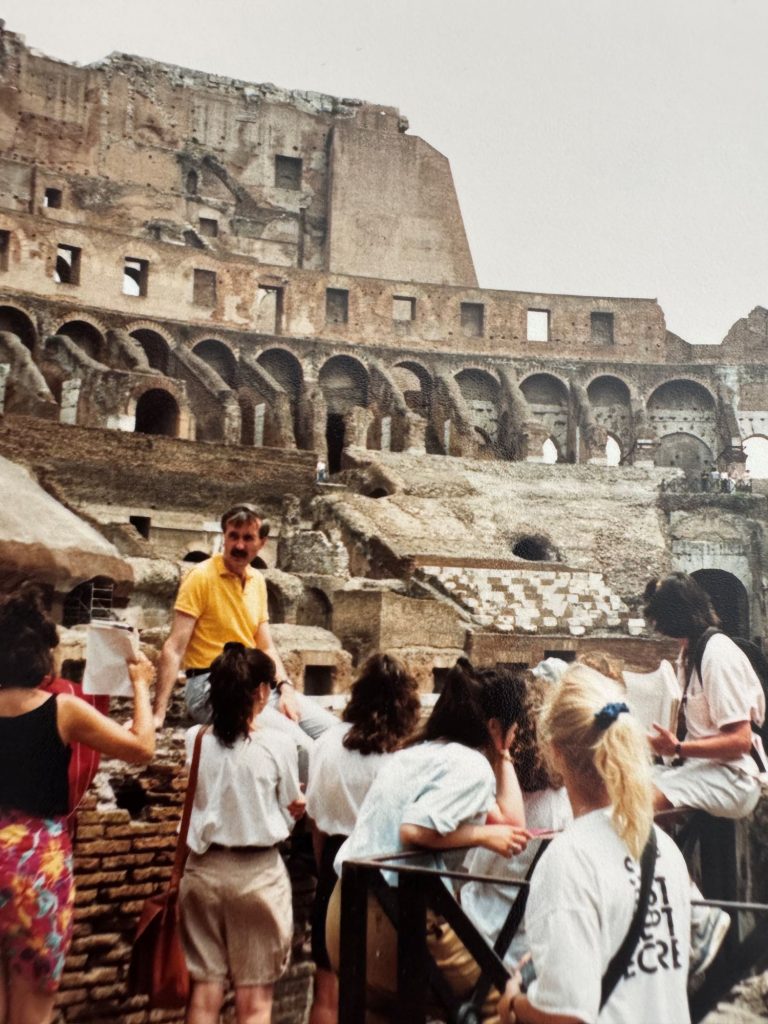
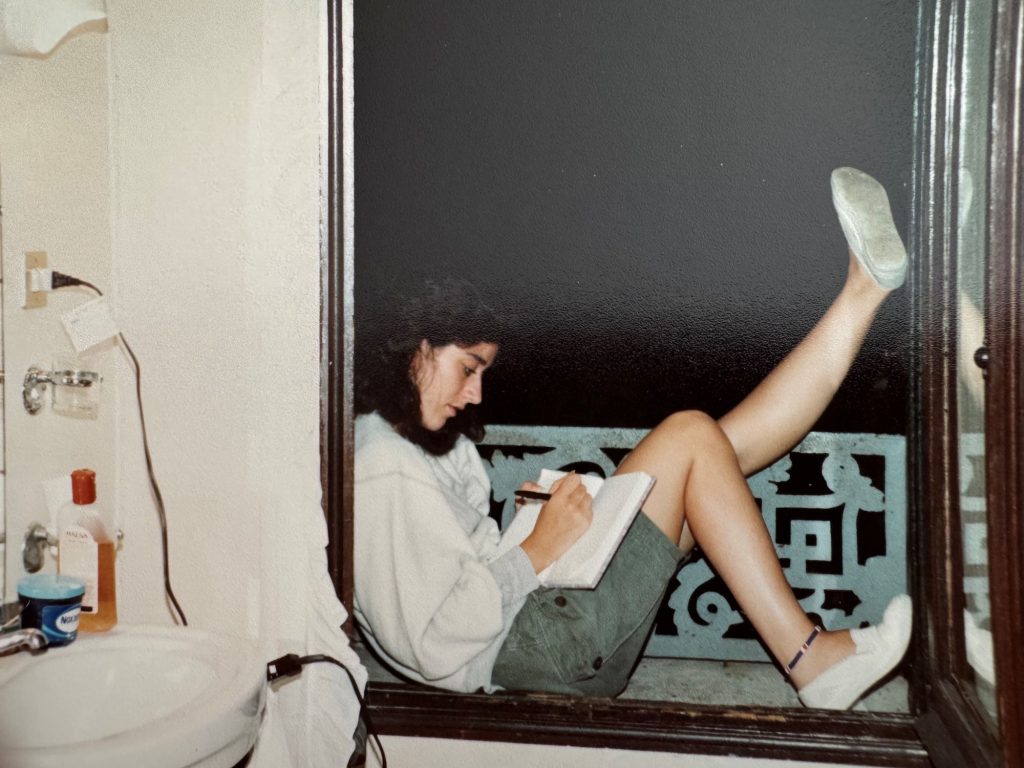
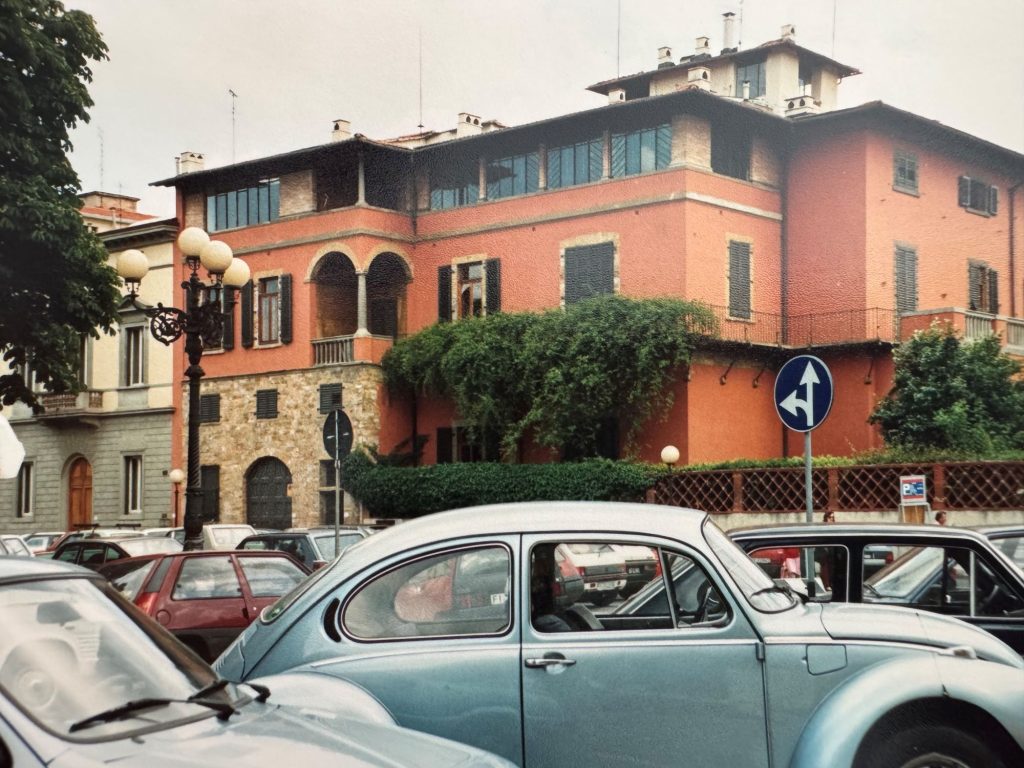
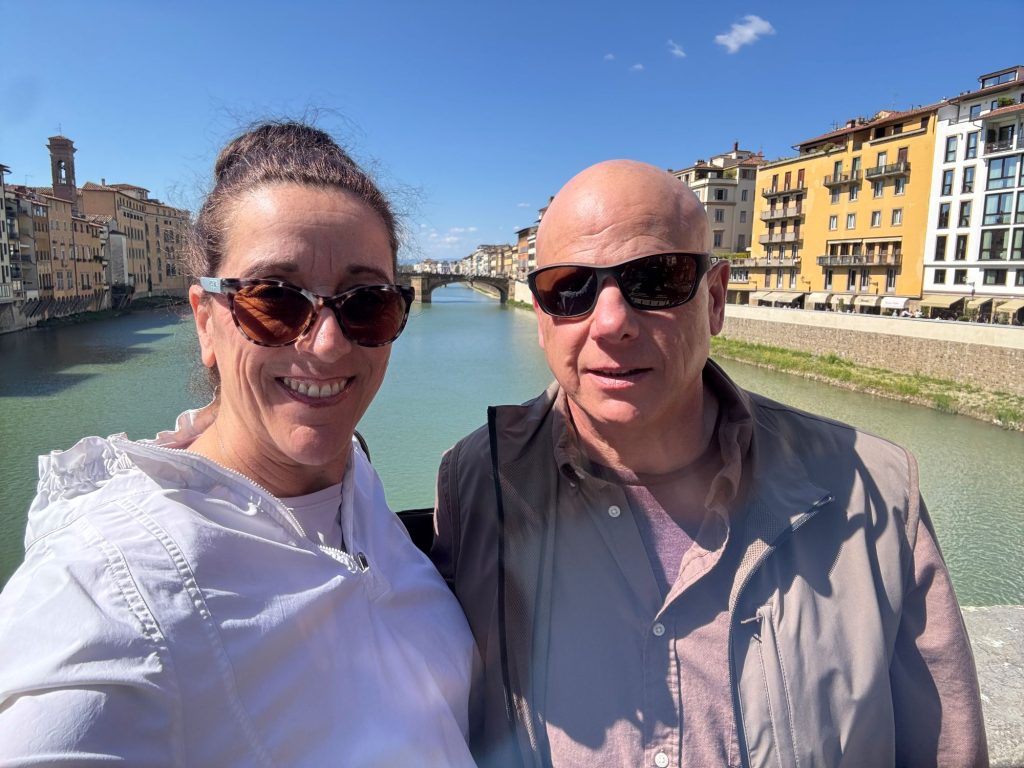
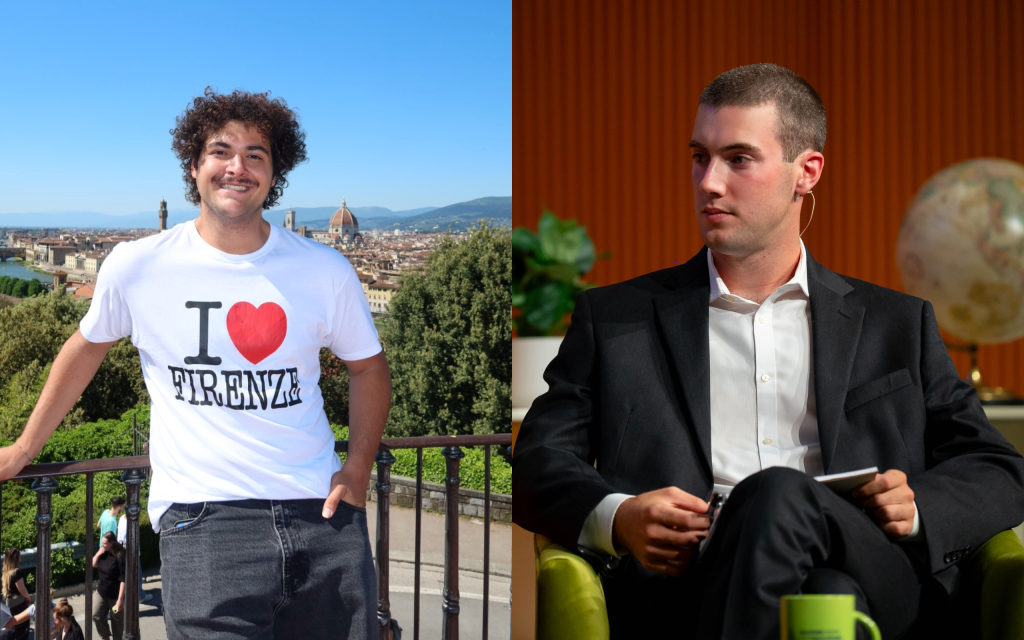
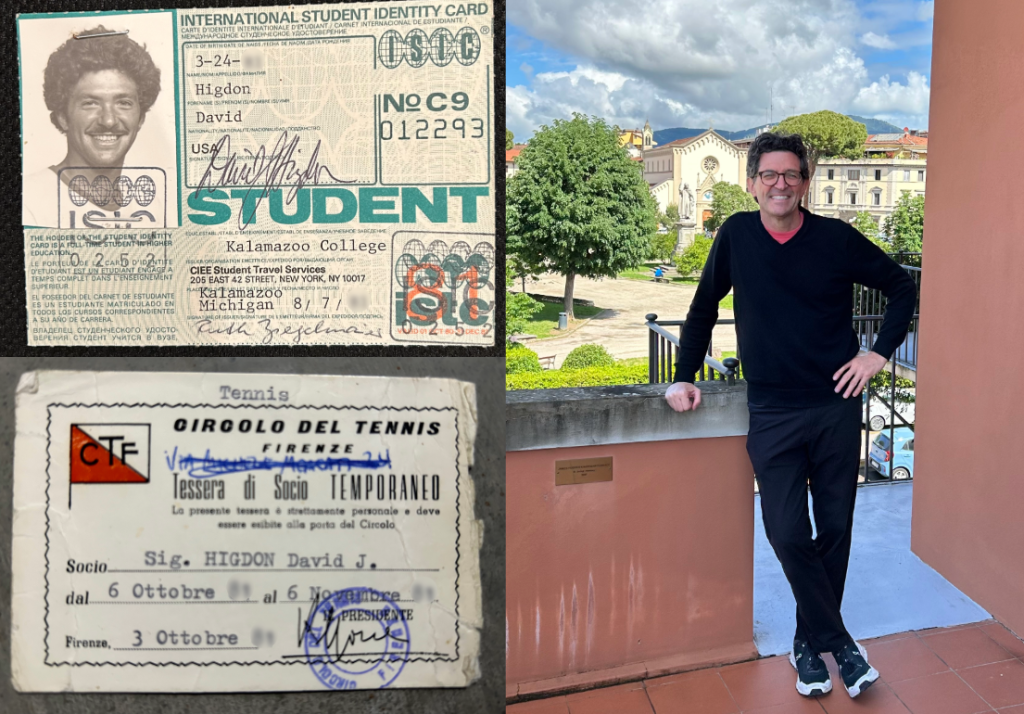
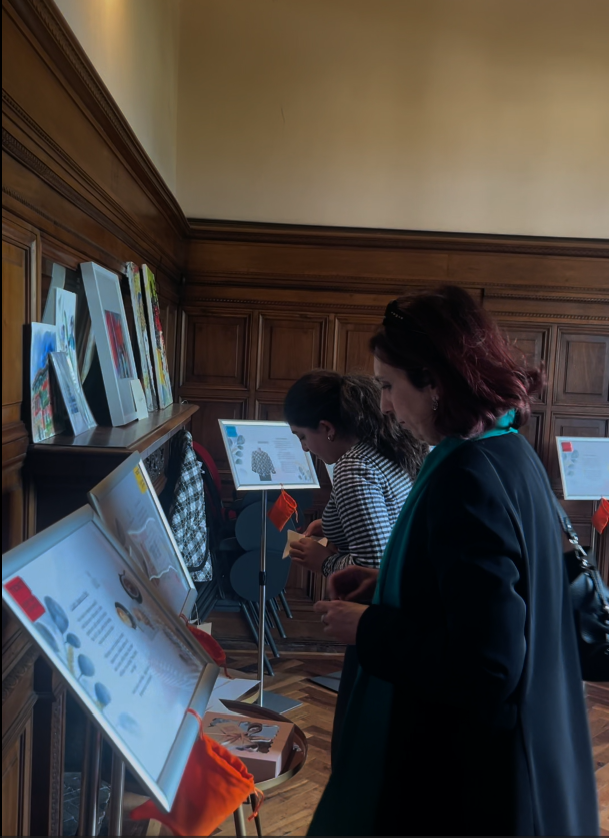
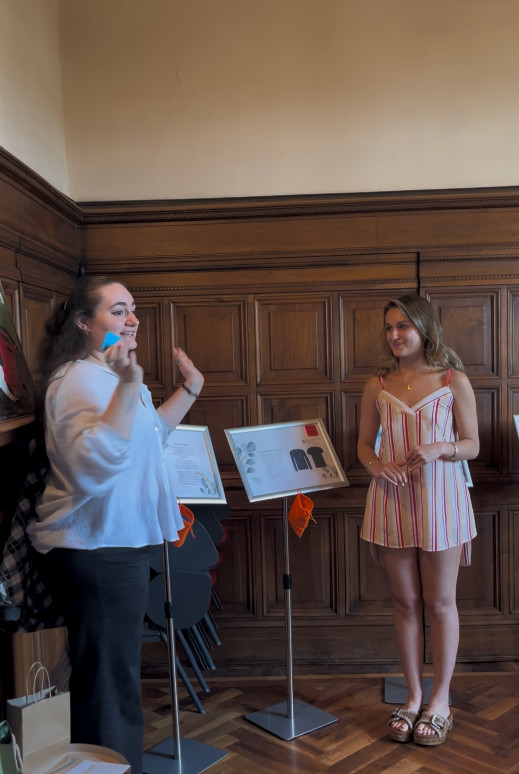
This week, we’re delighted to share the story of Molly and Adam Fraust-Wylie, whose romance began during Spring 2003 at Villa Rossa when their Italian professor, Vittoria Tettamanti, paired them together for a role-play as “husband and wife.” This interview with Molly is the second in our Valentine’s month series of love stories that began at Syracuse Florence. Read the first one here.
1. When were you in Florence, and what were your majors and home schools?
We studied abroad in Florence in Spring 2003. I was a student at Dickinson College in Pennsylvania studying Art History. Adam was a student at Tufts University in Massachusetts where he studied Structural Engineering – in Italy he studied architecture.
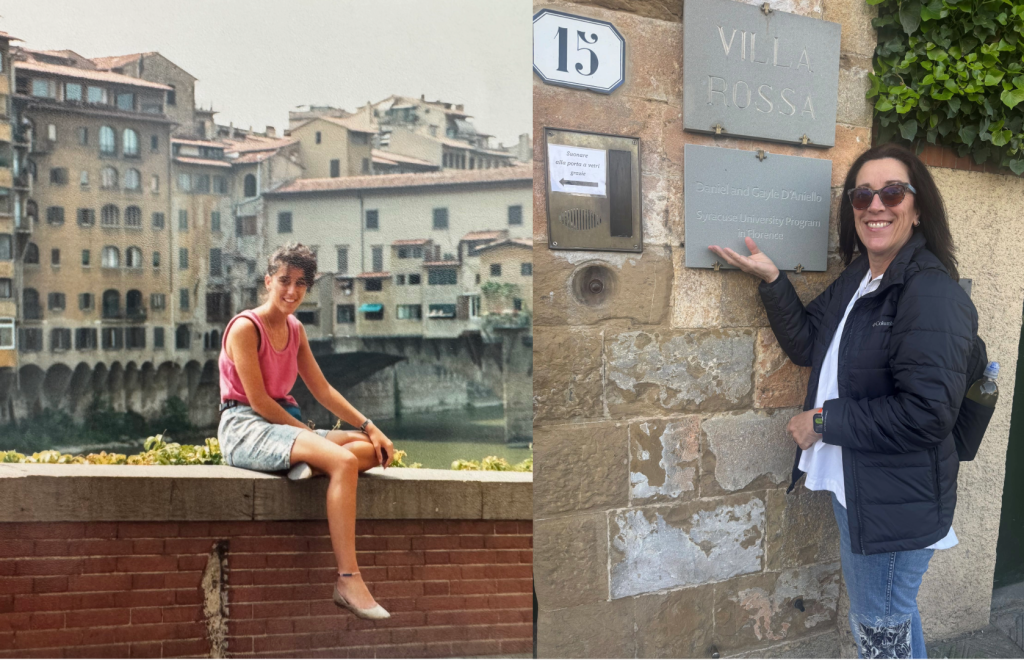
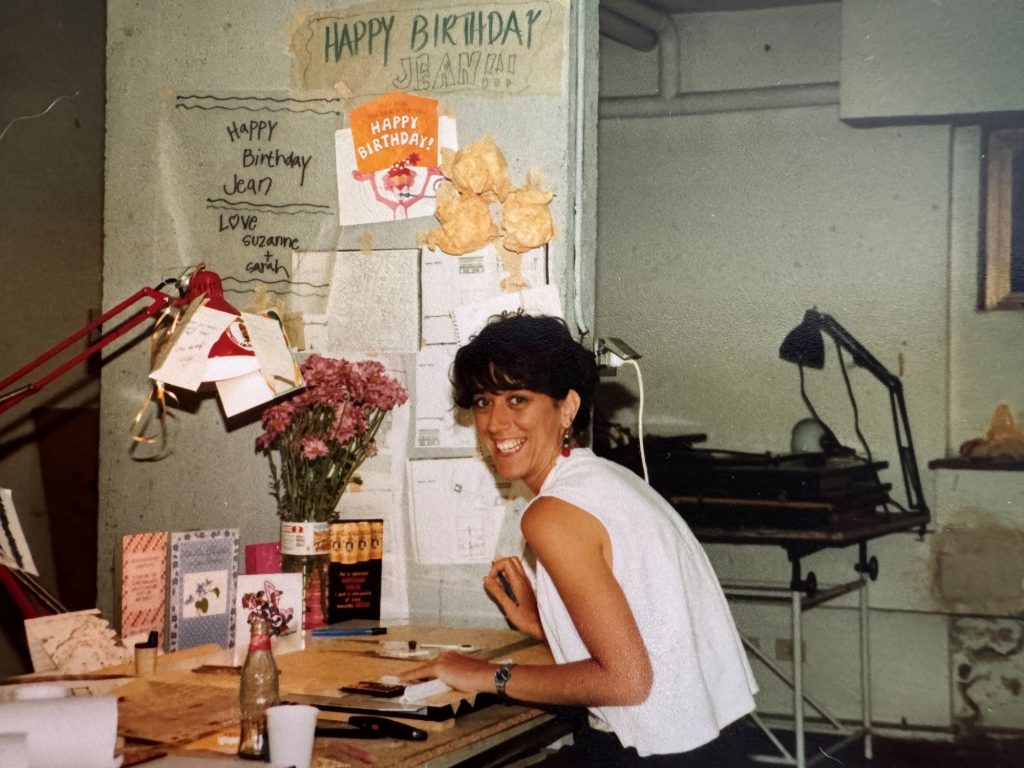
2. How did you meet?
We had Italian class together with Vittoria Tettamanti 🙂 She paired us together for an Italian language learning exercise where we had to pretend/role play that we were husband and wife, ha! We didn’t start dating until later that semester, but Vittoria famously said to us once on a bus to her home to cook in Florence, “Is this a love story?” and the answer was ultimately, yes!
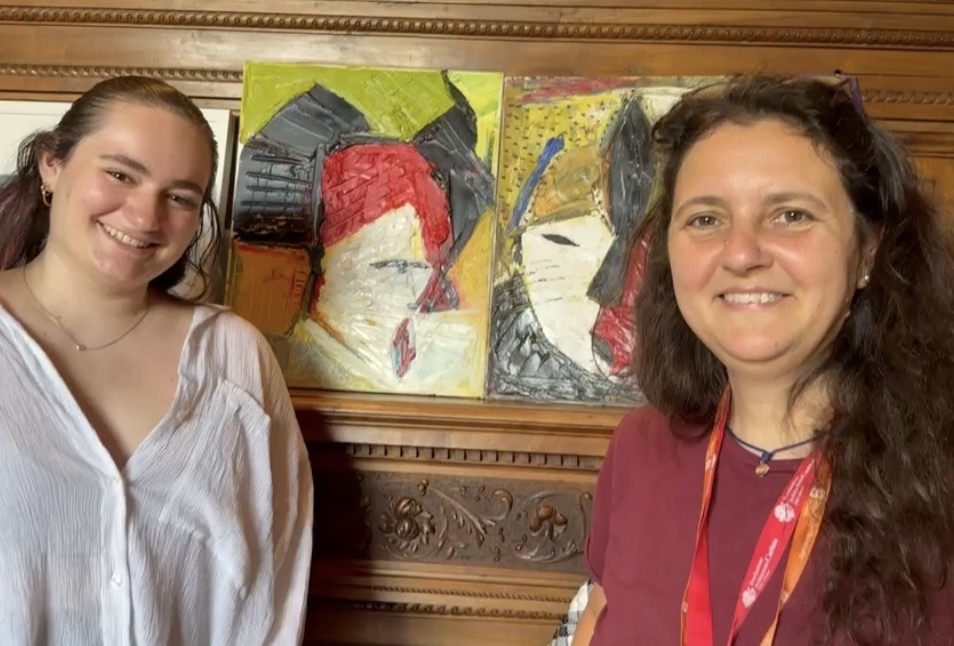
With their cupid, now-retired Italian Professor Vittoria Tettamanti
Funny story: both of our families happened to travel to Florence to visit us at the exact same time and we all went out to dinner together, so our families met each other. Adam’s grandfather was there and says he knew we would get married and said it during a toast during our wedding weekend. Pretty wild to think that all our families met each other in another country and we got married 7 years later!
3. Have you been back to Florence since?
Yes! We went back for our honeymoon in 2010 (and I went back before that in 2007 with some friends).
4. How has your story progressed since meeting here?
We were together in 2003 while studying abroad together, traveling to Greece for a month after the semester ended. We broke up before traveling back to the US knowing long distance senior year wasn’t something either of us wanted to do. We stayed in touch and got back together in 2005 or 2006 when Adam came to DC where I was living to visit friends and we met up… and have never been apart since.
We got married in 2010, with several of our friends from Florence attending our wedding. We took our honeymoon in Italy where we saw Vittoria and visited the Villa Rossa and then traveled to Ischia. Since then, we’ve had two sons, Max who is 13, and Renzo, named after our first date in Piazza San Lorenzo and the famous Italian architect Renzo Piano. We loved the name (and my host brother when I lived there was named Lorenzo, but everyone called him Renzo!). We are traveling back to Florence in April and bringing the boys and cannot wait to show them the city where we met and fell in love!
Engineering Professor Francesca Parotti was featured in a recent issue of La Repubblica’s Affari e Finanza magazine in an article about using bamboo, “nature’s green steel,” in construction. Professor Parotti, who has taught the course Sustainability in Civil and Environmental Systems at Syracuse Florence for 12 years, has become a point of reference for this building materials in Italy.
The article was published in response to the fact that the Institution of Structural Engineers has recently published the first comprehensive structural engineering guide for bamboo. “Bamboo is much more durable than wood,” Parotti explains in the interview. It’s also fast-growing and eco-friendly. “I’m convinced it’s the future of construction, though there are still some problems to resolve.”
Today the United Nations celebrates the International Day of Women and Girls in Science, a global reminder of the vital role women play in scientific and technological advancement. First proclaimed by the UN General Assembly in 2015, the day highlights both progress and gender equality in STEM fields worldwide.
Eleven years later, Syracuse Florence is marking the occasion by spotlighting three students who are gaining hands-on STEM experience through internships in Italy. For aspiring physician Lilly Ragusa, the path to STEM was shaped by personal experience as a patient. She recalls the impact of doctors who took time to connect, communicate clearly, and involve her in her own care. “I value being someone who can help a child feel safe,” Lilly says. “I believe strongly in giving children a sense of autonomy and making sure they understand what is happening— because the patient is the child, not just the parent.” That commitment led Lilly to neuroscience research. While in Florence, she is interning at the CNR Institute of Neuroscience, focusing on autism and neurodevelopmental disorders.
To Rachel Bosson, STEM represents the power to create solutions that can make a meaningful difference. “I like being able to create something that can solve a lot of problems in the world,” she shares. Rachel credits her father as an early mentor who introduced her to projects that sparked curiosity and made science feel fun. An industrial engineering major, Rachel’s internship in Florence involves working on the Ariel project, a space telescope, collaborating with a team at the University of Florence to design and manufacture parts for the telescope’s mounting.
Caitlyn Jordan has discovered the transformative power of mentorship during her cybersecurity internship with Alessandro Valassina while in Florence. Originally a computer science major, Caitlyn found her passion in Information Management and Technology with a concentration in Information Security after exploring the iSchool and meeting supportive mentors. “Mentorship has been central to helping me find my path,” Caitlyn reflects. “From high school teachers to Syracuse professors, and now Mr. Valassina, each mentor has guided me toward opportunities that align with my interests and strengths.” Her internship has provided hands-on experience and cultural perspective, allowing her to collaborate on lecture presentations in Italian and apply classroom knowledge in a real-world setting. Caitlyn shares that she has learned how to thrive in collaborative environments, leverage guidance effectively, and gain confidence in her technical skills.
Together, these Syracuse Florence students exemplify how global experiences, mentorship, and a passion for discovery empower women in STEM on a daily basis.
To mark this romantic month, we are sharing stories of love that blossomed out of study abroad experiences at Syracuse’s Villa Rossa in Florence. This is the first in the series.
By Cheryl Bakos
We first crossed paths in Syracuse on the night of the 1987 NCAA championship—a moment charged with excitement, though neither of us yet knew what the future had in store. Scott was the cute boy my best friend had her eye on, and at the time, that was all he was to me: a passing character in a crowded scene.Â
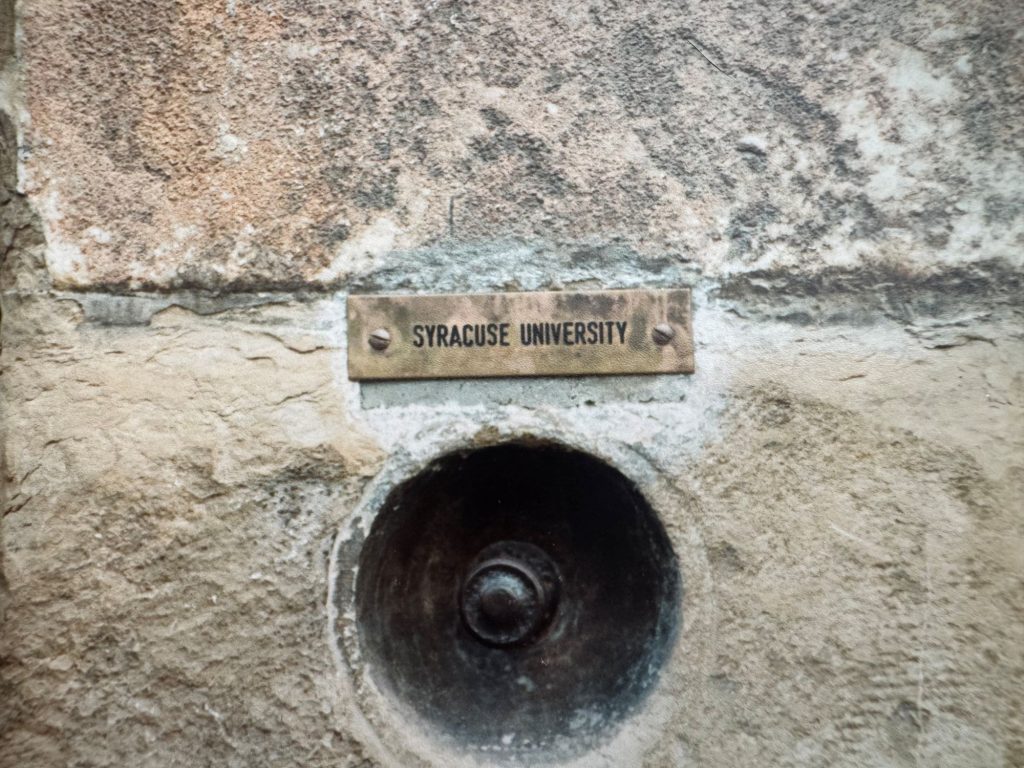
It wasn’t until the fall semester of 1989 in Florence that our story truly began. At Villa Rossa, we shared the “B” mailbox (for Bacher and Bakos) and in those small moments collecting our mail we started to know each other better. I remember thinking it was so sweet that Scott always received letters from his older sister, until I learned she was lovingly torturing him with photos of his grandmother’s irresistible cooking.
Fast-forward to New York City, fall of 1992. We hadn’t seen each other since Florence, but the universe clearly wasn’t finished with us. On the corner of Third Avenue and 26th Street, fate stepped in with a perfectly timed re-meet-cute, placing us back in each other’s lives once again – this time living just two blocks apart.
Even then, love took its time. Caught up in first jobs and long hours, it wasn’t until February of 1993 that we finally shared our first kiss. And from there, everything fell into place.
Thirty-nine years from our first meeting, thirty-two years from our first date, and nearly twenty-eight years of marriage later, our love story is still unfolding. We’ve built a life filled with laughter, raised two wonderful sons, and now call Florida home. Yet Florence will always hold a piece of our hearts—and returning there in 2023 to celebrate our 25th anniversary felt like coming full circle, back to where our forever truly began. We already dream of the day we wander those streets together again.
Laurie Kassman (middle) with Director Sasha Perugini (left) and Elisa Dekaney, Associate Provost for Strategic Initiatives at Syracuse (right)
Last October, Laurie Kassman walked through the gates of Villa Rossa for the first time in six decades. As an alumna of Syracuse Florence’s fall 1966 program, she had witnessed one of the most devastating natural disasters in Italian history—the Great Flood that submerged Florence on November 4, 1966. Now, she returned to share memories of that life-changing semester.
Following in Family Footsteps
Laurie’s connection to Syracuse Florence began with her brother, who had studied there three years earlier. He had lived with a family in Fiesole and left his motorbike with Agostino, the program’s caretaker, when he departed. The bike was still in the school garage when Laurie arrived.
She lived with a host family at Viale Corsica 2—a family with two daughters whose names have faded from memory, though the experience never did. Each day, she took the bus to Villa Rossa for classes.
The Morning Everything Changed
November 4, 1966, started like any other day. Laurie waited at her usual bus stop, but the bus never came. It had been raining for four days straight, and students had just returned from fall break. Laurie herself had just come back from Rome.
As she waited, a driver stopped to tell her the buses weren’t running—the Arno had flooded. She could hardly believe it. The river had been “a piddly little stream” during what seemed like a drought, but now it had become gigantic. The driver gave her a ride to Piazza Savonarola.
When she arrived, some students were missing. Soon, the announcement came: classes were canceled due to the flood. Curious and perhaps not fully grasping the severity, Laurie and her friends decided to walk to the river to see it for themselves. “And we saw a boat coming up the road! Oh my god!”
The Aftermath: Singing While Saving History
The flood’s destruction was immense, but the response from the community was swift. Laurie’s host father, who had been a partisan, had connections to the Library of the Resistance. She joined the recovery efforts there, helping to salvage waterlogged documents. “Clotheslines were stretched out where we would hang pages to dry while singing ‘Bella Ciao,'” she recalled.
A couple of days after the disaster, the U.S. Embassy contacted the school with an urgent message: students needed to call home and let their parents know they were safe. “It hadn’t even occurred to me!” Laurie admits. “It was very sad, but we were also having this amazing adventure.”
The Journey That Started It All
Laurie’s path to Florence had begun a couple months earlier on a ship bound for Europe. She remembers Professor Jackson, “this wiry guy who jumped around to teach you Italian as though you were the child and he was the grandpa. And it worked!” The voyage lasted about a week, giving students just enough language skills to greet their host families and apologize for not speaking Italian.
The ship stopped in Lisbon, Ceuta, and Tangiers before the students disembarked in Genoa and continued to Florence. That first day in Lisbon remains vivid in Laurie’s memory. Her friends pushed her to board a city bus first. “I got on and said, ‘How much is it?’ The driver looked like my father. And some passenger said to me, ‘No speak English.’ That’s when it hit me that I was in a foreign country.”
A Life Transformed
“This experience literally changed my life,” Laurie reflects. Without coming to study for a semester in Florence, she believes she would have stayed in New York. Instead, after graduating with a degree in political science and working briefly for a magazine, she flew to Paris and never looked back.
In Paris, she met Lou, a U.S.-born photojournalist, and they spent four decades traveling the world together on assignment. Their homes included Paris, Buenos Aires (arriving “at the tail end of the Dirty War”), London, and Cairo, where Laurie covered the Arab world for Voice of America. “I arrived in Cairo in June, and the Oslo Peace Process started in July,” she remembers of witnessing history unfold.
Sadly, Lou had passed away just six months before Laurie’s return to Villa Rossa. She had spent the previous month in Paris, spreading his ashes at their favorite places, fulfilling a promise they had made to each other. “I always imagined I’d marry a Frenchman and live in a château. I was kind of disappointed that didn’t happen,” she laughs, revealing the humor that carried her through decades of adventure.
Laurie reporting on the Iraq War in 2003
Rediscovering Villa Rossa
Walking through the Syracuse Florence campus, Laurie marveled at how much the program had expanded. She didn’t remember the garden—and we confirmed that in 1966, when Countess Gigliucci still occupied the top floor of Villa Rossa, students didn’t have access to it. “OK, so I’m not crazy,” she said with relief.
The curriculum was also much more limited then. “We had political science, Italian, art history, history. Very few subjects.” But the professors left lasting impressions. Sydney Alexander, a Michelangelo expert, taught art history and would read Michelangelo’s poetry aloud. He invited students to dinner at his home in Fiesole, “where you could see Florence in the mirror of his bathroom. It opened up a whole new world to me.”
The political science professor was equally memorable for presenting a complete picture of the era, weaving together social and artistic contexts. In Room 13, Laurie recalled sitting in art history class with the lights off to view slides—always scheduled for the afternoon, after a hearty Italian lunch with her host family. “They would water down my wine, but it was rough!”
Travel was different in those days too. Laurie and her friends hitchhiked all over Italy, a common practice at the time. “You’d meet people and they’d say, ‘Let me show you this little village where I used to live…’ The good old days.”
Laurie Kassman’s return to Villa Rossa reminds us that Syracuse Florence has been shaping lives and opening horizons for generations of students—even those who arrived just in time to witness history.
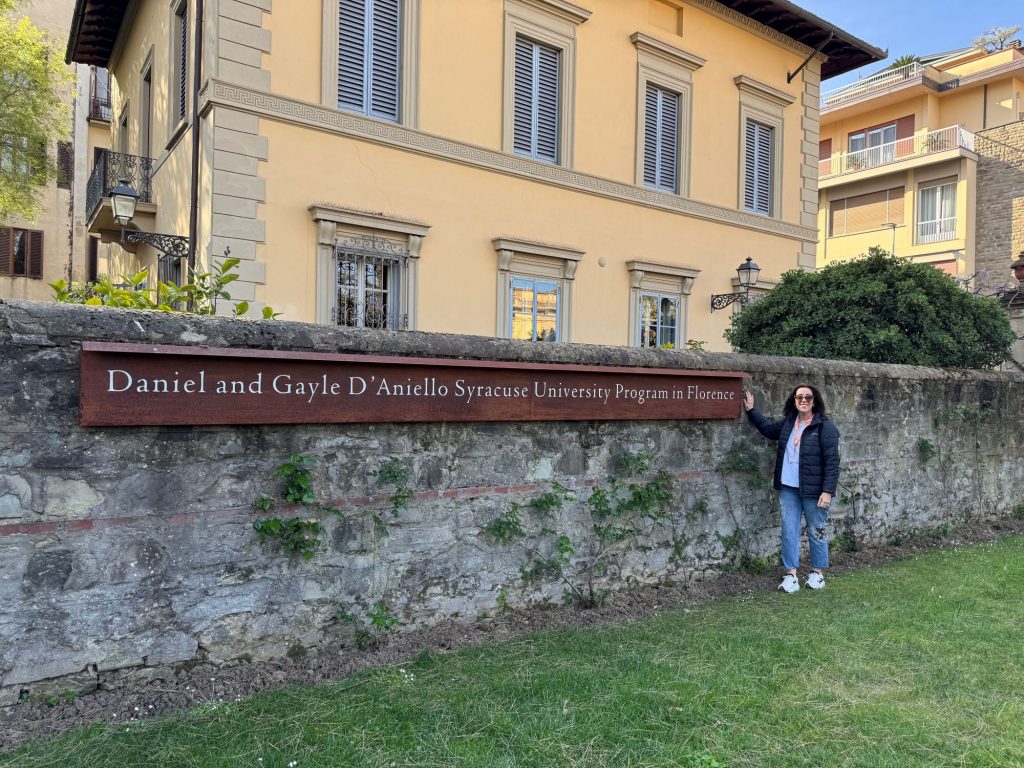
Syracuse University Florence celebrated an important step forward for campus accessibility on January 19, inaugurating the new entrance to Villa Rossa at its Piazza Savonarola location. The ceremony marked the completion of renovations that significantly reduce architectural barriers and improve access for students, faculty, staff, and visitors.Â
The work was made possible through the exceptional generosity of Daniel D’Aniello and his wife, Gayle, whose major gift in 2022 supported the participation of disadvantaged students and contributed to making the Florence center’s facilities more accessible.
For Daniel D’Aniello, the initiative carries special meaning. A Syracuse University alumnus who studied in Florence in fall 1966, he witnessed one of the city’s most dramatic moments in modern history: the Great Flood of November 4, 1966. During that emergency, he joined the ranks of the “Angeli del Fango” (mud angels), volunteers who worked tirelessly to help protect Florence’s artistic and cultural heritage. In recognition of that enduring connection, the City of Florence awarded him the Keys to the City in 2023—a bond that now takes a tangible form for today’s university community, in the 60th anniversary year of the Flood.Â
“I express our profound gratitude to Daniel and Gayle D’Aniello,” said Sasha Perugini, Director of Syracuse University Florence. “This work enhances the heritage of Villa Rossa and will make the experience of our students even more welcoming and inclusive. D’Aniello perfectly embodies what we believe in: study abroad creates authentic, meaningful bonds that endure across decades, enriching both students and the communities that host them.”
From left: Â Bernard Dika, Undersecretary to the President of the Tuscan Region, Dario Danti, Florence City Councillor for Universities and Research, Michele Pierguidi, President of District 2, and Sasha Perugini, Director of Syracuse Florence
The inauguration was attended by representatives of local and regional institutions, reflecting the broader value of Syracuse University Florence’s presence and partnership in the city. Guests included Dario Danti, City Councilor for University and Research, Bernard Dika, Undersecretary to the President of the Tuscany Region, and Michele Pierguidi, President of District 2.
“Since 1959, Syracuse University in Florence has been an authoritative presence in our city,” said Dario Danti, noting the campus’s growth over the years while remaining rooted in its founding purpose: helping students deepen their understanding of Italian art and society and building lasting intercultural relationships with Florence. He emphasized confidence that the campus will continue serving as a cultural link between communities through the exchange of ideas and perspectives.
Dario Nardella, Member of the European Parliament and former Mayor of Florence at the time of the D’Aniello donation and the presentation of the Keys to the City, was unable to attend due to unexpected commitments. In a message shared for the occasion, he expressed satisfaction at seeing the project completed and recalled D’Aniello’s contribution—then and now—to Florence’s community and cultural heritage.
More than an architectural upgrade, the new entrance stands as a practical expression of Syracuse University Florence’s values: a campus that welcomes people more fully, supports participation, and remains open to the Florentine and international community.
In the early 1960s, Garland Jeffreys became what is believed to be the first Black student at Syracuse Florence. That semester would prove transformative for the young man from Brooklyn, who later became a celebrated rock and soul musician—collaborating with legends like Lou Reed, writing songs covered by everyone from Rickie Lee Jones to John Mellencamp, and creating music that boldly addressed racial identity and urban life. His 1977 song “Wild in the Streets” became an anthem, and over a career spanning decades, he released critically acclaimed albums that blended rock, reggae, and soul while never shying away from confronting social issues.
Fellow Syracuse alumnus Martin Inn, Garland’s friend from that pioneering semester, brought Garland’s remarkable story to our attention. Inn had a similar experience as one of the first Asian Americans to attend Syracuse Florence, and he shared his wonderful story with us in the last printed issue of the Villa Rossa Voice (page 10). He also provided the black-and-white photo above of Garland with his host family, “taken at Via Benedetto da Maiano in Fiesole where we lived,” he explains. “Garland had the same family as me probably because they were Italian Communist and were accepting of people who were not white. They were wonderful people and we loved them.”
Today, Garland is living with late-stage Alzheimer’s and can no longer share his stories himself. But his wife Claire Jeffreys—who produced the 2023 documentary Garland Jeffreys: The King of In Between, now streaming on Amazon Prime, Apple TV, YouTube TV, and Tubi—spoke with us about Garland’s time in Florence, what the experience meant to him, and why he kept returning to the city he loved.
What has Garland told you about the time he studied at the Syracuse program in Florence?
Garland always spoke of his time in Florence with great enthusiasm and excitement. He said not many people from his neighborhood made it to Florence to study. He especially loved his host families and loved the home cooking with lunch every day. One of his Brooklyn friends said he came home with a round face from all that pasta! He spoke of being with the host family when Kennedy was murdered and hearing cries of “Kennedy è morto!”
Can you confirm whether he was the first Black person to attend the program, as claimed by his friend Martin Inn?
This is what I was told but I can’t confirm 100%. Garland said he went to the director of the program (or perhaps a professor) and argued forcefully that the reason he had been rejected from the program was because he was Black, and that they then reconsidered and allowed him to attend.Â
In the story he shared with us, Martin mentioned that Garland returned to Florence after having studied here. Do you know more about that? Did he ever come back to Florence with you?
He remained in love with Florence! We went back together many times, including our first trip (and my first) to Europe together in 1981. He took me to the Bargello Museum and showed me the Cellini statues, to the Uffizi, and to Fiesole, all the time using his art history knowledge to impress me! We visited his friend Piero Colacicchi, who later taught at the Accademia and had a family villa in Fiesole.
Claire and Garland with daughter Savannah (from Garland Jeffreys)
Garland was an art history major while he was here and then attended grad school in NY before dropping out to go into music. What was his favorite period? Did this interest in art history ever pop up later in life?
He was most interested in the art of the Renaissance. He loved to go to museums and look at paintings and that remained a constant throughout his life, though it never became a focus of his lyrics. One of his favorite painters was Giorgione. He also loved the frescoes of Fra Angelico and the paintings of Duccio.
What kind of advice do you think Garland might have had for students of color on a semester abroad today?
Never feel like you don’t belong. By nature of being there, you belong. See as much as you can see, don’t hold back on going out or taking day trips, because that precious time can never be duplicated. Talk to everyone you can! Let your horizons expand!
Jacquelyn Trotman, a Syracuse University student who studied in Florence last spring, has achieved a notable academic milestone with the publication of a paper in the Syracuse Honors Research Journal: “Dapper Dreams: Gucci and the American Hip Hop Scene, 1980s-1990s.”
Trotman’s paper originated as a final project for Professor Chiara Faggella’s course DES 300.2 (Bellissima! Unraveling the Threads of Italian Fashion) in April 2025. Her research explored the intersection of counterfeit Italian luxury fashion goods and the American hip-hop scene during the 1980s and 1990s, examining how these unauthorized reproductions were repurposed and given new cultural meaning.
“Jacquelyn wrote a brilliant paper based on research she conducted autonomously,” said Professor Faggella. “She really did an amazing job and shed light on a brilliant case study.”
After completing the course, Trotman refined her work and submitted it to the research journal run by the Renee Crown University Honors Program, with Professor Faggella serving as her supporting faculty member.
Trotman’s achievement shows how the Florence program can spark academic inquiry that extends beyond the semester abroad, turning classroom assignments into published research that contributes to broader scholarly conversations about fashion, culture, and identity.
On January 20, the six graduate students who recently arrived at our campus for their year-long residency in Florence, all members of the 2026 cohort of master’s degree candidates in Italian Renaissance Art, attended a special lecture at the Villa Rossa by Alison Fleming, professor of art history at Winston-Salem State University.
In her lecture, “Saints and the Power of Images in Early Modern Catholic Florence,” professor Fleming explored the fascinating and often competing roles that images, economic history, and social levers played in the complex path to canonization for three Florentine saints in the 17th century: Sant’Andrea Corsini, Santa Maria Maddalena de’ Pazzi, and San Filippo Benizi.
The lecture, which was also attended by a number of Villa Rossa faculty members, included a lively discussion between the graduate students and professor Fleming, who is herself an alumna of our MA program, followed by a collegial pizza dinner in piazza Savonarola.
Using Faggella’s book as a starting point, the participants – Isabella Martini (University of Florence, moderator), Mariarosa Mettifogo (Accent Global Learning), Fabio Corsini, Dafne Mazzanti, and Francesca Passeri (Accent Global Learning) – and Faggella discussed how Italy’s postwar fashion industry evolved into the global powerhouse we know today.Â
Among the many topics covered they tackled the role of celebrity culture and cinema in advancing the cause of Italian style in postwar years, but also the role of professional intermediaries that work behind the scenes and aid the more famous designers in creating their signature looks, ending with a lively debate the effectiveness of the label Made in Italy today and how to best help our international students understand the specificities of the Italian fashion system, between past and present.