I Left my Heart in Santiago

¡Hola! My name is Sophia Moore, I’m a junior studying television, radio & film and sociology with a minor in Spanish. I studied abroad in Santiago, Chile during the fall 2023 semester and cannot recommend it enough. Studying abroad in general is an opportunity to broaden your horizons and learn more about yourself and the world you live in, and I encourage you to chase that experience no matter where you go. However, if you’re seeking an abroad experience that’s more off the beaten path and will give you the chance to explore the beautiful continent of South America, Santiago is your ticket.
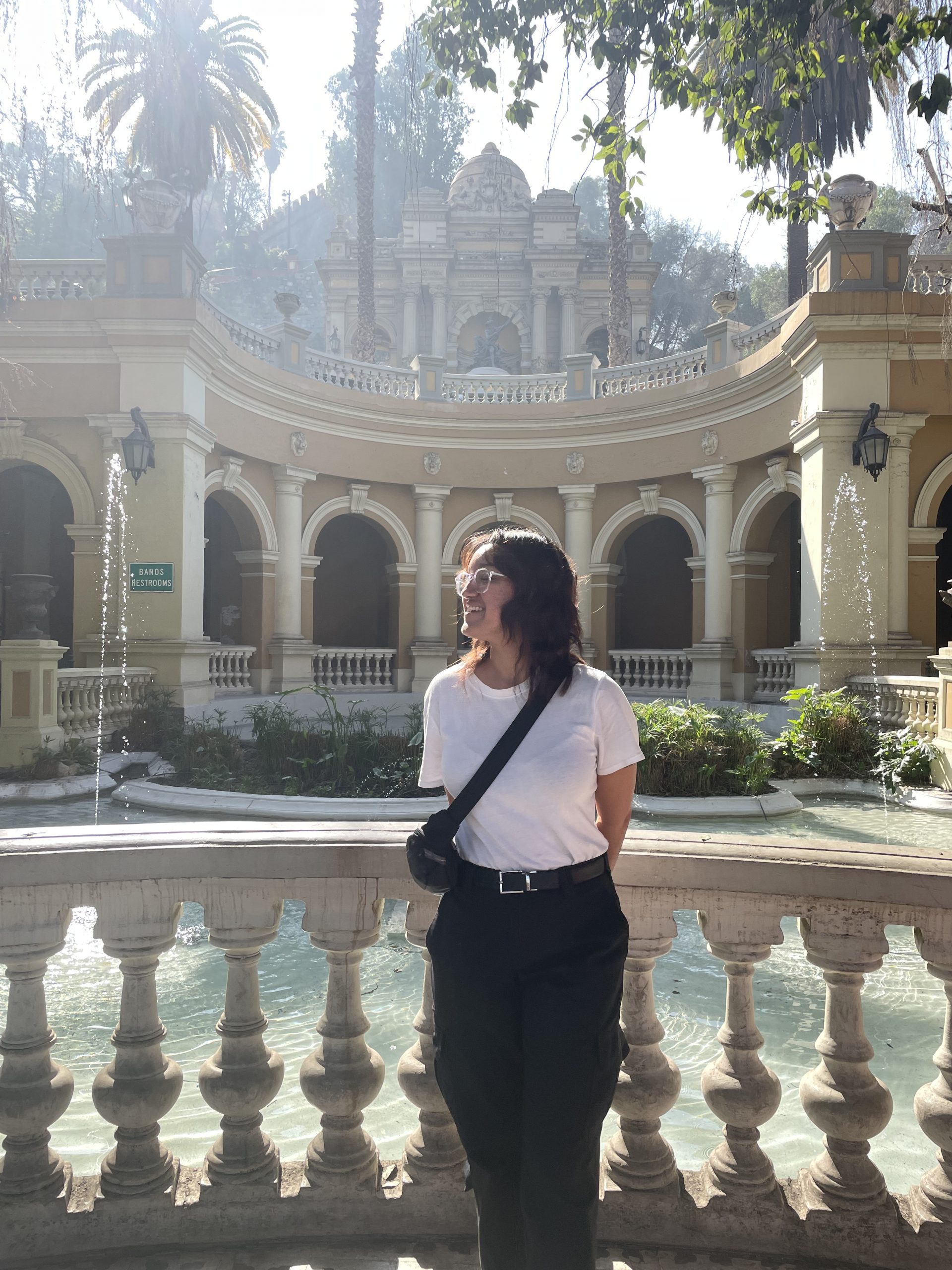

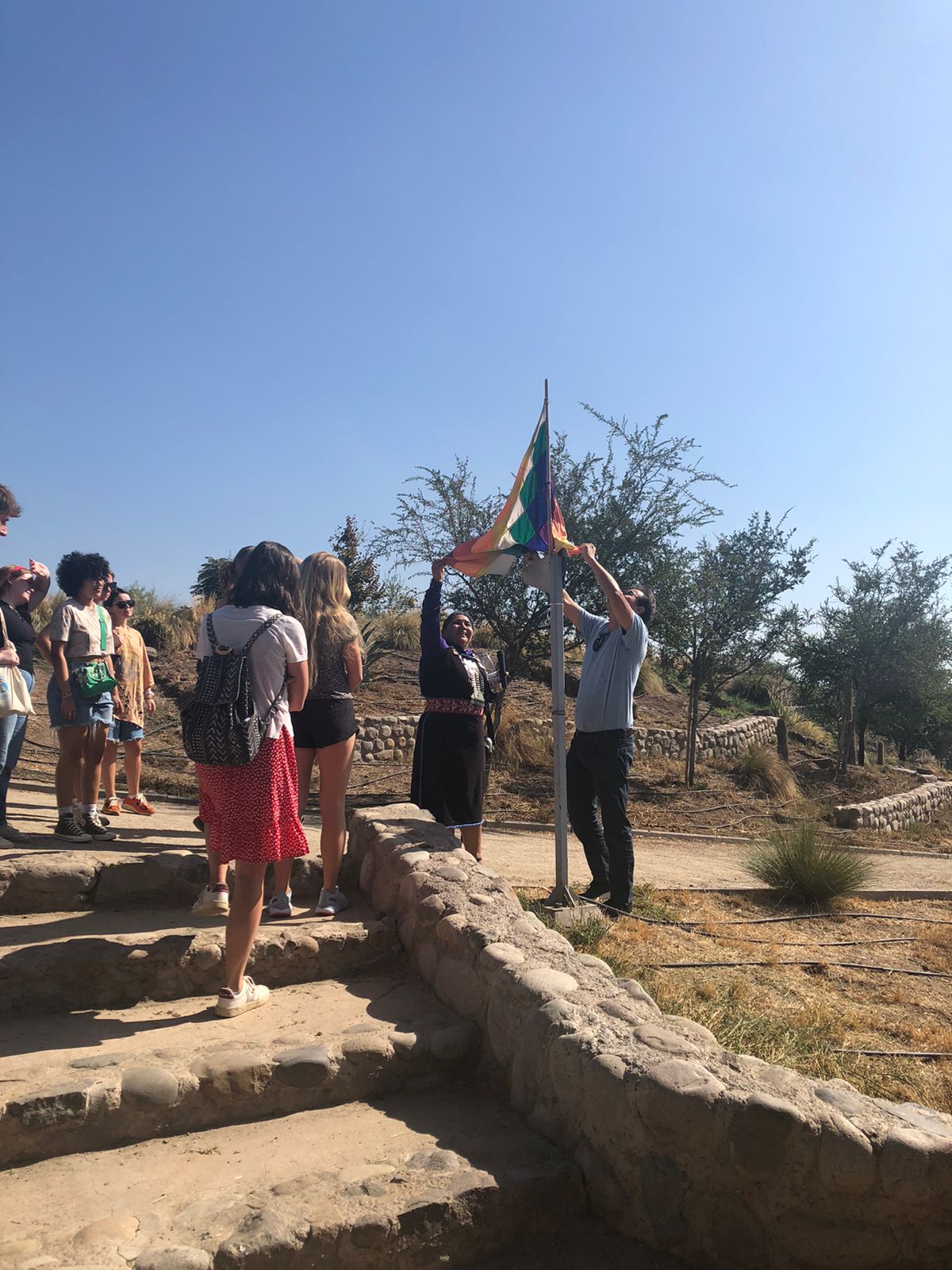
I chose to attend the Santiago program because I was interested in improving my Spanish. I didn’t know much about Chile before I left, and felt my Spanish was nothing special. Going into the semester, I was afraid I wouldn’t be able to keep up with native speakers, or that I’d struggle with the language the entire time I was abroad. Despite those fears, I entered the semester with an open mind and the intention to learn and absorb as much as I could about Spanish, Chilean culture, and what life in Latin America is like. As soon as I landed in Buenos Aires for the signature seminar, my fears dissipated. I knew I would struggle to get a handle on the language (in part because of the fascinating accent Argentines use, as well as the speed at which Chileans speak), but I would have a good time doing it. Buenos Aires, Santiago, and all the other locations I visited while abroad (Patagonia, Atacama, and Cusco, Peru, to name a few!) were some of the most stunning, culturally-rich places I’ve ever visited, and that in itself was enough to excite me for the semester.


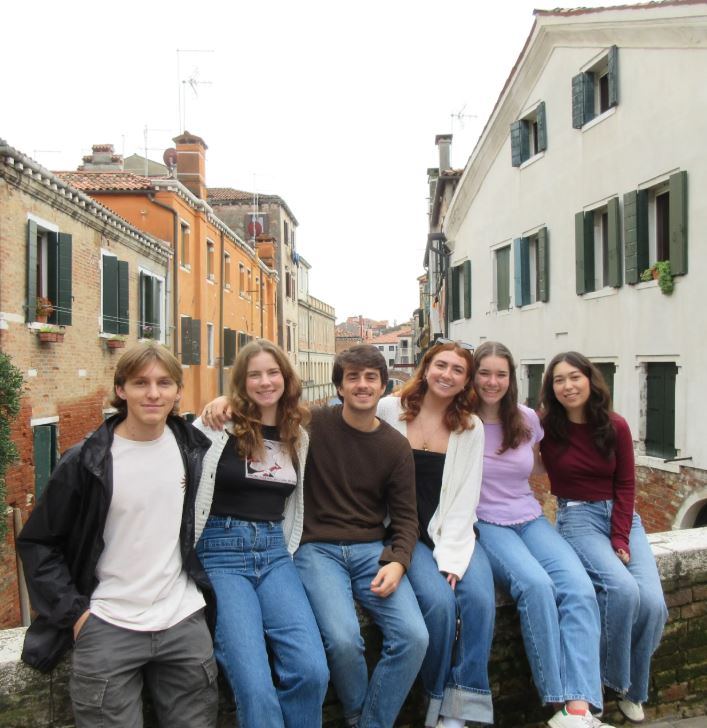
The Buenos Aires signature seminar, connected to a course called Issues in Contemporary Latin America, is a wonderful introduction to the semester. Taught by both of the Santiago program directors, Mauricio and Paula , as well as on-site professors in Buenos Aires, the signature seminar helps you acclimate to the pace of life abroad, as well as acquaints you early with the other people in your program. In my abroad cohort, there were only 13 of us, but we were able to bond quickly and grow our relationships throughout the semester. These friendships are some of the most fulfilling and enduring relationships I’ve ever built— the opportunity to explore a new culture together and travel across a new continent forges connection in a more profound way than you can imagine.
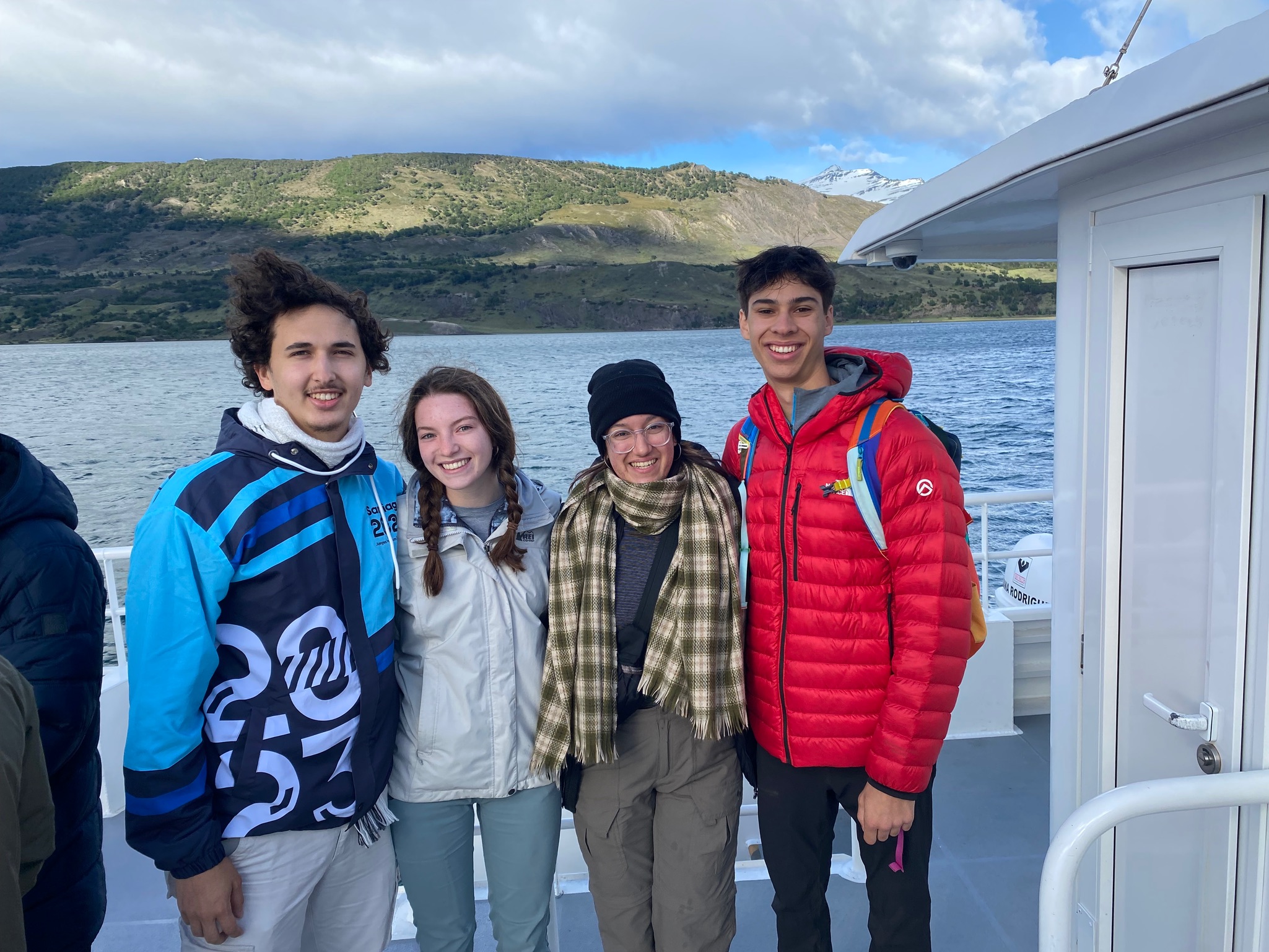
A particular highlight of my time in Santiago was, in fact, traveling, especially the travel I embarked on with my friend, Ana. I met her through the abroad program —we had never seen each other on campus or interacted in any way while in Syracuse, but we got along so well that we decided to take an international trip together for fall break. Her and I visited Montevideo, the capital of Uruguay, and Buenos Aires, because that city is just so magical. We navigated airports, ferries, and taxis together, tried new foods and new ways to immerse ourselves in the city, and had our fair share of vacation mishaps: a stolen sandwich from the communal hostel fridge and an extended layover in the Argentinian airport. I look back on that trip as one of my favorite parts of my semester, not only because I was able to explore new cities, but because I got to do it with someone who I now consider one of my best friends.


Another travel highlight of my semester was when I went to Cusco, Peru to visit Inca citadel Machu Picchu for my birthday. This trip had been on my bucket list for ages, and toward the end of the semester, I knew I had to make it happen. A major part of my trip to Peru was that I wanted to go solo; I needed to prove to myself not only could I navigate my semester abroad, but I could navigate it on my own. At this point in the semester, I felt pretty confident in my Spanish: I was speaking it daily with my host family, using it in my classes, and relying on it in stores, restaurants, and public transportation. Without fear, I booked my tickets to Peru and Machu Picchu and set out on my birthday adventure. Peru was, without a doubt, my favorite experience of my entire semester. The food was delicious, the people I met were so welcoming and accommodating to me, and Machu Picchu is indescribably gorgeous. Being able to see a wonder of the world that I had dreamed about for years beforehand was an amazing gift, and one that I am so grateful for. The travel built into the Santiago program is incredible, too. Visiting Atacama, the driest desert and the world, and Patagonia, the lush southern region of Chile, demonstrates the incredible diversity of the country and exposes you to the cultural breadth of Chile. I loved going sandboarding on Atacama’s dunes and hiking glacial mountains in Patagonia, and getting to do both trips with the program made it that much better.
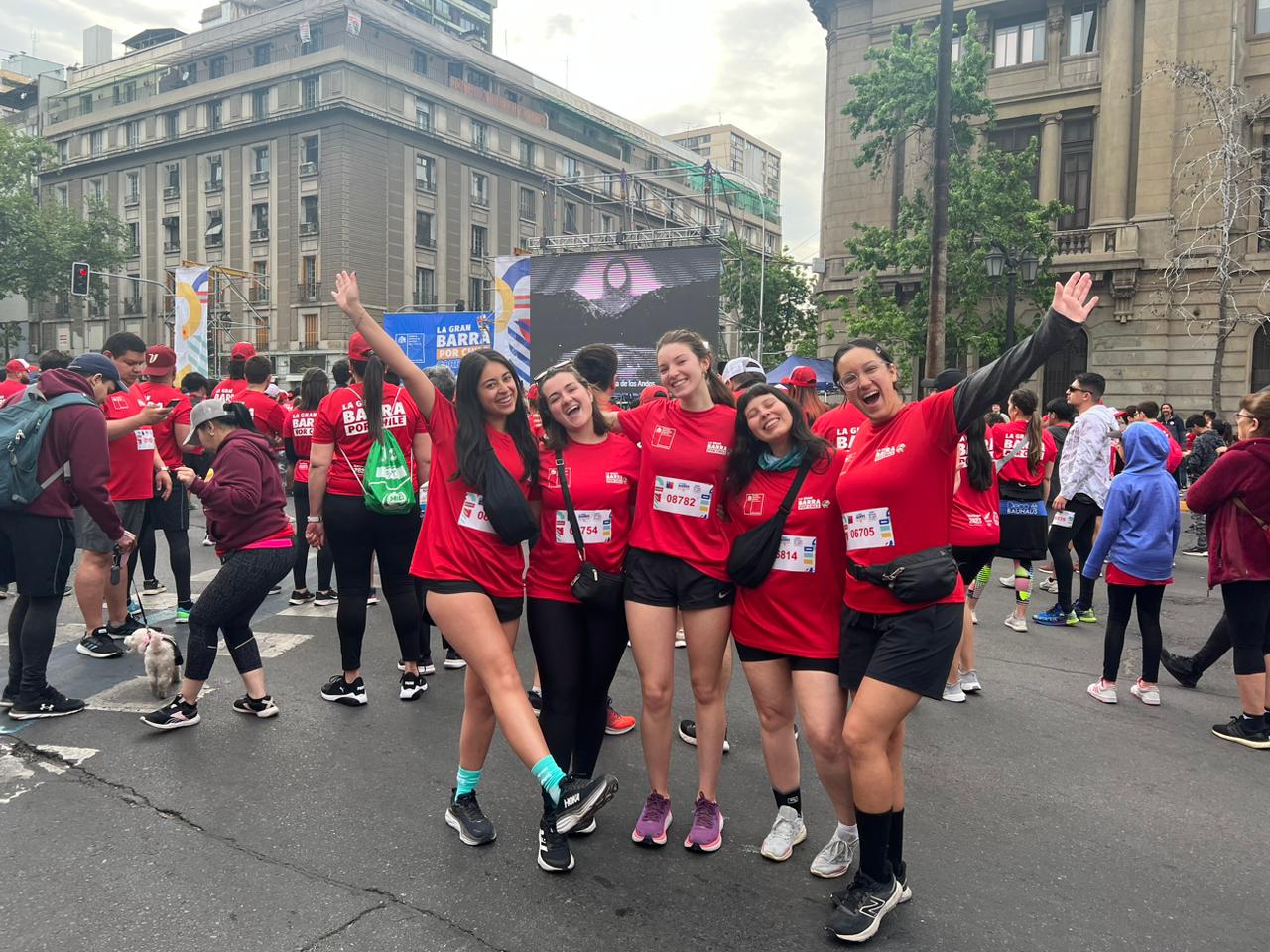
All in all, my semester in Santiago was life-changing. The city itself is modern, clean, and well-connected, I look back so fondly on my mornings spent commuting to school and feeling like a local. Chilean food is a unique fusion of Latin American cuisine and European influence, and I got to try so many special dishes thanks to my host mom. I loved my semester abroad and will reflect on it for the rest of my life, using the skills I learned about myself and the world to navigate stronger and smarter than before.

Sophia Moore ’25

Santiago Center, fall 2023

TRF major, Spanish minor
The French Study Abroad Experience: Feeling at home in Strasbourg

Sarah Regner is a visiting student from Colgate, enrolled in the University of Strasbourg program.

Dr. Bart: Why did you decide to join the Syracuse Abroad program in Strasbourg?

Sarah Regner: I really wanted to study abroad in France to try to become more fluent in French. I did not want to be in Paris because I have found that it is more difficult to practice speaking there. Everyone speaks English, and it’s a lot easier for them to speak to you in English than for you to struggle with French. I wanted to have a fighting chance at practicing the language and thought a smaller city would be better.

The Syracuse program appealed to me because of the Villa here and the opportunity to take at least a few classes either in English or with professors who understand that I’m not French. Also, the partner program with the University of Strasbourg was a big factor. The French major at Colgate is focused on French literature rather than grammar or history classes in French, which is a bit tricky to find in study abroad programs. Being able to take literature classes alongside French students was really important for my major and also for becoming more fluent in the language.

Dr. Bart: So, given your aim was to find more opportunities to actually speak French, has it worked? Has that been a good choice?

Sarah Regner: I think so. The University of Strasbourg courses are a little tricky because the format is two-hour lectures, and no one really speaks except for the professors. I’ve gotten a lot better at understanding and taking notes from what I’m hearing. But in terms of speaking, I think being in a host family and taking some of my French grammar classes here at the Villa have been more helpful.

Speaking French in a more colloquial context has pointed out gaps in my knowledge—things like common phrases you wouldn’t really come across in a traditional French class but that are super important in everyday life. It’s been a little hard because all the kids here speak English, so I tend to speak English with my friends. But we’ve tried to teach each other words and phrases we pick up. If we find a word or phrase that works better in French than in English, we’ll add it to the vocabulary we use with each other, which is really fun.

Dr. Bart: Have you made any French friends or socialized with anyone French?

Sarah Regner: I have. The two literature courses I’m taking each had an oral presentation component we had to do in groups. For one, I was in a group of three, and for the other, I had one partner. We had to sit down and work on the projects for quite a while, analyzing the texts we were presenting on, so I got to know them along the way. 

I’ve noticed that a lot of the students in these literature classes are other international students from Europe, the Middle East, or other regions. It’s been really cool to use French to communicate with people where neither of us is speaking our first language.

I also joined the local rowing club, which has been great for meeting people outside of an academic context while keeping up with my training. I talk to the coach, the other girls on the team, and anyone at practice; they have all been so kind and welcoming.

Dr. Bart: Have you been traveling on weekends?

Sarah Regner: I have. I feel very lucky that all of our trips went off so well. I was lucky to find a group of people I love traveling and spending time with. We all had similar priorities when traveling, which made it super easy to pick a place, go, and explore something new.

Before coming here, I didn’t like traveling—it made me nervous. This was a test to see how far I could push myself, and it ended up being amazing. Now it’s one of my favorite things to do: seeing new places, trying new food, and doing new things with a great group of friends.

Dr. Bart: When you first came to the University of Strasbourg, it wasn’t easy with orientation, right?

Sarah Regner: No, it was a bit tricky at first. The university has an infrastructure for the Erasmus program for European international students, but the US exchange exists outside of that structure. I filled out pre-registration forms, but they weren’t accepted. Syracuse helped to sort out the situation, which I am very grateful for. Dr. John walked with me to the office of the head of international relations to make sure I could get into classes that worked with my schedule and major requirements, and catch up on notes so I didn’t fall behind.

Dr. Bart: What will be your lasting memory of Strasbourg when you return home?

Sarah Regner: It’s hard to pick just one. But a recent memory is from the Christmas market, watching the light show on the tree while music from The Nutcracker played. I grew up doing ballet and performing The Nutcracker every year, so it was really special to hear that music and share the moment with friends.

Dr. Bart: Do you consider Strasbourg home now? Would you come back?

Sarah Regner: I think so. I’ve started calling my host family’s house “home,” which reminds me of when I first moved to college and started to feel at home in my dorm. At the beginning of the semester, I couldn’t imagine getting around here without Google Maps, but now I feel comfortable and know where things are. I’ll definitely come back. It feels special to have studied abroad in a city that isn’t as famous as Paris and to share it with the friends I’ve made here.

Dr. Bart: And finally, where’s your favorite place to hang out in Strasbourg?

Sarah Regner: I recently discovered a café called Les Savons d’Hélène near the Christmas markets. It’s cozy, eclectic, and great for working. The staff is lovely, and there’s plenty of space for big groups. I’ll definitely be going back this week.

Souleymane’s journey in Strasbourg

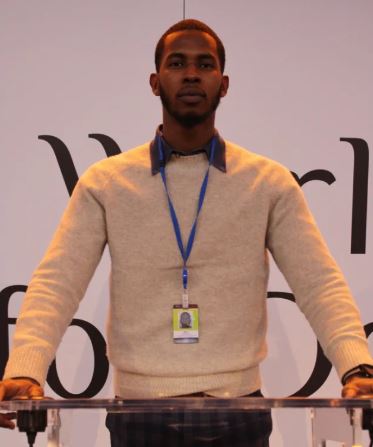
Studying abroad in Strasbourg has been one of the most transformative experiences of my life. The city’s rich history and dynamic culture, coupled with its role as a hub for European institutions, have provided an inspiring backdrop for both my academic pursuits and personal growth. As a Sciences Po student and intern at the Council of Europe, I have been immersed in an environment that fosters critical thinking, cross-cultural engagement, and meaningful professional development. 

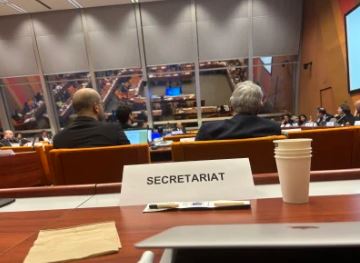
At the Council of Europe, I am part of the Directorate General Human Rights and Rule of Law, specifically working with the Data Protection Unit on matters related to Convention 108. This internship has been an incredible opportunity to delve into international data protection policies and contribute to discussions shaping the protection of individual rights in the digital age. My tasks often involve researching legal frameworks, drafting summaries, and supporting projects that emphasize the importance of data privacy. Working alongside such dedicated professionals has given me invaluable insights into how multilateral institutions operate to safeguard democratic principles. 

What truly stands out about my internship is the supportive and collaborative atmosphere created by my supervisors. They have been more than mentors—they have become an integral part of my experience here. One of my supervisors, for instance, shares my interest in fitness, and we often go for morning runs together. These runs symbolize the depth of the connections I’ve formed; they are more than moments of exercise—they reflect a genuine rapport that transcends the formalities of the workplace. This relationship exemplifies how my time at the Council of Europe is not just about professional achievements but also about building lasting human connections. 

Outside of my internship, I have had the pleasure of forming meaningful friendships with locals. Strasbourg’s people have welcomed me with warmth and kindness, making it easy to integrate into the community. These friendships have opened doors to new experiences, from attending cultural events to exploring the city’s historic landmarks. Whether strolling along the canals or discussing European politics in the park, my interactions with local friends have broadened my understanding of life in Strasbourg and enriched my perspective on cultural diversity. 

As a Sciences Po student, the academic component of my time in Strasbourg has been equally rewarding. The curriculum challenges me to analyze global issues critically while offering a unique opportunity to study in a city that embodies European cooperation. Strasbourg’s role as the seat of the Council of Europe and other key institutions has allowed me to witness the intersection of academic theories and practical policymaking. 

Strasbourg has become more than a city I study and work in; it has become a place where I’ve grown as a person. The relationships I’ve built—with my supervisors, colleagues, and local friends—reflect the profound connections that have shaped this journey. This experience has been about more than academic and professional growth; it’s about the people, the ideas, and the values that will remain with me long after I leave.

Souleymane Nx Bah ’26

International Relations major

Syracuse Strasbourg & Sciences Po

New Lender Center Initiative Expands Student Social Justice Research to Global Locations

The work of the Lender Center for Social Justice will now have a global dimension as the result of a partnership with Syracuse Abroad.

Through a new initiative called Lender Global, each year one of the University’s abroad centers will be designated as the Lender Global Partner. In addition, three research fellowships will be awarded to students studying at that location.

Lender Global begins in Spring 2025 at Syracuse London with a focus on social and environmental justice. The student fellows will examine the themes of biodiversity and the rights of nature; climate justice for people of the global majority; and meaningful engagement with ethical travel.

Assistant Provost and Syracuse Abroad Executive Director Erika Wilkens says, “We are pleased to partner with the Lender Center on this innovative concept that enhances our current programming and supports experiential learning, innovative research and human thriving. It’s an excellent way for students to include unique research opportunities while they study abroad.”  

Learn more: Lender Center Global Locations

Fall Abroad: Exclusive Programs and Opportunities Students Can’t Miss

It’s almost time to apply for fall 2025 study abroad programs. Learn more about what students can expect during a fall semester abroad.

Exclusive Fall-Only Programs

The fall semester provides unique study abroad opportunities for students in various academic disciplines and degree plans. Programs like Exploring Central Europe, Engineering in Strasbourg and Spanish Immersion in Santiago are specifically designed for the fall semester. Filled with immersive learning experiences, built-in program travel and unique courses, the fall is an ideal time to explore opportunities abroad.

Learn more about Fall 2025 abroad programs and experiences

Life-Changing Experiences From Summer Study Abroad

After spending the Spring 2024 semester in Strasbourg, France, Aulestia decided to extend her time abroad and spend the summer interning in the same location. During her summer session, she interned for ARTE, the Franco-German broadcast station in Strasbourg, just a six-minute walk away from the Syracuse center.

“It was amazing to see how ARTE manages bilingual content in France but also how it caters to the rest of the neighboring counties. ARTE is a popular channel for Europe with coverage in several languages aside from French and German,” Aulestia says.

As a broadcast and digital journalism major, this internship was a valuable experience contributing to both her personal and professional growth. Her internship responsibilities included working on reports, conducting research for their social media platforms and helping to plan future projects. “I learned so much about myself while abroad and I will always be thankful for the experience,” Aulestia says.

Learn more about Summer Study Abroad

Syracuse Abroad Appoints New London Director

Syracuse Abroad has appointmented Stephanie Solywoda as the new director of the Syracuse University London program, beginning Oct. 1.

Originally from New York, Solywoda joins Syracuse London after more than twenty years of studying and working at Oxford University. For the past eight years, she has served as director of Stanford University’s Montag Centre for Overseas Study at Oxford. As director, Solywoda was responsible for all operations of the Montag Centre, as well as local partnerships, staff/faculty leadership and program development, notably in the increase of science, technology, engineering and mathematics offerings.

Solywoda takes over the London program’s leadership from Troy Gordon, who, after ten years as director, moves into his new role of director of global teaching and learning, working across all Syracuse Abroad centers.

Read full story

Syracuse Abroad Week to be Celebrated Sept. 16-20

This fall, Syracuse Abroad welcomes all Syracuse University students to explore study abroad options for 2025 and beyond during this year’s Syracuse Abroad Week.

Syracuse Abroad Week, Sept. 16-20: Students, partners, faculty and staff are invited to join virtual events to learn more about study abroad programs. Throughout the week, Syracuse Abroad staff will host information sessions on Zoom discussing program options, financing study abroad, internship opportunities and more. To register for information sessions, visit the schedule of Syracuse Abroad Week events.

2023 Syracuse Abroad on the Quad

Syracuse Abroad on the Quad, Sept. 18: Students, campus partners and faculty are invited to visit

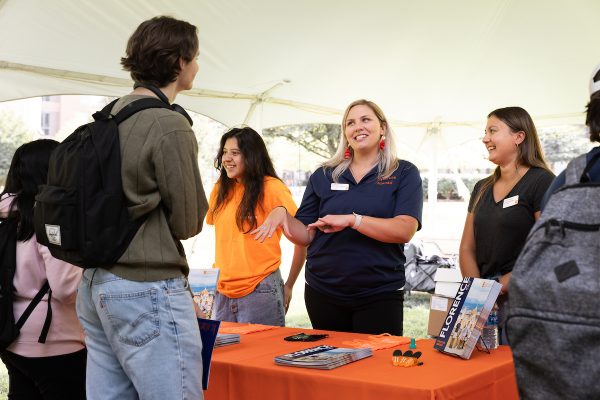
Syracuse Abroad staff members Kelsey Hanbach, left, and Sarah Tomlinson speak with a student during the Syracuse Abroad on the Quad event in 2023 (photo by Angela Ryan)

the Syracuse Abroad tent on the Shaw Quad from 11 a.m. to 3 p.m. to learn about options for semester and summer international study. In the event of rain, the event will be held in Goldstein Auditorium in the Schine Student Center.

Learn more: Syracuse Abroad Week 2024

Making Memories in Santiago

Hi! My name is Sally Jewell and I studied abroad in Santiago, Chile my junior year in the Spring semester of 2024. I am majoring in International Relations and Political Science, so the Santiago program was a perfect match for me as many of the course options had a political science background. One of the biggest differences between the semester I went abroad and previous Santiago cohorts is that our classes were in English but we were placed in home stays with a Chilean family so we were able to practice our Spanish with the host family.

One of the most positive aspects of this type of study abroad experience is that you are able to focus less on the language barrier in a classroom setting and are able to put more focus on the content you are learning about. Within the classes I took, I gained so much knowledge on Chilean politics, history, and culture. Additionally, you are able to learn within a classroom of people who are studying abroad just like you so you are able to help each other out with navigating a new city and country.

Something that I wished I had known before studying abroad is how helpful everyone is, especially our program directors. Everyone that is a part of the program wants to see you succeed, this includes professors, program directors, and host families. My host family was incredibly supportive and helpful throughout my semester abroad. I found it very helpful to live with someone from the area so they could give me recommendations and advice for how to navigate through this new place. I was very nervous meeting my host family, but the reality of meeting them made me realize that they enjoy this experience. They want to help you around the city and help you learn about a different city and culture; you are not a burden to them and it can be very fun and interesting for both you and your host family to talk about their culture as well as American culture and the similarities and differences between the two.

Studying abroad has taught me that there are a lot more places that I want to travel to outside of the United States. Going abroad can feel very daunting especially if you do not speak the language of the country you want to visit. However, having navigated through Santiago by myself and learning how to understand a different country and culture, I am now more confident in myself to be able to conduct myself abroad in other countries. With all the greenery in Chile, I have found that I love to be in nature and experience the beauty of the world, which is something I do not get to do in my everyday life. This has made me want to explore more areas of natural greenery and see all different sides of the world.

Additionally, studying abroad has made me think more critically about what I want to do post-college. I never really had a set plan as to what I wanted to do in the future, however being abroad made me realize that I have time to figure out what I want to do. I do not have to rush to find my passion or what I want to do with my life. I am allowed to explore unknown places and witness and experience things I would never be able to experience in the United States.

Lastly, I chose this specific program because one of my concentrations for my major is the Americas so I thought Chile would be an interesting place to go further in depth into that topic. I did not just want to be a tourist going around a city and visiting other tourist destinations close to me. I wanted to learn about the culture, history, and customs of the country I was going to. When looking at all the abroad programs together, I found that the Santiago program was one that seemed to prioritize immersing yourself in the culture and learning about the history of the country, which is exactly what I wanted. I am very happy with my decision to go abroad to Santiago, Chile and I know I have gained knowledge and experiences that will help me in the future and I will remember for the rest of my life.

Sally Jewell ’25

Santiago Center (Courses in English)

International Relations and Political Science