Lender Global Student Fellows Learn About UK Environmental Sustainability

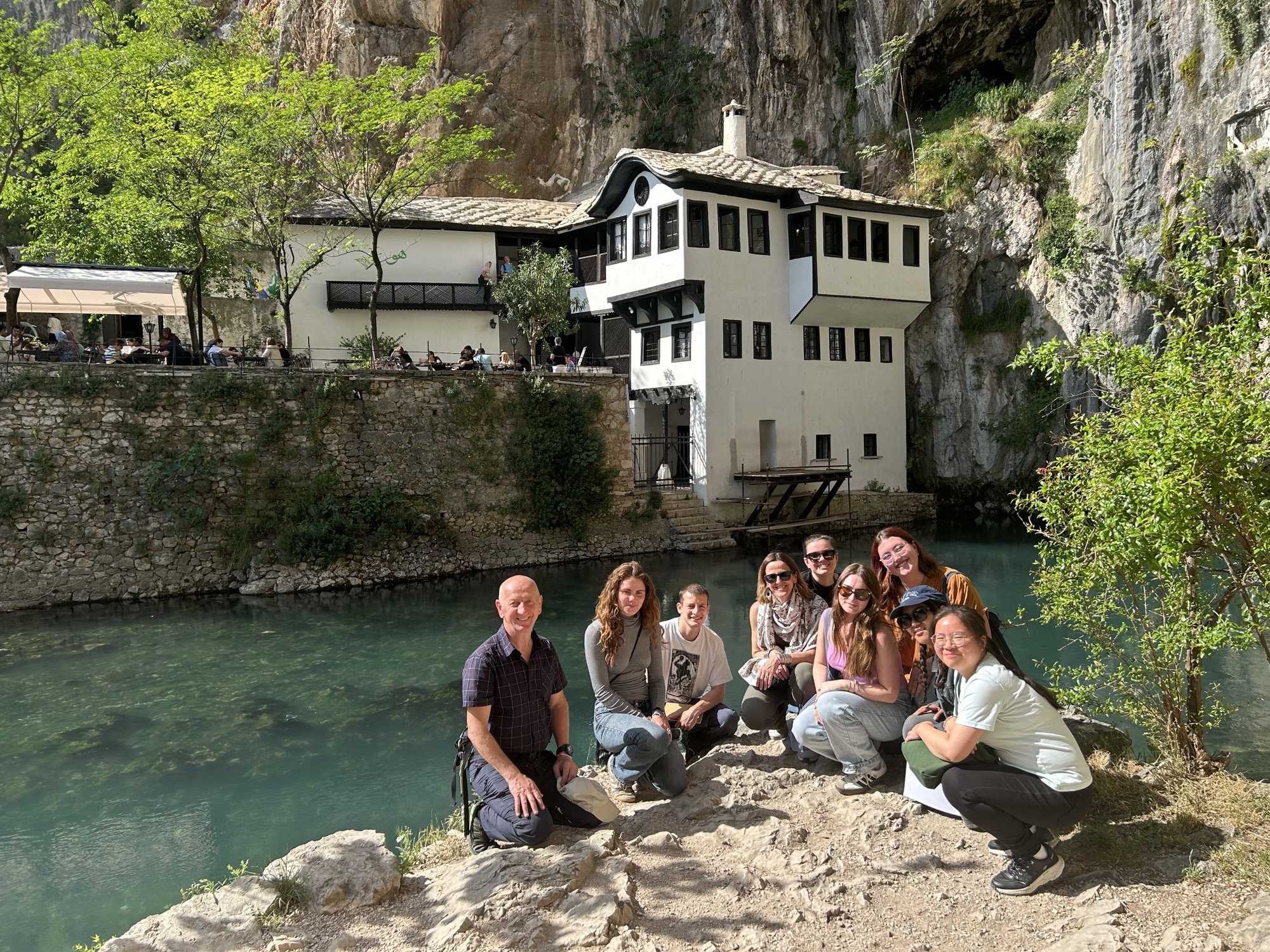
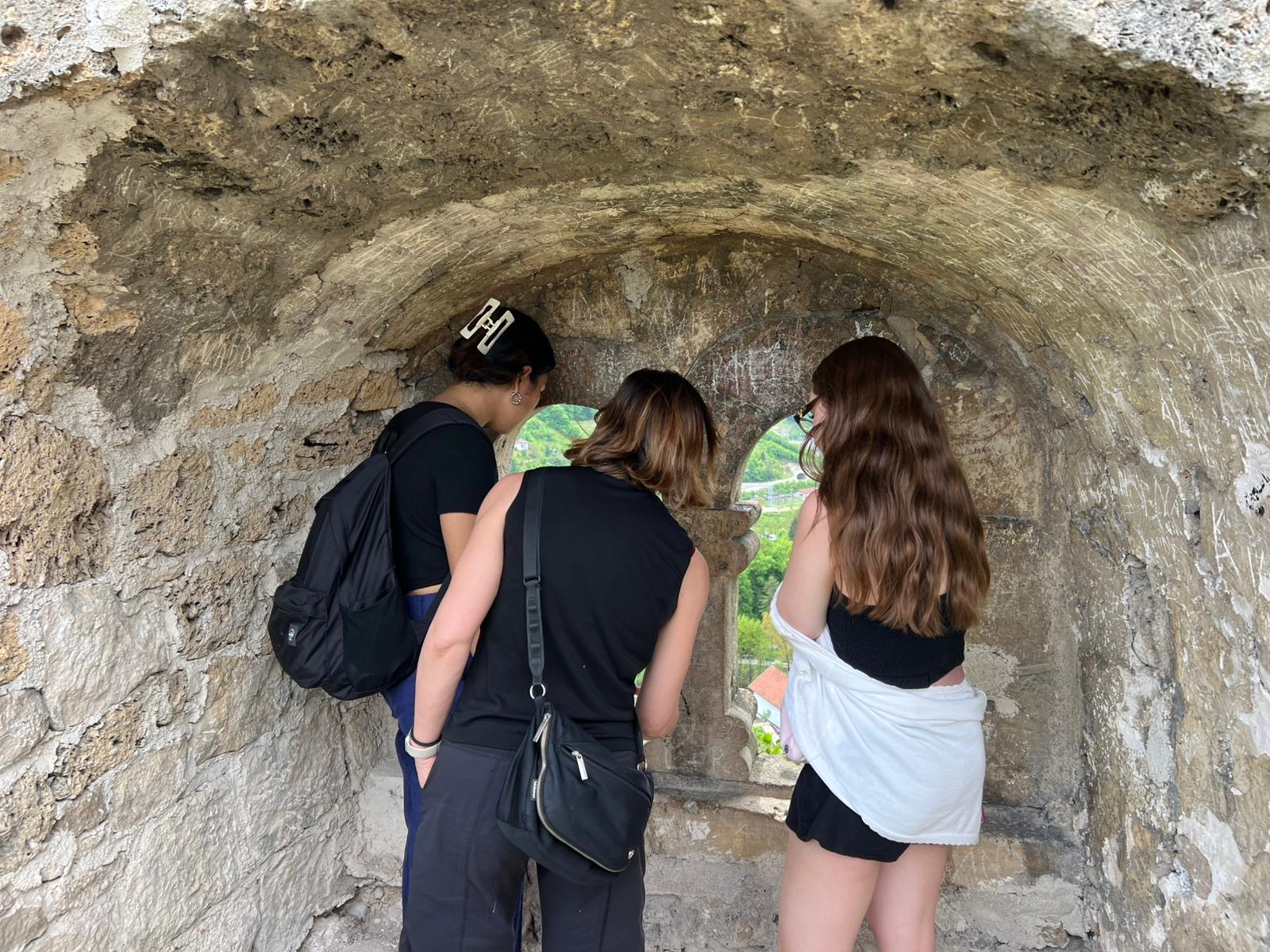
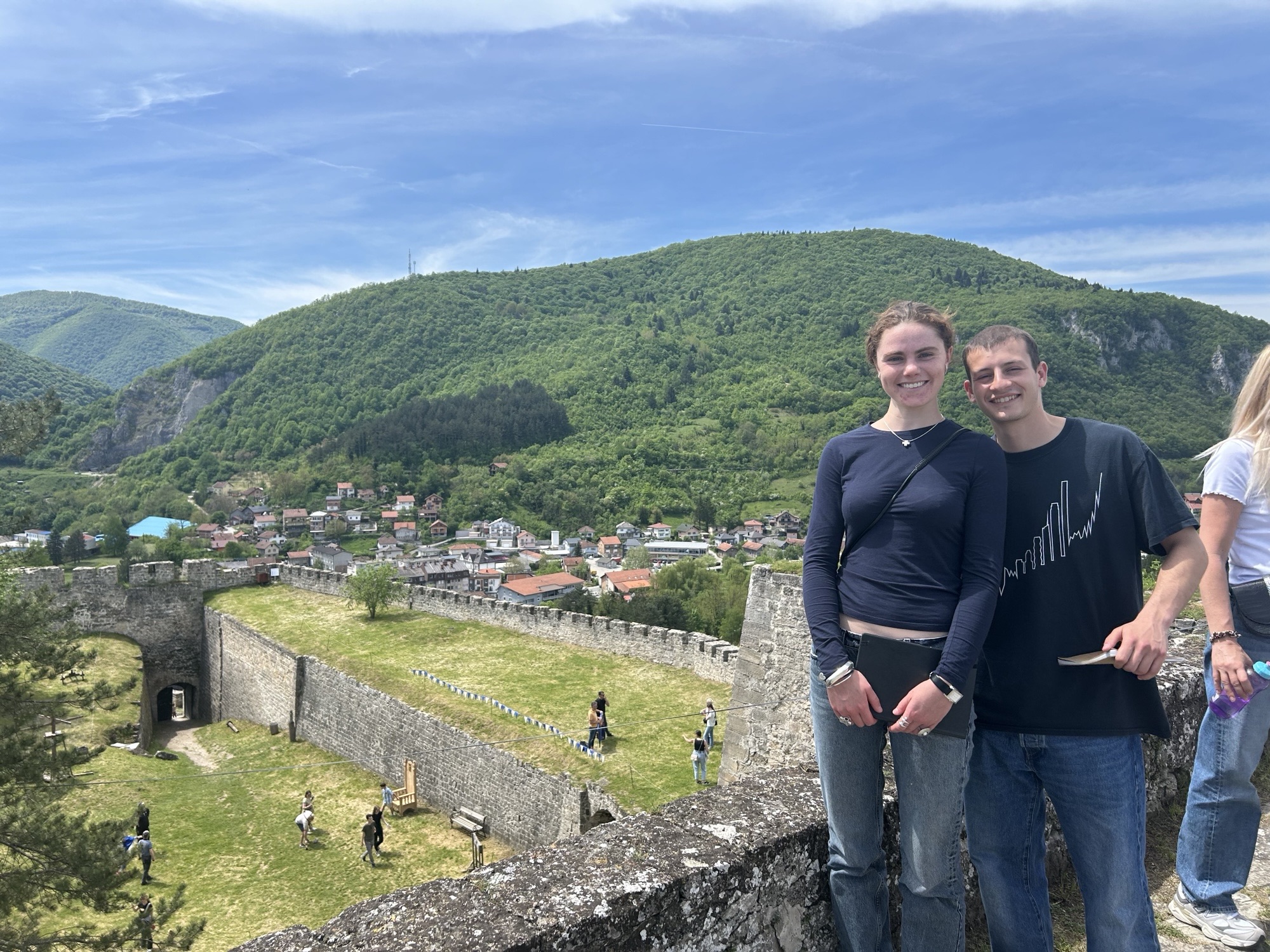
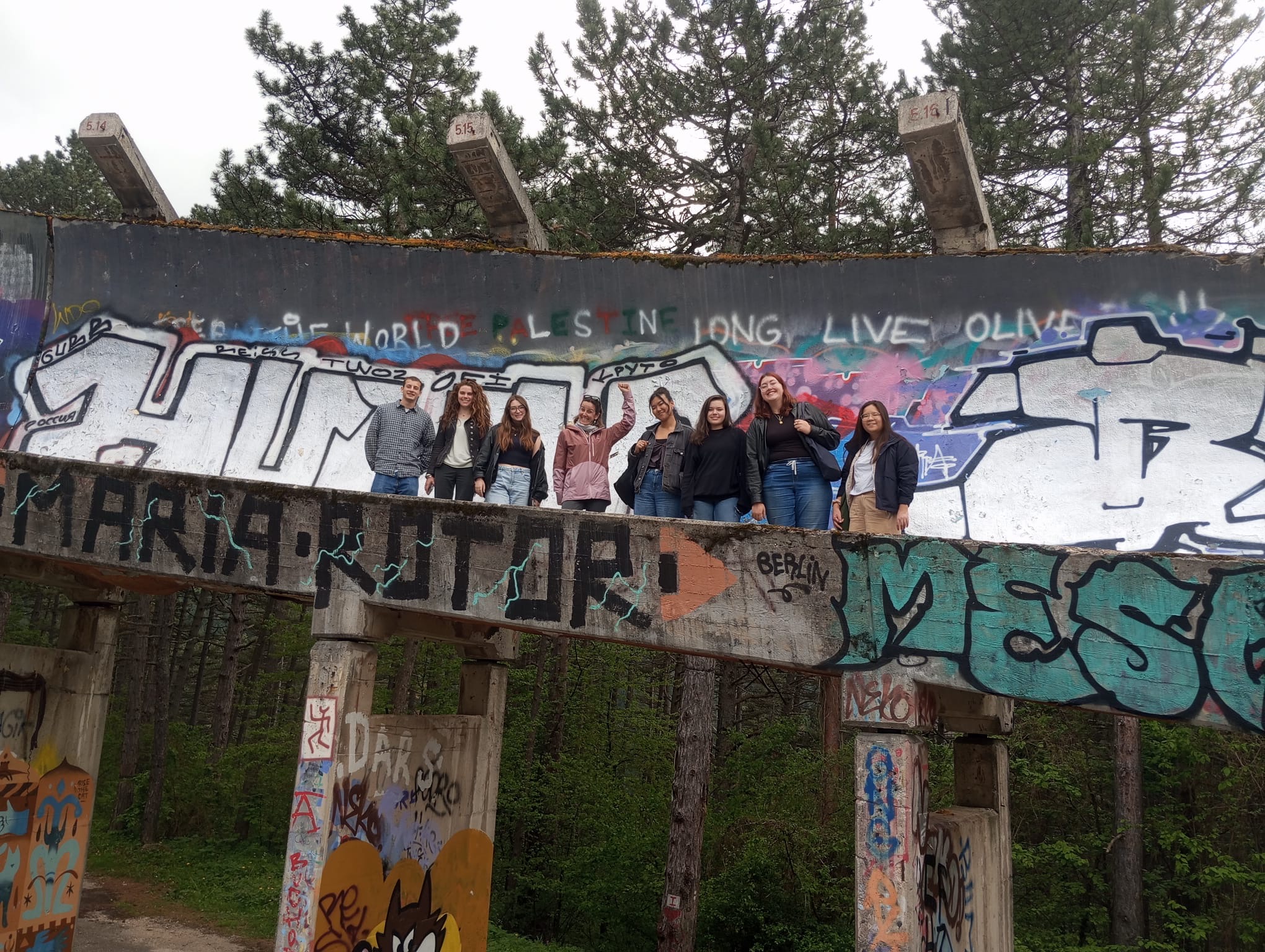
Among the students studying in the Syracuse Abroad London program this semester are three undergraduates who were selected for unique research opportunities as Lender Global research fellows. Since the semester began, they have engaged in hands-on learning by visiting famous environmental sites and examining social justice topics focused on the environment.

The Lender Global program expands existing Lender Center for Social Justice student research opportunities, offered on campus or at sites in the U.S., by broadening the scope of social justice research to include examinations with global dimensions. The research is customized to students’ interests and location. London is the inaugural site for the Lender Global program, which was announced last fall.

Read more: Lender Global in the UK

Lender Global Program Recruiting Students for Next Research Fellowships in Santiago, Chile

Syracuse University’s Lender Center for Social Justice and Syracuse Abroad have chosen the Santiago, Chile, program as the next location to host a new globally focused student research initiative.

The Lender Global program was launched last year to offer students innovative research opportunities to examine social justice issues from a global perspective. The first cohort is studying environmental issues at the Syracuse Abroad center in London now. In Santiago, student fellows will study the impact and consequences of the Augusto Pinochet dictatorship in Chile, which lasted from 1973 to 1990, during which more than 3,000 people died or disappeared, 200,000 suffered exile and 27,000 were tortured.

Three student fellowships will be awarded to students who plan to study abroad in Santiago during the 2025-26 academic year. All students who have been accepted to study there via the OrangeAbroad portal will be invited to express interest in the fellowship project.

Learn more about the Lender Center Research Fellowship

Abroad Alumni Selected for Prestigious Rangel and Pickering Fellowships

A Syracuse University senior and an alumna were recently chosen for prestigious graduate fellowships that prepare students for careers in the Foreign Service.

Linda Baguma ’25, an international relations and political science major in the Maxwell School of Citizenship and Public Affairs and College of Arts and Sciences, has been named a 2025 Rangel Fellow and studied abroad in South Africa. Alexandria Johnson ’24, an international relations graduate from the Maxwell School and College of Arts and Sciences, has been selected as a 2025 Pickering Fellow and studied abroad at Syracuse Strasbourg Center.

Read more about Linda and Lexie

Gilman International Scholarship Recipients Announced for October 2024 cycle

Syracuse Abroad congratulates the 4 students who have been awarded Benjamin A. Gilman International Scholarships for upcoming study abroad programs in spring and summer 2025. The total amount received by the students is $17,500

The recipients, along with the country where they will be studying, are the following:

  • Leo Skipper, Taiwan, Summer 2025
  • Ashlana Prashad, Spain, Spring 2025
  • 2 other students have been awarded scholarships and plan to study in France and Italy

Syracuse Abroad partners with the Center for Fellowship and Scholarship Advising (CFSA) to advise students during the application process. Throughout the recent cycles, CFSA and Syracuse Abroad held information sessions and writing workshops to help students prepare their applications and essay submissions.

Gilman Scholarships are open to undergraduate students who are U.S. citizens receiving Federal Pell Grant funding at a two-year or four-year college or university to participate in study or internship programs abroad.

All who meet the qualifications with plans to study abroad are encouraged to apply. Gilman encourages applications from students from diverse ethnic backgrounds; students planning to study in non-traditional destinations; students in fields underrepresented in study abroad; and students with high financial need. Students studying a critical need language (such as Arabic, Korean, Japanese or Portuguese) can apply for an additional $3,000 supplement for a total possible award of $8,000.

The application deadline is the first Tuesday of March for summer/fall/full-year programs; the first Tuesday of October for spring semester and summer (early application). Funding for fall, spring and summer study abroad opportunities is available.

For more information on Syracuse Abroad programs, students can make an appointment to meet with an advisor for more information.

Learn more: Gilman and other Outside Scholarships

I Left my Heart in Santiago

¡Hola! My name is Sophia Moore, I’m a junior studying television, radio & film and sociology with a minor in Spanish. I studied abroad in Santiago, Chile during the fall 2023 semester and cannot recommend it enough. Studying abroad in general is an opportunity to broaden your horizons and learn more about yourself and the world you live in, and I encourage you to chase that experience no matter where you go. However, if you’re seeking an abroad experience that’s more off the beaten path and will give you the chance to explore the beautiful continent of South America, Santiago is your ticket.


I chose to attend the Santiago program because I was interested in improving my Spanish. I didn’t know much about Chile before I left, and felt my Spanish was nothing special. Going into the semester, I was afraid I wouldn’t be able to keep up with native speakers, or that I’d struggle with the language the entire time I was abroad. Despite those fears, I entered the semester with an open mind and the intention to learn and absorb as much as I could about Spanish, Chilean culture, and what life in Latin America is like. As soon as I landed in Buenos Aires for the signature seminar, my fears dissipated. I knew I would struggle to get a handle on the language (in part because of the fascinating accent Argentines use, as well as the speed at which Chileans speak), but I would have a good time doing it. Buenos Aires, Santiago, and all the other locations I visited while abroad (Patagonia, Atacama, and Cusco, Peru, to name a few!) were some of the most stunning, culturally-rich places I’ve ever visited, and that in itself was enough to excite me for the semester.


The Buenos Aires signature seminar, connected to a course called Issues in Contemporary Latin America, is a wonderful introduction to the semester. Taught by both of the Santiago program directors, Mauricio and Paula , as well as on-site professors in Buenos Aires, the signature seminar helps you acclimate to the pace of life abroad, as well as acquaints you early with the other people in your program. In my abroad cohort, there were only 13 of us, but we were able to bond quickly and grow our relationships throughout the semester. These friendships are some of the most fulfilling and enduring relationships I’ve ever built— the opportunity to explore a new culture together and travel across a new continent forges connection in a more profound way than you can imagine.

A particular highlight of my time in Santiago was, in fact, traveling, especially the travel I embarked on with my friend, Ana. I met her through the abroad program —we had never seen each other on campus or interacted in any way while in Syracuse, but we got along so well that we decided to take an international trip together for fall break. Her and I visited Montevideo, the capital of Uruguay, and Buenos Aires, because that city is just so magical. We navigated airports, ferries, and taxis together, tried new foods and new ways to immerse ourselves in the city, and had our fair share of vacation mishaps: a stolen sandwich from the communal hostel fridge and an extended layover in the Argentinian airport. I look back on that trip as one of my favorite parts of my semester, not only because I was able to explore new cities, but because I got to do it with someone who I now consider one of my best friends.


Another travel highlight of my semester was when I went to Cusco, Peru to visit Inca citadel Machu Picchu for my birthday. This trip had been on my bucket list for ages, and toward the end of the semester, I knew I had to make it happen. A major part of my trip to Peru was that I wanted to go solo; I needed to prove to myself not only could I navigate my semester abroad, but I could navigate it on my own. At this point in the semester, I felt pretty confident in my Spanish: I was speaking it daily with my host family, using it in my classes, and relying on it in stores, restaurants, and public transportation. Without fear, I booked my tickets to Peru and Machu Picchu and set out on my birthday adventure. Peru was, without a doubt, my favorite experience of my entire semester. The food was delicious, the people I met were so welcoming and accommodating to me, and Machu Picchu is indescribably gorgeous. Being able to see a wonder of the world that I had dreamed about for years beforehand was an amazing gift, and one that I am so grateful for. The travel built into the Santiago program is incredible, too. Visiting Atacama, the driest desert and the world, and Patagonia, the lush southern region of Chile, demonstrates the incredible diversity of the country and exposes you to the cultural breadth of Chile. I loved going sandboarding on Atacama’s dunes and hiking glacial mountains in Patagonia, and getting to do both trips with the program made it that much better.

All in all, my semester in Santiago was life-changing. The city itself is modern, clean, and well-connected, I look back so fondly on my mornings spent commuting to school and feeling like a local. Chilean food is a unique fusion of Latin American cuisine and European influence, and I got to try so many special dishes thanks to my host mom. I loved my semester abroad and will reflect on it for the rest of my life, using the skills I learned about myself and the world to navigate stronger and smarter than before.

Sophia Moore ’25

Santiago Center, fall 2023

TRF major, Spanish minor

The French Study Abroad Experience: Feeling at home in Strasbourg

Sarah Regner is a visiting student from Colgate, enrolled in the University of Strasbourg program.

Dr. Bart: Why did you decide to join the Syracuse Abroad program in Strasbourg?

Sarah Regner: I really wanted to study abroad in France to try to become more fluent in French. I did not want to be in Paris because I have found that it is more difficult to practice speaking there. Everyone speaks English, and it’s a lot easier for them to speak to you in English than for you to struggle with French. I wanted to have a fighting chance at practicing the language and thought a smaller city would be better.

The Syracuse program appealed to me because of the Villa here and the opportunity to take at least a few classes either in English or with professors who understand that I’m not French. Also, the partner program with the University of Strasbourg was a big factor. The French major at Colgate is focused on French literature rather than grammar or history classes in French, which is a bit tricky to find in study abroad programs. Being able to take literature classes alongside French students was really important for my major and also for becoming more fluent in the language.

Dr. Bart: So, given your aim was to find more opportunities to actually speak French, has it worked? Has that been a good choice?

Sarah Regner: I think so. The University of Strasbourg courses are a little tricky because the format is two-hour lectures, and no one really speaks except for the professors. I’ve gotten a lot better at understanding and taking notes from what I’m hearing. But in terms of speaking, I think being in a host family and taking some of my French grammar classes here at the Villa have been more helpful.

Speaking French in a more colloquial context has pointed out gaps in my knowledge—things like common phrases you wouldn’t really come across in a traditional French class but that are super important in everyday life. It’s been a little hard because all the kids here speak English, so I tend to speak English with my friends. But we’ve tried to teach each other words and phrases we pick up. If we find a word or phrase that works better in French than in English, we’ll add it to the vocabulary we use with each other, which is really fun.

Dr. Bart: Have you made any French friends or socialized with anyone French?

Sarah Regner: I have. The two literature courses I’m taking each had an oral presentation component we had to do in groups. For one, I was in a group of three, and for the other, I had one partner. We had to sit down and work on the projects for quite a while, analyzing the texts we were presenting on, so I got to know them along the way. 

I’ve noticed that a lot of the students in these literature classes are other international students from Europe, the Middle East, or other regions. It’s been really cool to use French to communicate with people where neither of us is speaking our first language.

I also joined the local rowing club, which has been great for meeting people outside of an academic context while keeping up with my training. I talk to the coach, the other girls on the team, and anyone at practice; they have all been so kind and welcoming.

Dr. Bart: Have you been traveling on weekends?

Sarah Regner: I have. I feel very lucky that all of our trips went off so well. I was lucky to find a group of people I love traveling and spending time with. We all had similar priorities when traveling, which made it super easy to pick a place, go, and explore something new.

Before coming here, I didn’t like traveling—it made me nervous. This was a test to see how far I could push myself, and it ended up being amazing. Now it’s one of my favorite things to do: seeing new places, trying new food, and doing new things with a great group of friends.

Dr. Bart: When you first came to the University of Strasbourg, it wasn’t easy with orientation, right?

Sarah Regner: No, it was a bit tricky at first. The university has an infrastructure for the Erasmus program for European international students, but the US exchange exists outside of that structure. I filled out pre-registration forms, but they weren’t accepted. Syracuse helped to sort out the situation, which I am very grateful for. Dr. John walked with me to the office of the head of international relations to make sure I could get into classes that worked with my schedule and major requirements, and catch up on notes so I didn’t fall behind.

Dr. Bart: What will be your lasting memory of Strasbourg when you return home?

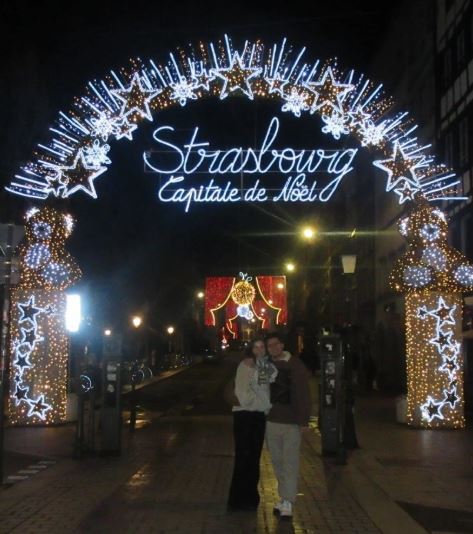
Sarah Regner: It’s hard to pick just one. But a recent memory is from the Christmas market, watching the light show on the tree while music from The Nutcracker played. I grew up doing ballet and performing The Nutcracker every year, so it was really special to hear that music and share the moment with friends.

Dr. Bart: Do you consider Strasbourg home now? Would you come back?

Sarah Regner: I think so. I’ve started calling my host family’s house “home,” which reminds me of when I first moved to college and started to feel at home in my dorm. At the beginning of the semester, I couldn’t imagine getting around here without Google Maps, but now I feel comfortable and know where things are. I’ll definitely come back. It feels special to have studied abroad in a city that isn’t as famous as Paris and to share it with the friends I’ve made here.

Dr. Bart: And finally, where’s your favorite place to hang out in Strasbourg?

Sarah Regner: I recently discovered a café called Les Savons d’Hélène near the Christmas markets. It’s cozy, eclectic, and great for working. The staff is lovely, and there’s plenty of space for big groups. I’ll definitely be going back this week.

Souleymane’s journey in Strasbourg

Studying abroad in Strasbourg has been one of the most transformative experiences of my life. The city’s rich history and dynamic culture, coupled with its role as a hub for European institutions, have provided an inspiring backdrop for both my academic pursuits and personal growth. As a Sciences Po student and intern at the Council of Europe, I have been immersed in an environment that fosters critical thinking, cross-cultural engagement, and meaningful professional development. 

At the Council of Europe, I am part of the Directorate General Human Rights and Rule of Law, specifically working with the Data Protection Unit on matters related to Convention 108. This internship has been an incredible opportunity to delve into international data protection policies and contribute to discussions shaping the protection of individual rights in the digital age. My tasks often involve researching legal frameworks, drafting summaries, and supporting projects that emphasize the importance of data privacy. Working alongside such dedicated professionals has given me invaluable insights into how multilateral institutions operate to safeguard democratic principles. 

What truly stands out about my internship is the supportive and collaborative atmosphere created by my supervisors. They have been more than mentors—they have become an integral part of my experience here. One of my supervisors, for instance, shares my interest in fitness, and we often go for morning runs together. These runs symbolize the depth of the connections I’ve formed; they are more than moments of exercise—they reflect a genuine rapport that transcends the formalities of the workplace. This relationship exemplifies how my time at the Council of Europe is not just about professional achievements but also about building lasting human connections. 

Outside of my internship, I have had the pleasure of forming meaningful friendships with locals. Strasbourg’s people have welcomed me with warmth and kindness, making it easy to integrate into the community. These friendships have opened doors to new experiences, from attending cultural events to exploring the city’s historic landmarks. Whether strolling along the canals or discussing European politics in the park, my interactions with local friends have broadened my understanding of life in Strasbourg and enriched my perspective on cultural diversity. 

As a Sciences Po student, the academic component of my time in Strasbourg has been equally rewarding. The curriculum challenges me to analyze global issues critically while offering a unique opportunity to study in a city that embodies European cooperation. Strasbourg’s role as the seat of the Council of Europe and other key institutions has allowed me to witness the intersection of academic theories and practical policymaking. 

Strasbourg has become more than a city I study and work in; it has become a place where I’ve grown as a person. The relationships I’ve built—with my supervisors, colleagues, and local friends—reflect the profound connections that have shaped this journey. This experience has been about more than academic and professional growth; it’s about the people, the ideas, and the values that will remain with me long after I leave.

Souleymane Nx Bah ’26

International Relations major

Syracuse Strasbourg & Sciences Po

New Lender Center Initiative Expands Student Social Justice Research to Global Locations

The work of the Lender Center for Social Justice will now have a global dimension as the result of a partnership with Syracuse Abroad.

Through a new initiative called Lender Global, each year one of the University’s abroad centers will be designated as the Lender Global Partner. In addition, three research fellowships will be awarded to students studying at that location.

Lender Global begins in Spring 2025 at Syracuse London with a focus on social and environmental justice. The student fellows will examine the themes of biodiversity and the rights of nature; climate justice for people of the global majority; and meaningful engagement with ethical travel.

Assistant Provost and Syracuse Abroad Executive Director Erika Wilkens says, “We are pleased to partner with the Lender Center on this innovative concept that enhances our current programming and supports experiential learning, innovative research and human thriving. It’s an excellent way for students to include unique research opportunities while they study abroad.”  

Learn more: Lender Center Global Locations

Fall Abroad: Exclusive Programs and Opportunities Students Can’t Miss

It’s almost time to apply for fall 2025 study abroad programs. Learn more about what students can expect during a fall semester abroad.

Exclusive Fall-Only Programs

The fall semester provides unique study abroad opportunities for students in various academic disciplines and degree plans. Programs like Exploring Central Europe, Engineering in Strasbourg and Spanish Immersion in Santiago are specifically designed for the fall semester. Filled with immersive learning experiences, built-in program travel and unique courses, the fall is an ideal time to explore opportunities abroad.

Learn more about Fall 2025 abroad programs and experiences

Life-Changing Experiences From Summer Study Abroad

After spending the Spring 2024 semester in Strasbourg, France, Aulestia decided to extend her time abroad and spend the summer interning in the same location. During her summer session, she interned for ARTE, the Franco-German broadcast station in Strasbourg, just a six-minute walk away from the Syracuse center.

“It was amazing to see how ARTE manages bilingual content in France but also how it caters to the rest of the neighboring counties. ARTE is a popular channel for Europe with coverage in several languages aside from French and German,” Aulestia says.

As a broadcast and digital journalism major, this internship was a valuable experience contributing to both her personal and professional growth. Her internship responsibilities included working on reports, conducting research for their social media platforms and helping to plan future projects. “I learned so much about myself while abroad and I will always be thankful for the experience,” Aulestia says.

Learn more about Summer Study Abroad